Portuguese
  Spanish


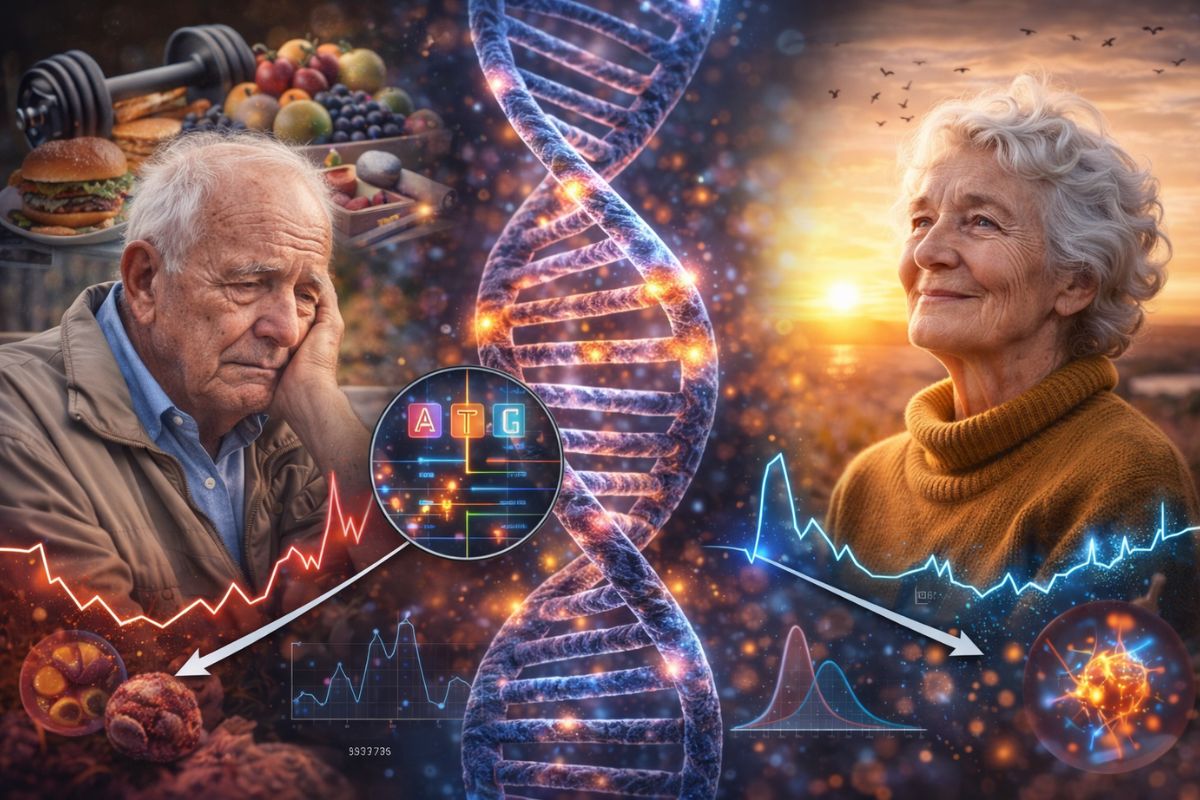

A study from the Weizmann Institute published in Science revealed that genetics may be responsible for about 50% of the variation in human life expectancy, at least twice the 20 to 25% estimated for decades, after analyzing databases of twins from Sweden and Denmark including twins raised apart.
For many years, science treated genetics as a minor player in determining how long each person lives. Previous estimates suggested that hereditary factors explained between 20% and 25% of the differences in life expectancy, and some large studies even pointed to less than 10%. But a study published in Science in April 2026 by researchers at the Weizmann Institute of Science in Israel challenges this view and reveals that genetics may account for approximately half of the variation in human longevity, which represents at least double what was believed until now.
According to ScienceDaily, the discovery changes the way scientists, doctors, and the general public think about aging. “For many years, life expectancy was primarily attributed to non-genetic factors, fueling skepticism about the hereditary determinants of longevity,” explained Ben Shenhar, a researcher in Professor Uri Alon’s lab at the Weizmann Institute. If genetics weighs as much as lifestyle in the longevity equation, the search for specific genes that influence lifespan gains an urgency that it did not have when it was believed that DNA was secondary.
Why science underestimated the role of genetics in life expectancy for decades

The error in previous estimates was not due to incompetence, but to methodological limitations. Older studies on genetics and longevity failed to separate hereditary influences from a factor that scientists call extrinsic mortality: accidents, infections, and environmental events that shorten life regardless of genes.
-
Iraq floats and sinks under an arm of the Euphrates 10 giant concrete boxes of 46,000 tons and 125 meters each to assemble a 2.4 km submerged tunnel and open a new land route between Asia and Europe.

-
Scientists use more than 20,000 artificial birds and solar speakers to “trick” seabirds, reactivate nesting routes, and revive a colony on an island that seemed abandoned.

-
She spent 73 years breathing inside an iron lung, survived the aftereffects of polio, and became the last woman in the United States dependent on the equipment before dying at 78 years old.
-
Brazilian students created a $1 filter using pine bark, cotton, and 3D-printed parts to clean cassava wastewater, reduce the toxicity of a hazardous waste, and transform contaminated water into biofertilizer.




As the databases used did not include detailed causes of death, everything was mixed in the same analysis, diluting the signal of genetics.
The result was an artificially low estimate because it included people whose lifespan was shortened by causes unrelated to genetic inheritance.
If a person with genes for living 95 years dies at 40 due to a traffic accident, that data enters the analysis as if genetics “had failed” to predict longevity, when in fact the determining factor was completely external. Filtering these distortions was the challenge that no one had solved until now.
How the Weizmann Institute Discovered That Genetics Matters Much More Than Previously Thought

The team led by Ben Shenhar analyzed three extensive databases of twins from Sweden and Denmark. For the first time in this type of research, scientists included data from twins who were raised separately, which allowed for a more precise separation of genetic influences from shared environmental influences.
Identical twins raised in different families share the same genes but not the same environment, making their data extremely valuable for this type of analysis.
To solve the problem of extrinsic mortality, the team created an unprecedented analytical approach. They used mathematical models combined with simulations of virtual twins to distinguish deaths caused by biological aging from those triggered by external factors.
By filtering these influences, the signal of genetics emerged strongly: about 50% of the variation in life expectancy is determined by DNA, a number consistent with what is observed in other complex human traits and in studies with laboratory animals.
What the Numbers Reveal About Genetics, Aging, and Disease Risk
The discovery is not limited to a general number of 50%. The study identified that up to the age of 80, the risk of death from dementia has a heritability of about 70%, much higher than that of cancer or heart disease.
This means that genetics has a particularly large weight in neurodegenerative conditions, where family history can be a more powerful predictor than lifestyle.
For cancer and heart disease, genetics also weighs more than previous estimates suggested, but to a lesser extent than for dementia.
These data reinforce the idea that different aging diseases have different degrees of genetic determination, and that a personalized prevention approach would need to take into account each person’s individual genetic profile. Lifestyle still matters, but genetics is not the supporting actor that science has described for decades.
What changes in medicine and research on aging with this new view of genetics
If genetics determines half of the variation in longevity, the search for specific genetic variants that prolong life gains a much stronger scientific justification.
“If heritability is high, as we have shown, this creates an incentive to seek variants that prolong life, in order to understand the biology of aging and potentially address it therapeutically,” said Shenhar. The idea that aging can be treated as a genetic problem, rather than just a consequence of lifestyle, gains support with this study.
For personalized medicine, the discovery means that genetic tests could, in the future, offer more accurate predictions about longevity risks and aging diseases.
Knowing that genetics weighs about 50% changes the calculation for researchers who previously hesitated to invest in the search for longevity genes because the estimates of 20-25% made the return uncertain. With the new estimate, the genetics of aging becomes a field with real therapeutic potential and not just academic.
What the study does not say and what lifestyle continues to determine
The discovery that genetics weighs 50% does not mean that lifestyle is irrelevant. The other 50% continues to be influenced by diet, exercise, environment, access to health care, and daily choices, which means that half of the fate of longevity is still in each person’s hands.
Those with favorable genes but who live carelessly may waste their genetic advantage. Those with unfavorable genetic predispositions may partially compensate with healthy habits.
The study also does not identify which specific genes influence longevity, it only demonstrates that the total weight of genetics is much greater than previously estimated. The next step in the research will be to map the genetic variants responsible for this influence, a task that may take years but now has a solid statistical basis to advance.
Genetics and lifestyle do not compete with each other. They operate together, and understanding the real weight of each is the first step towards evidence-based longevity strategies.
What surprises you more: discovering that genetics accounts for 50% of life expectancy or that science has underestimated this number for decades? Do you think knowing your genetic profile would change your lifestyle choices? Share in the comments. Studies that change what science has believed for entire generations deserve debate, and this one touches on something that interests everyone: how long we will live.