





 Portuguese
  English
  Spanish
  5 min of reading
  0 comments


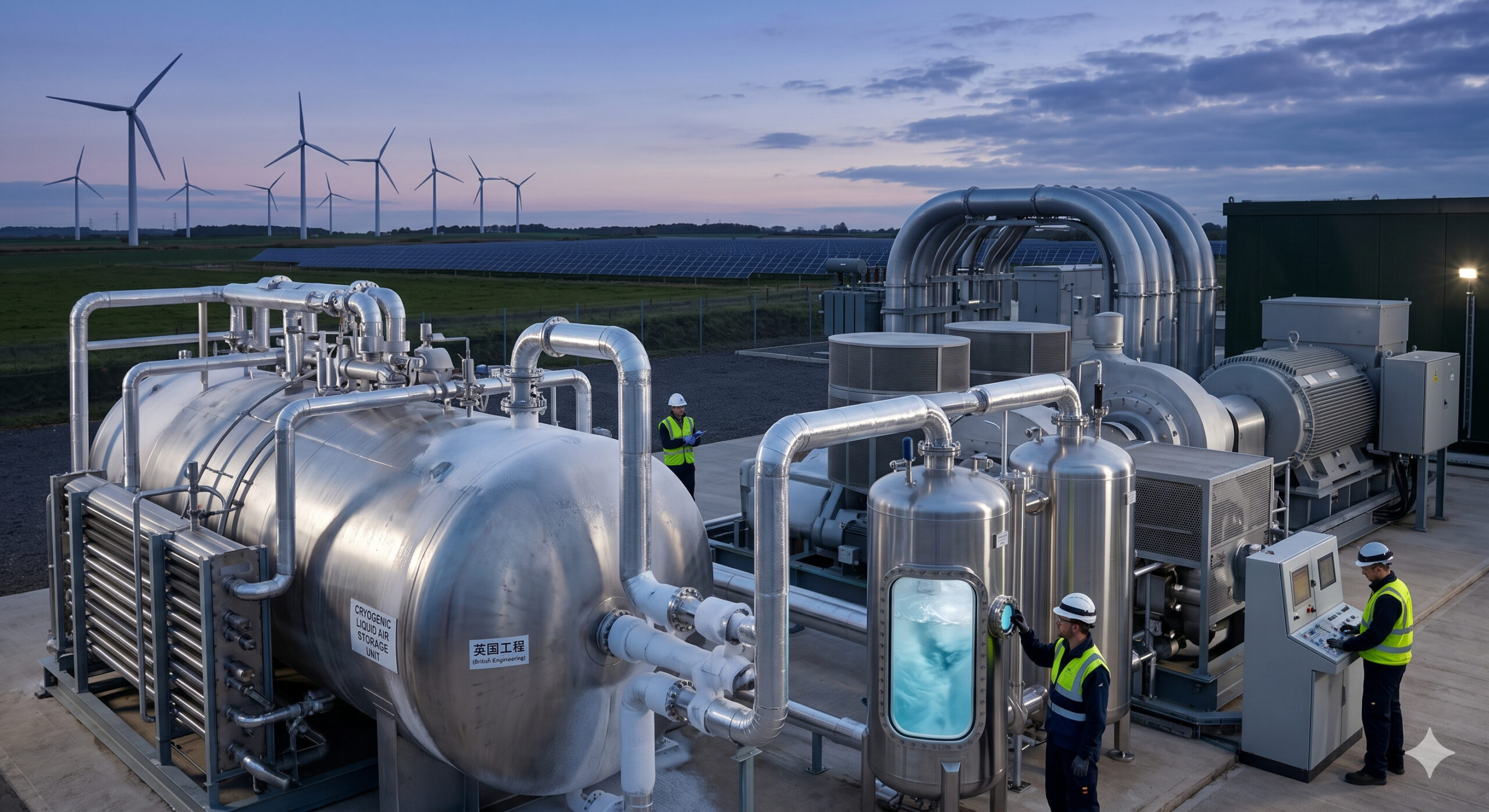
British technology transforms air into a giant battery, storing clean energy for hours or weeks without lithium use.
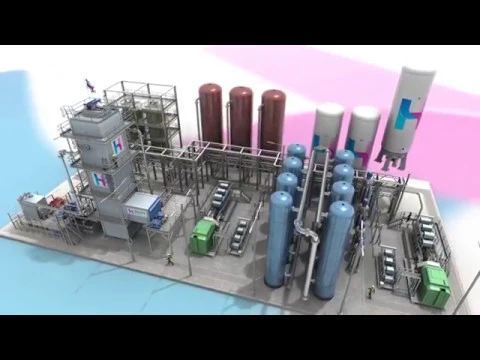
In 2024, the British company Highview Power made progress in deploying one of the most unusual solutions ever proposed for large-scale energy storage: using atmospheric air itself as a storage medium. In June 2024, the then UK Infrastructure Bank announced an investment of £165 million in the company, as part of a total fundraising of £300 million, to enable the construction of the UK’s first large-scale commercial liquid air energy storage plant in Carrington, Manchester. The project utilizes Liquid Air Energy Storage (LAES) technology, a system that stores excess electricity by cooling air to its liquefaction and keeps it stored for later use.
When the grid needs reinforcement, this liquid air is reheated and expanded to generate electricity again. According to Highview itself, the technology can operate with storage of six hours to several weeks, while the Carrington plant is designed to deliver 300 MWh, with a capacity of 50 MW for up to 6 hours, in addition to stability services for the grid.
The proposal arises as a direct response to one of the biggest challenges of the energy transition: the intermittency of sources like solar and wind, which do not generate electricity continuously. By capturing excess when there is a surplus of supply and returning it to the system when renewable production drops, the technology aims to reduce waste, alleviate generation cuts, and increase supply security in an increasingly dependent grid on variable sources, as highlighted by Highview Power and the British government in their statements about the project.
-
New catalyst developed by scientists in the USA enhances the performance of water electrolysis without using platinum, reducing operational costs and expanding the potential of green hydrogen as a strategic alternative for industries, heavy transportation, and clean energy generation.

-
China implements basalt fibers tested on the Moon to contain the desert’s advance in 1 million hectares, and the program surprises scientists worldwide.
-
Fernando de Noronha begins unprecedented energy transformation with a R$ 350 million solar plant that promises to replace diesel generation and change the island’s sustainable future by 2027.
-
Eos Energy will build the world’s largest zinc battery with 1 GWh in Mojave and eliminates lithium for AI data centers.


How air is transformed into stored energy
The operation of the system is based on a simple physical principle, but applied on an industrial scale. When there is excess energy in the grid — usually during times of high production and low demand — this electricity is used to cool atmospheric air to about -196 °C, the temperature at which it liquefies.


In this state, the air occupies a much smaller volume, about 700 times smaller than in the gaseous state, allowing large quantities to be stored in cryogenic tanks. This liquid air remains stored until the electrical grid needs energy.
When this happens, the process is reversed: the air is heated, returns to a gaseous state, and expands rapidly, triggering turbines that generate electricity.
Storage capacity ranges from hours to weeks
Unlike conventional batteries, which typically operate in cycles of a few hours, the liquid air system has a characteristic that makes it especially strategic: the flexibility of storage time.
According to Highview Power itself, the technology can store energy for:
- about 6 hours in standard applications
- up to several days or weeks, depending on the configuration
This capacity allows the system to act not only as a short-term regulator but also as a strategic energy reserve for prolonged periods of low renewable generation.
Project in the United Kingdom advances to industrial scale
One of the company’s main projects is located in Carrington, England, where Highview Power has begun construction of a large-scale facility based on this technology. The goal is to create a plant capable of operating as a true storage power station, directly connected to the power grid.
Although the exact numbers vary depending on the project, systems of this type can achieve:
- dozens to hundreds of megawatts of power
- storage on the scale of hundreds of megawatt-hours
This places the technology on the same level as traditional solutions like pumped hydroelectric plants, but with one important advantage: it does not depend on specific geography such as mountains or reservoirs.
No lithium, no rare metals, and long lifespan
One of the most relevant points of the technology is that it does not rely on critical materials. Unlike lithium-ion batteries, the system uses:
- atmospheric air
- industrial steel
- conventional cryogenic components
This eliminates the need for mining metals such as lithium, cobalt, or nickel, often associated with high costs and environmental impacts. Furthermore, systems of this type tend to have a longer lifespan, potentially operating for decades with proper maintenance.
Efficiency is still a challenge, but integration improves performance
The energy efficiency of the LAES system is still lower than that of chemical batteries, but it is evolving with the use of thermal integration.
During the process, heat generated from air compression can be stored and reused during the expansion phase, increasing the overall efficiency of the system. This optimization is essential to make the technology economically competitive.
The growth of solar and wind energy has brought a structural problem: intermittency.
- the sun does not shine at night
- the wind does not blow constantly
This creates periods where generation drops drastically, requiring backup sources. The liquid air system acts precisely at this point, functioning as a “lung” for the power grid, releasing energy when production falls.
Comparison with other storage technologies
Large-scale energy storage is being contested by different technologies, each with advantages and limitations.
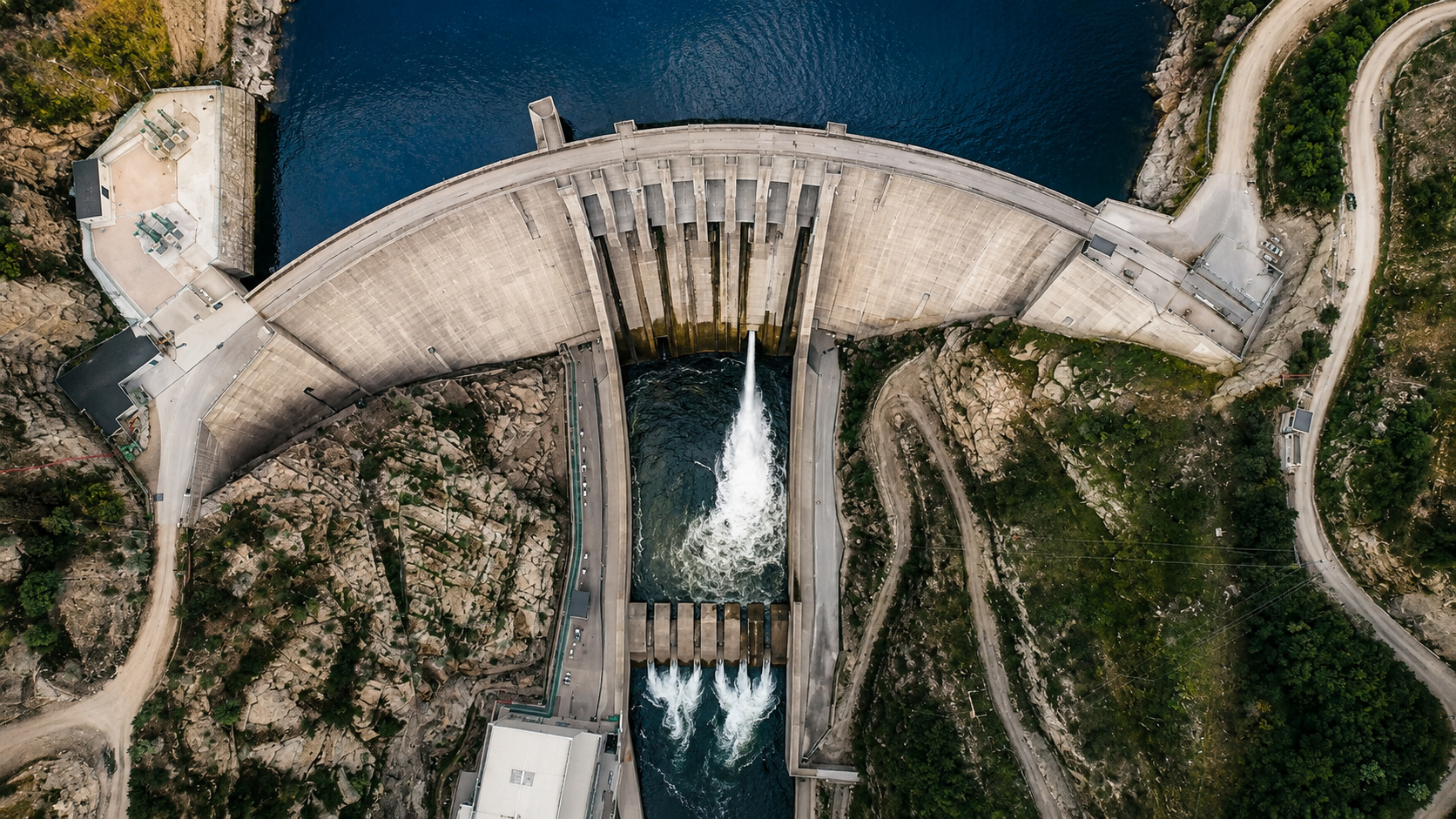
While lithium batteries offer high efficiency and quick response, they are limited in duration and depend on critical materials.
On the other hand, solutions like pumped hydroelectric plants have great capacity but require specific geographical conditions. The LAES system positions itself as an intermediate alternative, with:
- high scalability
- installation flexibility
- long-duration storage
Global interest grows with the need to stabilize power grids
With the advancement of decarbonization goals, countries and companies have been seeking solutions capable of ensuring energy stability without resorting to fossil fuels.
In this context, technologies like liquid air storage are gaining prominence in studies and investments.
The fact that it uses an abundant resource — air — and relatively conventional infrastructure makes the model attractive for large-scale implementation.
Technology can redefine the role of power plants in the future
By allowing energy to be stored on a large scale and released on demand, systems like LAES can change the way the electrical grid is structured.
Instead of relying solely on continuous generation, the system now counts on large distributed energy reservoirs.
This paves the way for a more flexible model, where production and consumption do not need to be synchronized in real-time.
Debate: can this technology replace traditional batteries on a large scale?
With projects already under construction and continuous advancements in efficiency, liquid air storage raises a central question for the future of energy: can systems based on physics and heavy engineering surpass chemical batteries at the scale needed to sustain a 100% renewable electrical grid?
The answer is still in development, but the advancement of this technology shows that the energy transition may rely less on rare minerals and more on industrial solutions based on simple physical principles applied on a gigantic scale.






Be the first to react!