Portuguese
  Spanish


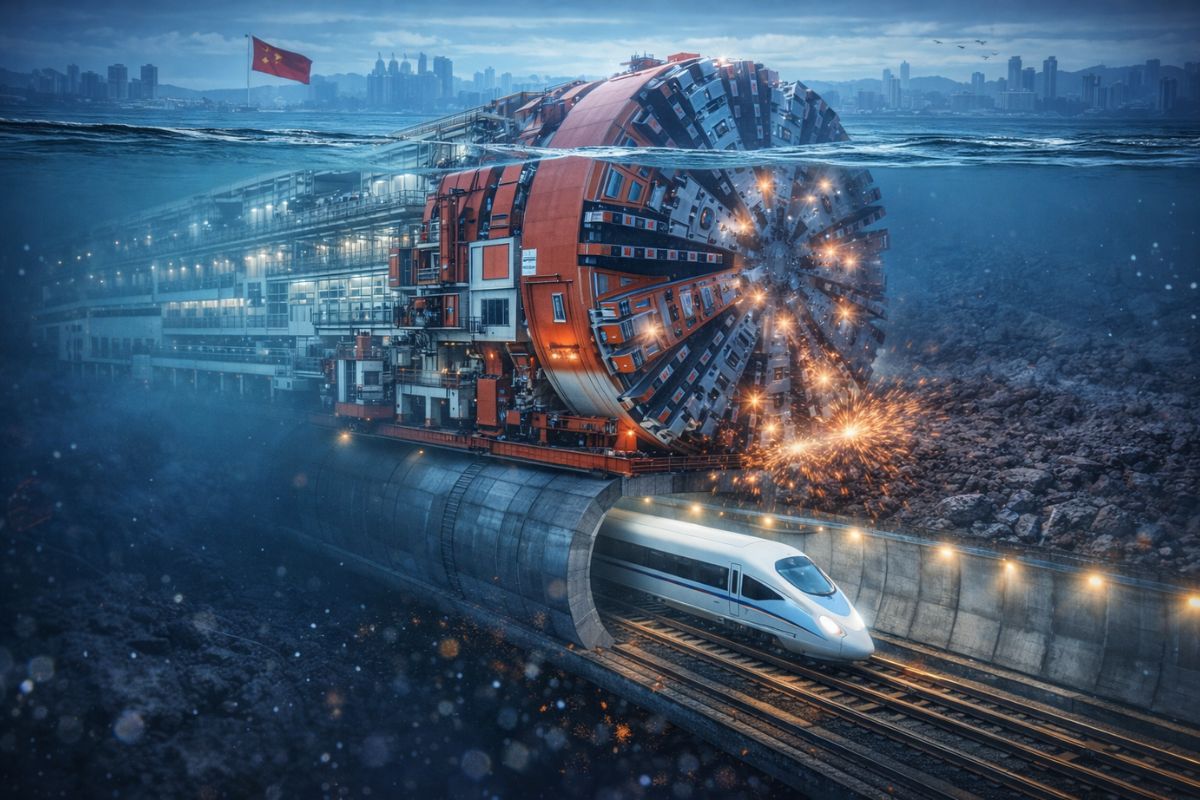

The Linghang boring machine is 148 meters long, weighs 4 thousand tons, and is digging 89 meters deep under the Yangtze River a 14 km tunnel for the Shanghai-Chongqing-Chengdu high-speed railway, having broken the world record by completing 11.18 km of continuous digging with a diameter of 15 meters.
At 89 meters below the bed of the Yangtze River, a boring machine the size of a five-story building advances meter by meter through rock and sediment to pave the way for high-speed trains that will cross the river without reducing speed. The Linghang is the largest high-speed tunnel boring machine developed by China, measuring 148 meters long and approximately 4 thousand tons in weight, equipped with an intelligent excavation system and high-pressure water sealing designed to operate in extreme conditions. The boring machine is constructing the Chongming-Taicang Tunnel, a 14-kilometer stretch that is part of the Shanghai-Chongqing-Chengdu high-speed railway.
The most impressive feat of the boring machine has already occurred. According to CGTN, the Linghang completed 11.18 kilometers of continuous underwater excavation, setting a world record for large-diameter tunnel boring machines of the 15-meter class. The uninterrupted excavation of over 11 kilometers beneath one of the world’s most powerful rivers, facing extreme water pressure and complex geological conditions, demonstrates a level of engineering that few countries can replicate. When the tunnel is completed, high-speed trains will travel at 350 km/h beneath the Yangtze without passengers realizing they are underwater.
The dimensions of the boring machine digging under the Yangtze River

To understand the scale of the project, one must visualize the boring machine in comparison to known references. The 148 meters length of the Linghang is equivalent to almost one and a half football fields, and its 4 thousand tons of weight corresponds to more than 2,600 compact cars stacked.
-
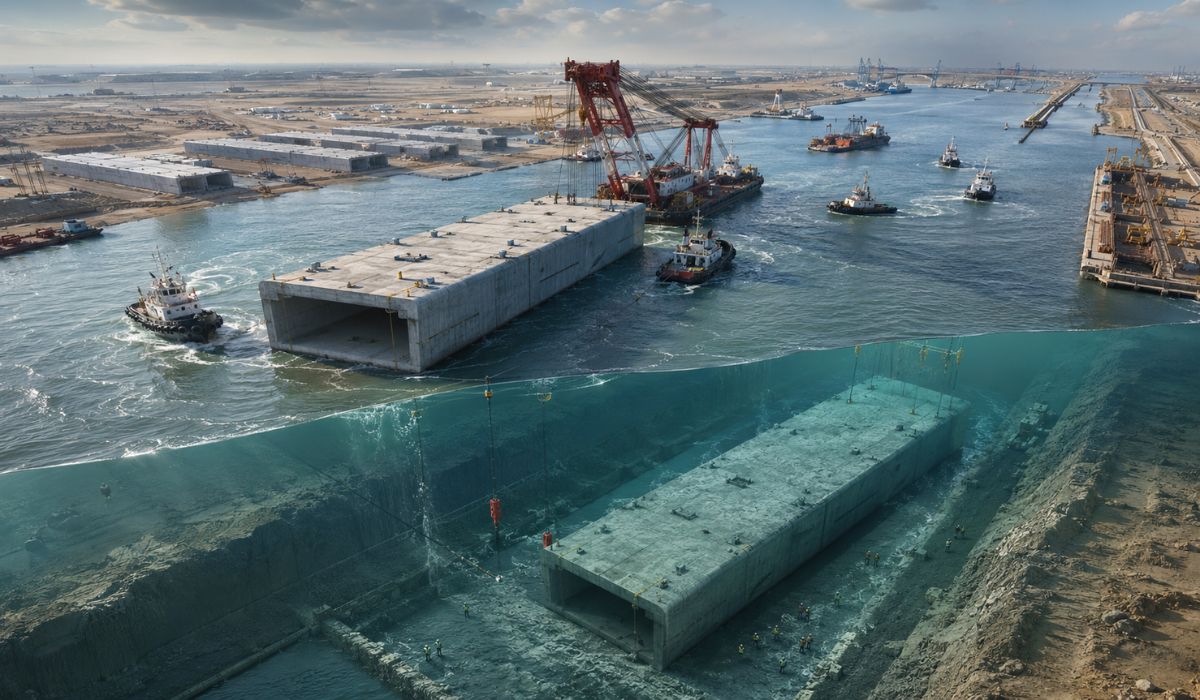
Iraq floats and sinks under an arm of the Euphrates 10 giant concrete boxes of 46,000 tons and 125 meters each to assemble a 2.4 km submerged tunnel and open a new land route between Asia and Europe.

-
Scientists use more than 20,000 artificial birds and solar speakers to “trick” seabirds, reactivate nesting routes, and revive a colony on an island that seemed abandoned.

-
She spent 73 years breathing inside an iron lung, survived the aftereffects of polio, and became the last woman in the United States dependent on the equipment before dying at 78 years old.
-
Brazilian students created a $1 filter using pine bark, cotton, and 3D-printed parts to clean cassava wastewater, reduce the toxicity of a hazardous waste, and transform contaminated water into biofertilizer.



The cutting disc at the front of the tunnel boring machine has a diameter of 15 meters, enough to open a circular section that accommodates two high-speed train tracks side by side.
The drilling machine operates 89 meters below the river’s surface, a depth that imposes water pressure equivalent to almost 9 atmospheres on the structure. To withstand this load, Linghang uses a high-pressure sealing system that prevents water from entering during excavation and the simultaneous installation of the concrete segments that line the tunnel walls.
Each meter advanced by the drilling machine is immediately sealed, ensuring that the tunnel remains dry even beneath one of the world’s largest rivers.
The smart technology that allows the drilling machine to operate in risk zones

Excavating under the Yangtze is not just a matter of brute force. The drilling machine features an integrated smart control platform that includes a digital twin of the entire excavation process, reproducing in real-time the soil conditions, water pressure, and the mechanical state of the tunneling machine in a virtual model.
This system allows engineers to anticipate problems before they occur, remotely adjusting operational parameters.
A real-time early warning system complements the digital twin and enables the drilling machine to navigate safely through high-risk zones, such as the main navigation channel of the Yangtze, where surface ship traffic cannot be interrupted, and environmentally sensitive areas where excessive vibrations could harm the river ecosystem.
The challenges include the vast width of the river, geological layers that vary between soft clay and hard rock over short stretches, and the need to maintain millimeter precision in the tunnel alignment over 14 kilometers.
The world record that the drilling machine broke by excavating 11 km without stopping

The milestone of 11.18 kilometers of continuous underwater excavation is a record for large-diameter tunnel boring machines.
The drilling machine completed this section without significant interruptions, maintaining a constant advance rate under extreme pressure, high temperature inside the equipment, and the need for perfect coordination between the cutting head, debris removal systems, and the installation of the tunnel lining rings.
The drilling machine’s record surpasses previous marks set by projects in Europe and Japan, where tunnel boring machines of similar diameter operated under less extreme conditions.
Continuous excavation means that Linghang did not need to stop for scheduled maintenance during the section, something that required redundancy in all critical systems and teams of engineers working in shifts inside the tunnel boring machine itself. The interior of the drilling machine functions like a small mobile factory, with workshops, storage areas, and control stations that allow for uninterrupted operation.
What the tunnel will allow when the drilling machine completes its work
The Chongming-Taicang Tunnel is a key section of the Shanghai-Chongqing-Chengdu high-speed railway, one of the most strategic lines in the Chinese railway network.
When completed, the tunnel will allow high-speed trains to cross the Yangtze River at 350 km/h without reducing speed, eliminating a logistical bottleneck that currently forces trains to slow down or use longer alternative routes. For passengers, the 14-kilometer underwater crossing will take less than three minutes.
The project is part of the regional integration strategy of the Yangtze River Delta, connecting Shanghai to the interior of China with speed and transport capacity that highways and bridges cannot replicate. The Linghang drilling machine is not just opening a tunnel.
It is creating infrastructure that will redefine the logistics of a region with over 200 million inhabitants and that accounts for a significant share of China’s GDP.
What impresses you more: the size of the 148-meter drilling machine, the depth of 89 meters under the river, or the record of 11 km excavated without stopping? Do you think Brazil should invest in technology like this for its infrastructure projects? Share in the comments. Large-scale engineering that seems like science fiction always generates debate among those who admire it and those who question the costs.