






 Portuguese
  Spanish


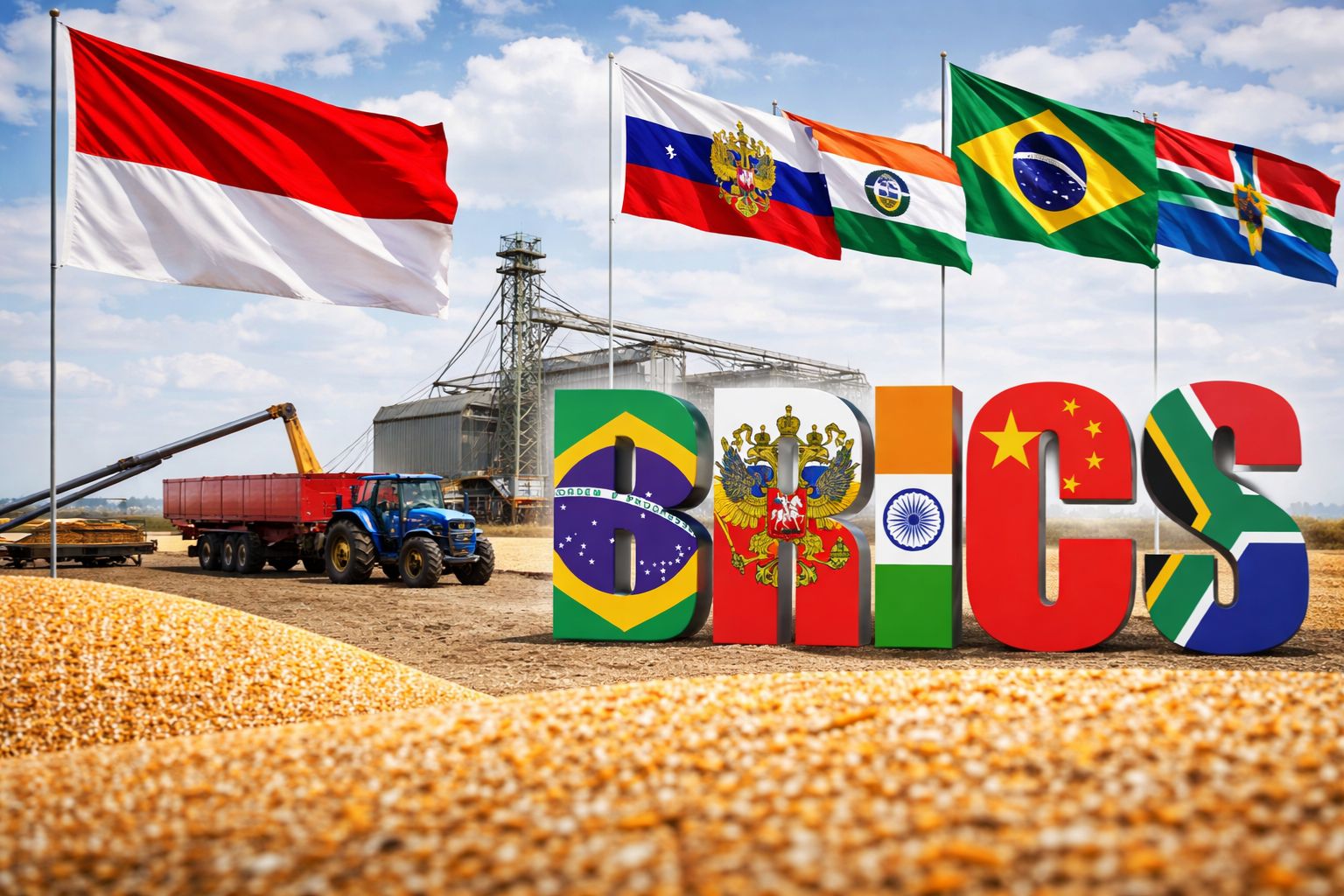

Indonesia, one of the largest grain importers in the world and a full member of BRICS, has shown interest in participating in the bloc’s Grain Exchange. According to the Russian ambassador in Jakarta, joining would protect national markets from external interference and ensure fair prices with long-term contracts for the Asian country.
The BRICS has just gained another heavyweight ally in its project to create its own grain exchange that operates outside the control of major Western trading companies and traditional commodity exchanges. Indonesia, one of the largest grain importers on the planet and a full member of the bloc, has expressed interest in participating in the initiative, according to a statement from the Russian ambassador in Jakarta, Sergei Toltchionov, in an interview with TV BRICS. “Jakarta agrees with the idea that the creation of the Grain Exchange within BRICS will help protect national markets from external interference”, said the diplomat, adding that the platform would also ensure fair prices and allow for the implementation of long-term contracts.
Indonesia’s membership is not just symbolic. The Asian country imports massive volumes of wheat, soybeans, and corn to feed a population of over 270 million people and relies on supply chains that go through financial and logistical intermediaries controlled by Western institutions. For Indonesia, participating in the BRICS Grain Exchange means diversifying its trade relations and reducing vulnerability to sanctions, currency fluctuations, and political decisions from third countries that can affect the cost of food reaching its population’s table. The potential for grain exports to Indonesia by 2030 could exceed $420 million, according to the Russian federal center Agroexport.
What is the BRICS Grain Exchange and why does it matter
The BRICS Grain Exchange is a developing platform that aims to allow member countries of the bloc to trade agricultural commodities directly with each other, without relying on exchanges like Chicago (CBOT) or financial intermediaries linked to the Western financial system. The stated goal is to create a grain trading mechanism that protects the national markets of BRICS countries from external interference, such as economic sanctions, price manipulation, and restrictions on the use of international payment systems.
-
Producer receives news and had to cull almost the entire herd, bounced back with the help of compensation, and is now producing 450 liters of milk per day in SC.

-
Quail Eggs Reveal a “Secret Code” on Their Shells Explaining Unique Patterns and Colors

-
Rare Tropical Fruit Canistel, with Egg Yolk Color and Caramel Flavor, Gains Interest from Researchers and Small Producers in Brazil
-
Brazilian Farmers Develop Wheeled Metal Lever to Ease Cassava Harvesting Without Heavy Machinery


For importing countries like Indonesia, the platform offers the possibility of establishing long-term contracts with exporting BRICS countries, such as Brazil and Russia, with prices negotiated outside traditional exchanges. For exporting countries like Brazil, which is the largest soybean producer in the world, the BRICS Grain Exchange represents an alternative marketing channel that can reduce intermediation costs and expand access to growing Asian markets. The logic is that if the largest producers and consumers of grains negotiate directly, both sides obtain better conditions.
Why Indonesia Wants to Join the BRICS Grain Exchange
Indonesia’s motivation is straightforward: food security. As one of the largest grain importers in the world, the country relies on external suppliers to feed its population, and any disruption in supply chains, whether due to geopolitical conflicts, sanctions, or price fluctuations in international markets, has an immediate impact on the availability and cost of food. Participation in the BRICS Grain Exchange offers an additional layer of protection against these risks.
Ambassador Toltchionov emphasized that Indonesia, as a full member of BRICS, has priorities focused on food security and the diversification of external economic relations. “This is of great interest to Indonesia, which is one of the largest grain importers”, he stated. Joining the mechanism would allow the country to negotiate directly with producers like Russia and Brazil under conditions that do not depend on Western financial intermediaries, a point especially relevant in a geopolitical scenario where sanctions and trade restrictions have become frequent tools of foreign policy.
The Financial Cooperation That Accompanies the BRICS Grain Exchange
Participation in the Grain Exchange is not the only area of cooperation among BRICS members in the agricultural sector. Russia and Indonesia are also negotiating the transition to direct payments in national currencies, eliminating dependence on the US dollar and banks from third countries in bilateral transactions. According to Toltchionov, “the creation of stable payment channels, independent of currencies and banks from third countries, is essential for increasing bilateral trade and carrying out large joint investment projects.”
This financial integration is what makes the BRICS Grain Exchange more than just a commodity trading platform. If the countries in the bloc manage to combine their own exchange with payment systems in local currencies, they will create a parallel trade infrastructure that operates outside the reach of dollar-denominated sanctions and restrictions on the SWIFT system. For Indonesia, which imports billions of dollars in grains annually, the possibility of paying in rupees or rubles instead of dollars could represent significant savings in exchange costs and reduced exposure to fluctuations in the US currency.
What Indonesia’s Membership Means for Brazil Within BRICS
Brazil is the largest exporter of soybeans in the world and one of the main suppliers of corn and other grains. If the BRICS Grain Exchange consolidates with the participation of major importers like Indonesia, the country gains a direct marketing channel that can complement sales already made through Chicago and international trading companies. Indonesia is a growing market for Brazilian agricultural products, and BRICS infrastructure can facilitate access.
For Brazilian agribusiness, the issue is pragmatic. The more marketing channels there are, the greater the negotiating power of exporters and the less dependence on a single pricing system. The BRICS Grain Exchange would not replace Chicago, but would serve as an alternative for bilateral transactions among members of the bloc, especially in scenarios of geopolitical instability where access to the Western financial system may be restricted. Indonesia’s interest reinforces that the demand for this type of platform is real and is not limited to countries under sanctions.
The challenges that the BRICS Grain Exchange still needs to overcome
Creating a commodities exchange that operates efficiently is not simple. BRICS needs to resolve issues of contract standardization, settlement mechanisms, delivery guarantees, and regulations that allow buyers and sellers to trust the platform as much as they trust traditional exchanges. Liquidity is another challenge: an exchange only works if there is sufficient trading volume to form reliable reference prices.
In addition to technical challenges, there are political issues. BRICS members have divergent interests on many topics, and the coordination necessary to operate a grain exchange requires a level of cooperation that the bloc is still building. Indonesia, as an importer, wants low prices; Brazil and Russia, as exporters, want high prices. Reconciling these interests within the same platform is the central challenge that will determine whether the BRICS Grain Exchange will be a real alternative to the current system or just another statement of intentions.
Indonesia wants to participate in the BRICS Grain Exchange to ensure fair prices and long-term contracts. Do you think Brazil should support this platform or could it harm exporters? Leave your opinion in the comments.








