Portuguese
  Spanish


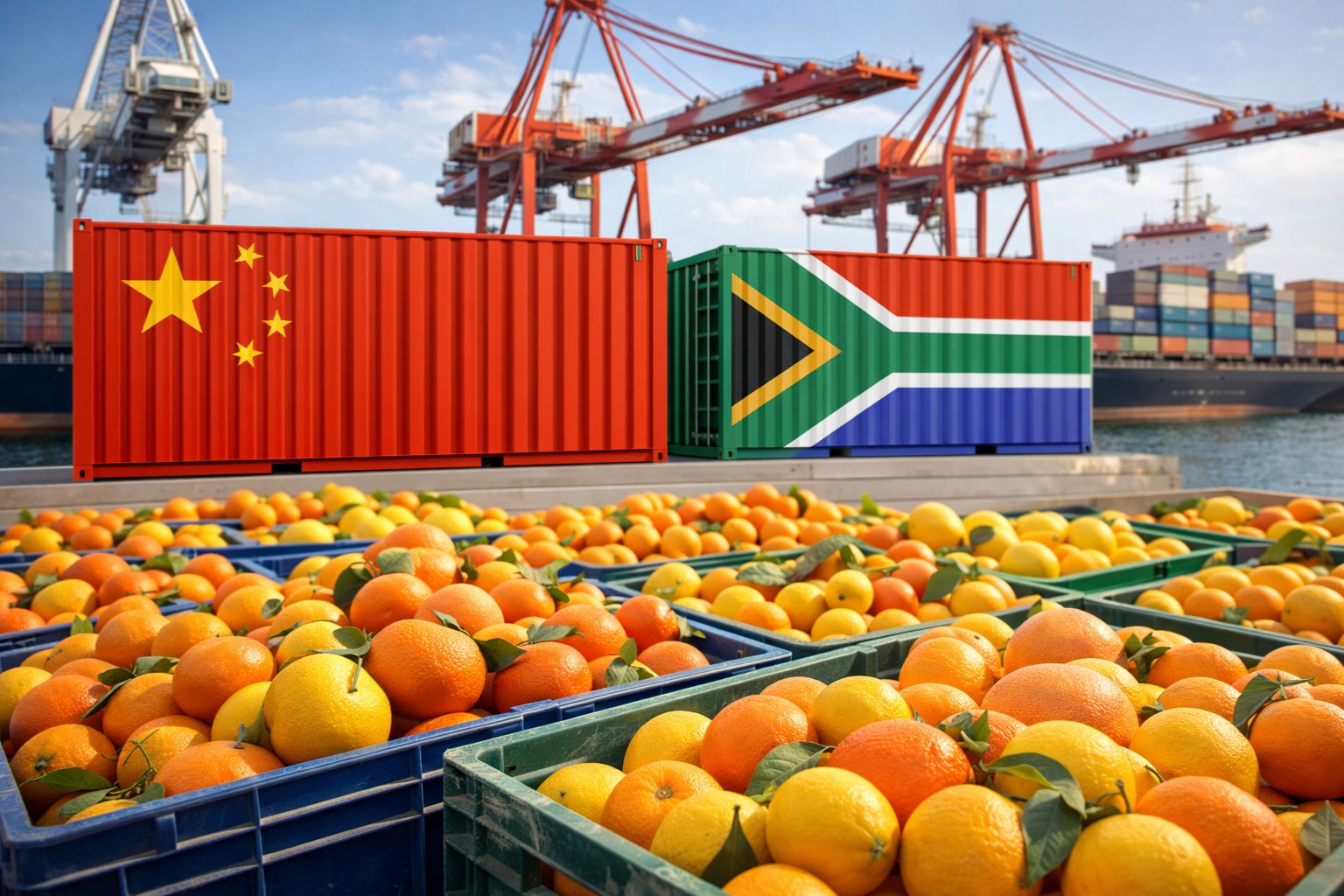

China and South Africa have signed an agreement to change phytosanitary requirements for the cold treatment of citrus fruits, reducing costs for producers and exporters. In 2025, South Africa exported 11.5 million boxes of citrus to China, and the sector surpassed $2 billion in export revenue for the first time.
The China has just opened its doors even wider to South African citrus. The two countries have reached an agreement that changes the phytosanitary requirements for the cold treatment of fruits, a technical change that, in practice, significantly reduces costs for South African producers and exporters and ensures that higher quality fruits reach Chinese consumers. The Chinese market, with 1.4 billion people, represents a scale opportunity that few countries can ignore, and South Africa is positioning itself to capture a larger share of this potential with citrus that already generates billions of dollars annually.
The agreement goes beyond citrus. Previously, South Africa had already gained expanded access to the Chinese market for stone fruits, including apricots, peaches, nectarines, plums, and prunes, through a free trade agreement. In 2025, South Africa’s citrus exports to China reached about 11.5 million boxes, representing approximately 6% of the total exported by the country. The Chinese ambassador to South Africa, Wu Peng, described the timing as opportune: “With the enormous Chinese market, our cooperation has great potential and bright prospects.”
What the agreement between South Africa and China changes in practice
According to information from the portal TV Brics, the central point of the agreement is the change in phytosanitary requirements for the cold treatment of citrus exported to China. In the export of fresh fruits, cold treatment is a requirement aimed at eliminating pests before the products reach the importing country, and the parameters of this treatment, including temperature, duration, and monitoring method, directly determine the logistical cost of the operation. Stricter or less efficient requirements increase costs and can compromise the quality of the fruit.
-
Chinese Farmers Develop “Blanket Greenhouses” to Grow Vegetables in Extreme Winter Without Heaters

-
Centuries Before Modern Greenhouses, English Gardeners Used Horse Manure to Grow Pineapples in Cold Climates

-
Sugarcane Cultivation in India: A Symbol of Water Stress and Environmental Strain Amidst Global Demand for Sugar and Green Fuel
-
Innovative Farm in Northeastern Brazil Combats Drought with Advanced Techniques, Aiming for 10,000 Liters of Milk Daily Production


With the new agreement, South African producers will be able to meet China’s requirements with procedures that cost less and better preserve the quality of citrus during transport. This means that fruits arrive at the Chinese consumer in better condition, at a more competitive price, and exporters maintain healthier profit margins. For a sector that already exports 193 million boxes per year and generates 140,000 direct jobs in South Africa, any cost reduction multiplies its economic impact.
The size of the Chinese citrus market that South Africa wants to conquer
The 11.5 million boxes that South Africa exported to China in 2025 represent only 6% of the total exported by the country, indicating that the Chinese market still has a lot of room to grow. China is the largest consumer of fruits in the world, and the demand for high-quality citrus grows as the Chinese middle class expands and seeks imported products with standards superior to domestic production in certain categories.
Ambassador Wu Peng highlighted that the agreement “comes at an opportune moment, as the South African citrus harvest season has recently begun and is going very well.” For China, diversifying sources of fresh fruit imports is a matter of both food security and offering variety to consumers, especially at a time when trade tensions with other suppliers make partnerships with Global South countries more strategic.
The weight of the citrus industry for the South African economy
The citrus industry is one of the pillars of South African agriculture. In 2025, Southern Africa exported about 204 million boxes of citrus, of which approximately 193 million were of South African origin. For the first time in history, export revenues from the sector exceeded $2 billion (about R$ 10 billion), a milestone that demonstrates the consistent growth of an industry that has become a global benchmark.
The impact goes beyond export numbers. According to the South African Citrus Producers Association, the sector generates about 140,000 direct jobs on farms and packing companies, in addition to sustaining thousands of indirect jobs in logistics, export services, and international distribution. For a country with a historically high unemployment rate, the citrus industry acts as a driver of economic inclusion, especially in rural areas where job alternatives are limited.
What the agreement means for the trade relationship between China and South Africa
The citrus agreement is yet another chapter in a trade relationship that has been deepening between the two countries. China is South Africa’s largest trading partner, and agricultural agreements strengthen a bond that goes beyond mineral commodities such as gold, platinum, and iron ore, products that traditionally dominate South Africa’s export agenda. Diversification into fresh and processed fruits broadens the relationship base and reduces dependence on a single sector.
For China, the partnership is also strategic. Ensuring reliable sources of fresh food is a priority for a country that needs to feed 1.4 billion people, and South Africa offers a combination of quality, volume, and complementary seasonality that few suppliers can match: when it is winter in the northern hemisphere and citrus production declines in Europe and North America, South Africa is in the midst of its harvest season.
What Brazil can observe in this movement between China and South Africa
For Brazil, which is one of the largest citrus producers in the world, the agreement between China and South Africa deserves attention. The reduction of phytosanitary costs for South African exporters makes South African citrus more competitive in a market that Brazil also aims for, and any advantage gained by a direct competitor can mean lost ground for Brazilian production.
China represents a market of dimensions that justify intense diplomatic and commercial efforts. With 1.4 billion consumers and an expanding middle class, the country is the prize that all agricultural exporters in the world are competing for. The South African agreement shows that market opening in China does not happen by inertia: it requires technical negotiation, phytosanitary adjustments, and diplomatic commitment. For Brazil, the lesson is that those who do not negotiate actively give way to those who do.
China and South Africa have reached an agreement that reduces costs in the export of citrus to a market of 1.4 billion consumers. Do you think Brazil should do something similar to secure space in the Chinese market? Leave your opinion in the comments.