






 Portuguese
  Spanish


The almost intact tomb of Tutankhamun created one of the most famous legends in archaeology, but science points to more concrete explanations for the mystery.
The opening of Pharaoh Tutankhamun’s tomb in 1922, in the Valley of the Kings, Egypt, marked the history of world archaeology.
The discovery was led by archaeologist Howard Carter, funded by Lord Carnarvon, and drew attention for revealing a practically intact tomb.
Shortly after, some deaths linked to the expedition began to fuel rumors of a supposed ancient curse.
-
Agatha Christie: More Than Mysteries, Her Letter to Pope Paul VI Helped Preserve the Latin Tridentine Mass

-
Pristine Brazilian Beach Becomes Ocean’s ‘Drain’ as Currents and Tides Bring Plastic and Waste from Thousands of Miles Away to the Northeast Coast.

-
Woman Finds Six Rare Pink Grasshoppers with Genetic Mutation While Picking Raspberries in Her Garden
-
Colossal Railway Connecting 11 Cities Begins Operations in UAE, Aiming to Transport 36 Million People by 2030 with 13 Trains Carrying 400 Passengers Each.


Since then, the so-called curse of Tutankhamun has come to mix history, fear, coincidences, and scientific explanations.
How the curse of Tutankhamun gained strength
The fame of the curse grew mainly after the death of Lord Carnarvon on April 5, 1923.
According to historical records cited by sources like National Geographic, Carnarvon suffered complications after an infection caused by a mosquito bite.
The coincidence between his death and the opening of the tomb was enough to fuel headlines in several countries.
The story gained popular strength and came to be treated as one of the great mysteries of Ancient Egypt.
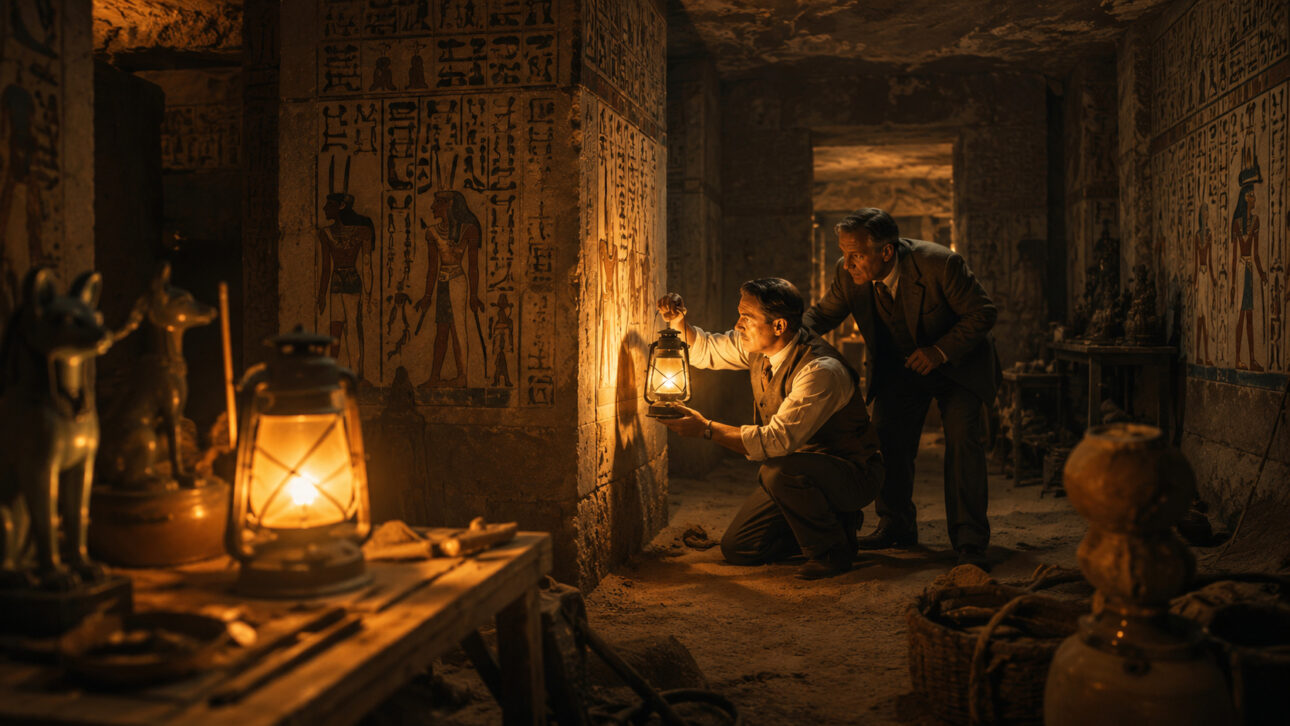
Science points to risks inside ancient tombs
Researchers began to analyze environments closed for centuries or millennia, such as tombs, caves, and burial chambers.
In these places, fungi, bacteria, and resistant spores can remain preserved for a long time.
Among the most cited organisms are fungi of the genus Aspergillus, capable of causing respiratory problems in vulnerable people.
Some bacteria and biological toxins can also pose a risk in ancient, humid, and poorly ventilated environments.
Were deaths caused by bacteria?
Despite suspicions, there is no definitive scientific proof that microorganisms caused the deaths linked to the tomb.
The very history of the expedition weakens this version, as several members lived for decades after the discovery.
In the case of Carnarvon, the most accepted explanation involves infection, fever, and common medical complications.
Science does not confirm a curse, but acknowledges that ancient environments can pose real biological risks.
Microorganisms that attract researchers’ attention
Among the elements investigated in historical tombs, some groups appear more frequently:
- Aspergillus fungi, associated with respiratory risks in people with low immunity;
- Preserved bacteria, which can survive in closed environments;
- Resistant spores, capable of surviving for long periods;
- Biological toxins, produced by some specific microorganisms.
The mere presence of these organisms does not prove that they caused the deaths after 1922.
Why this mystery continues to fascinate the world
The story brings together elements hard to ignore: a young pharaoh, an almost intact tomb, and deaths occurring in sequence.
Books, films, and documentaries have helped turn the curse into a globally known narrative.
Even without supernatural proof, the case continues to intrigue because it combines science, archaeology, coincidence, and popular imagination.
Thus, the curse of Tutankhamun remains alive as one of the greatest symbols of fascination with Ancient Egypt.
What archaeology has learned from the case
Currently, archaeological excavations follow much stricter protocols than those used in the early 20th century.
Protective equipment, laboratory analyses, and environmental studies have become part of researchers’ routine.
These measures reduce biological risks and make entering tombs and ancient sites safer.
In this way, the legend of Tutankhamun helped to reinforce the importance of scientific safety in archaeological discoveries.
Nominal sources consulted: British Museum, Metropolitan Museum of Art, National Geographic, and University of Texas Medical Branch.
After all, do you believe that the curse of Tutankhamun was just a historical coincidence or is there still something unexplained in this story? Share your opinion!


