Portuguese
  Spanish


In Svalbard, solar energy in the Arctic powers an old isolated station, uses snow as an ally, and reduces diesel transported to a roadless region
Where many would think solar energy doesn’t work, 360 solar panels operate in the Arctic, at 78 degrees north, near the North Pole, in an old isolated radio station in Norway.
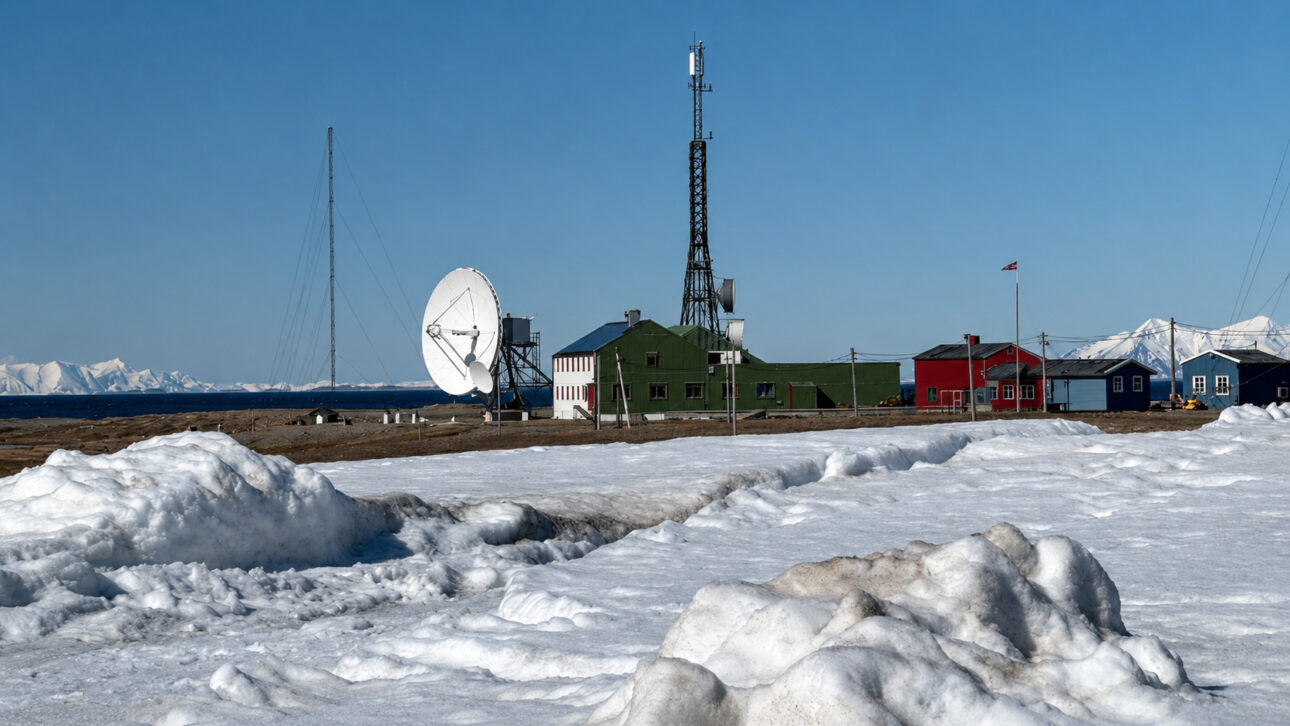
The information was published by The Barents Observer, a Norwegian news site about the Arctic. The Isfjord Radio station is located in Svalbard, far from roads, surrounded by ice in winter, and dependent on difficult logistics to receive equipment and fuel.
The case draws attention because it shows a simple solution to understand: snow reflects light, the panels take advantage of this brightness, and the system helps the location use less diesel in an area where transporting fuel is expensive and complicated.
-
Island in Brazil Innovates by Installing 184 Solar Panels on Urban Lagoon to Generate Clean Energy

-
Japanese Island of 417 Residents to Test Living Half the Year Solely on Solar Power, Reducing Dependence on Diesel Brought by Ship
-
Brazilian Fishermen Use Solar Power to Produce Nearly One Ton of Ice Daily, Preventing Fish Spoilage Before Reaching Market
-
Brazil, known for its river-powered energy, installs solar plant in mountains to boost winter electricity production


The old radio station is located in Svalbard, a frozen region between Europe and the North Pole
Isfjord Radio was established in 1933 to support communications between Svalbard settlements, ships in the northern Barents Sea, and mainland Norway. The structure found a new use and became a remote base in one of the most isolated areas of the Arctic.
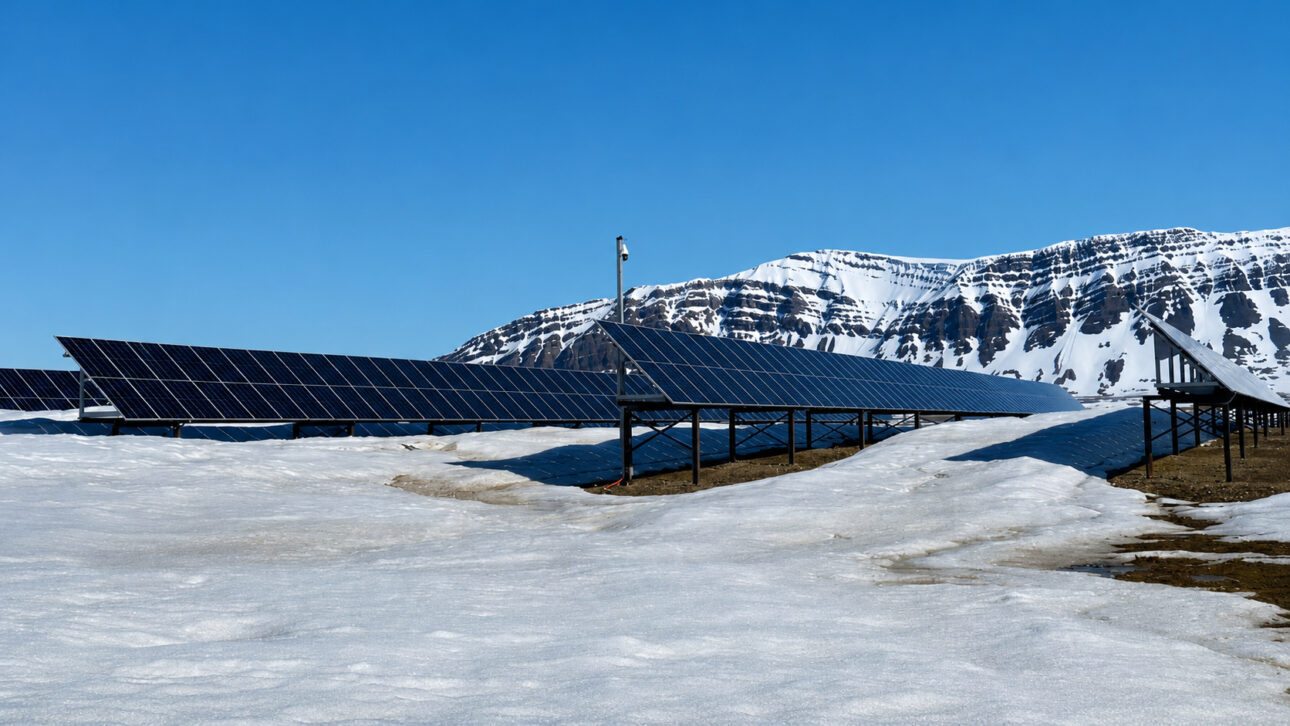
The location is about 50 km from Longyearbyen, on the coast facing the Greenland Sea. There is no common road to reach the station, making any transport a difficult operation.
Therefore, solar energy has a more practical significance than in a typical city. Each part of the electricity generated on-site reduces the need to transport diesel to a region marked by snow, ice, and distance.
The bifacial panels capture light from the front and also from the back
The system uses bifacial panels, a name given to panels that can capture light from both sides. Simply put, they receive direct light from the front and also take advantage of the brightness that hits the ground and reflects back from the rear.
In the Arctic, the snow helps with this account. As it is white, it reflects part of the sunlight to the modules. Thus, during the months with strong sun, the icy landscape itself helps the panels produce more energy.
This detail changes the idea that solar energy only suits hot places. The cold does not prevent generation. The big limitation is during the months of darkness, when the sun stays below the horizon and the panels produce little or nothing.
The structure has 360 ground panels, solar roofs, batteries, and stored hot water
The Barents Observer, a Norwegian journalistic site about the Arctic, detailed the main numbers of the system at Isfjord Radio. There are 360 bifacial panels installed on the ground, forming a system of 198 kW with an expected production of 161,000 kWh per year.
In addition, there are solar panels on the roofs of 3 buildings, with an installed capacity of 96 kW and an estimated generation of 60,000 kWh per year. The energy is not concentrated in a single part of the station.
When there is excess electricity, the system charges batteries. It also heats water stored in 12 tanks, with a total capacity of 12,000 liters, used to help heat the buildings at night or during times of weaker sun.
Without a road, equipment arrives by snow and diesel is no longer the only answer
The absence of a road to Isfjord Radio shows why reducing diesel matters so much. In winter, equipment and supplies need to arrive by snowmobiles or tracked vehicles, made to travel over ice and snow.
Before the new structure, the operation burned almost 200,000 liters of diesel per year to generate electricity and heat. With the solar installation, fossil fuel consumption can drop by 70%.
This number does not mean that diesel has disappeared. The station still needs support when there is little light, fog, clouds, or polar night. Even so, using less diesel already changes the operation in an area where each liter needs to be transported with difficulty.
On May 17, 2025, the panels covered the entire electrical demand for 24 hours
The most remarkable result occurred on May 17, 2025. On that day, the solar panels produced enough energy to cover the entire electrical demand of the base for 24 hours.
This happened during a favorable period for Svalbard. Between the end of April and the end of August, the sun does not set in the archipelago, which increases the solar generation time during the brightest season of the year.
Inge Jørstad, the station’s operations manager, explained that powering the buildings with solar energy works well there because the base closes in the middle of winter when the sun stays below the horizon.
The project shows the potential of solar energy in remote communities, but without exaggerated promises
The experience of Isfjord Radio serves as a test in an extreme region. It shows that solar energy can have real use in the Arctic, especially when combining panels, batteries, and heat storage.
At the same time, the model does not solve all energy challenges in cold places on its own. In regions that need to operate year-round, the lack of sun in winter requires other support solutions.
The main lesson is that solar energy can enter where many people would not expect. Instead of replacing everything at once, it reduces some of the dependence on fossil fuels and helps isolated locations produce energy close to where it will be used.
In the case of Isfjord Radio, 360 solar panels transformed snow, light, and storage into a practical solution for a station surrounded by ice. The project shows that even near the North Pole, the sun can ease the burden of diesel.
The question that remains is simple: if solar energy can help an isolated station in the Arctic, what other challenging places could also better take advantage of the light they already receive?