






 Portuguese
  Spanish


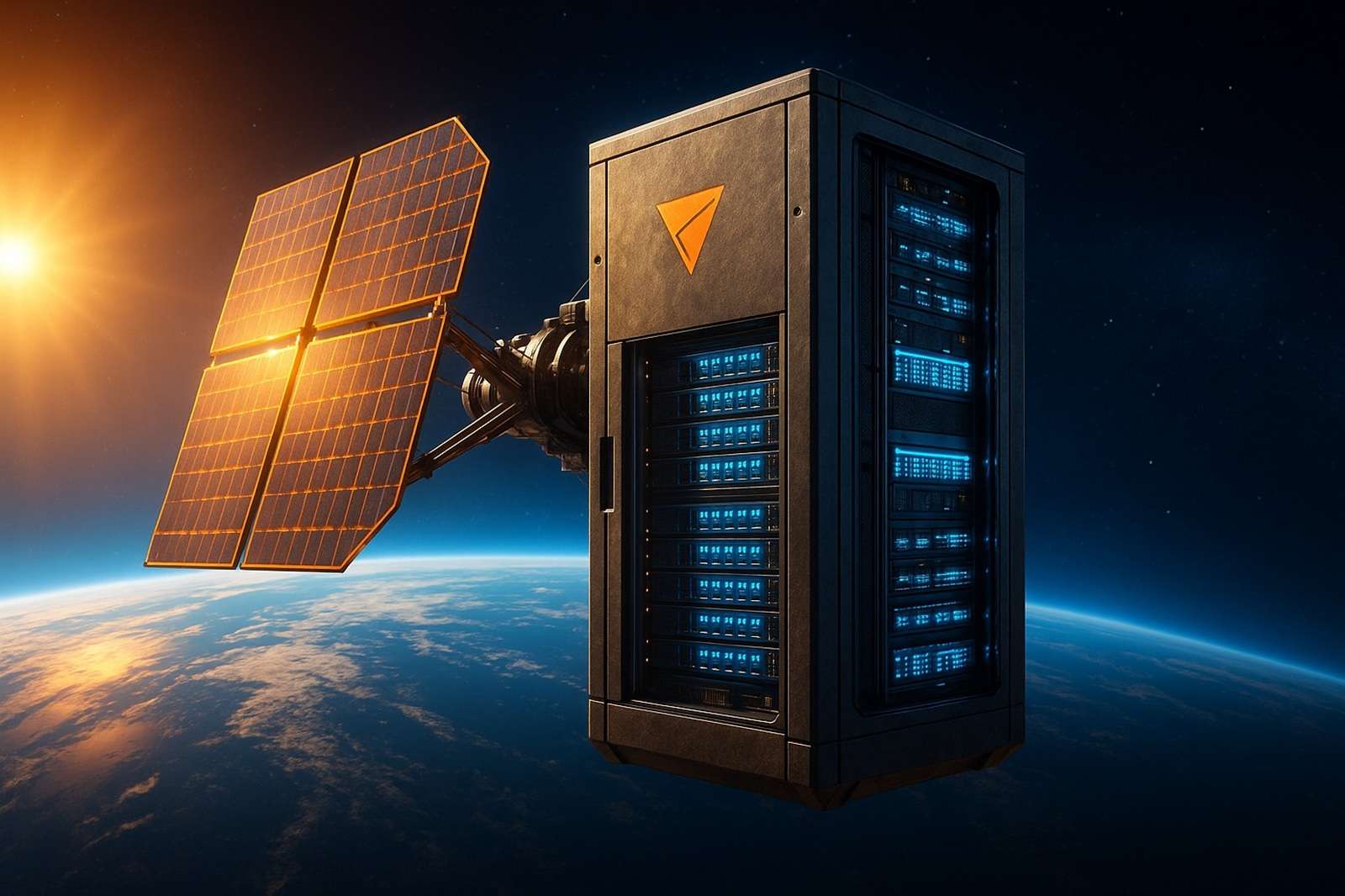


Technology Companies Advance in Projects to Take Data Centers to Orbit, Using Continuous Solar Energy, Natural Cooling, and Satellite Constellations to Sustain the Growing Demand of Artificial Intelligence on a Global Scale
Eyes are turning to space in search of energy capable of sustaining data centers that consume vast resources.
Technology companies are considering building entire structures off Earth, leveraging continuous sunlight and the environmental conditions of orbit to meet the growing demand for computing, especially in the accelerated race for artificial intelligence.
The momentum gained speed after the American startup Starcloud sent a refrigerator-sized satellite equipped with an Nvidia GPU into orbit.
-
Oceanographer Turns Abandoned Fishing Nets from Brazilian Waters into Bags, Creating Jobs and Earning Over $7,000 Monthly

-
Australia deploys poisoned sausages and uses traps, shooting, and fences in a battle against invasive cats that kill over 1.5 billion native animals annually, threatening more than 200 species.

-
NASA Rover Captures “Tired Face” on Mars, Highlighting Human Brain’s Tendency to See Faces in Rock Formations

-
Ancient Stone City in the Desert, Once Home to 30,000, Puzzles Scientists with Nabateans’ Water Mastery 2,000 Years Ago





The chipmaker celebrated the achievement as a “cosmic debut” of the mini data center, reinforcing a race that involves industry giants and entrepreneurs who see space as a logical path for expansion.
Philip Johnston, CEO of Starcloud, stated at a technology conference in Riyadh that it will soon make more sense to build data centers in space than on Earth.
He cited the constant supply of solar energy and the cooling facilities off-planet as decisive factors for this transition.
Google, SpaceX and Others Advance in Plans
The announcement from Starcloud coincided with initiatives from other companies. Google revealed plans to launch test satellites in early 2027 as part of the Suncatcher project.
The news emerged just days after Elon Musk stated that SpaceX should be able to deploy data centers in orbit next year, backed by the Starlink satellite program.
The Starcloud satellite traveled to space on Sunday, propelled by a SpaceX rocket, reinforcing the interconnectedness of different companies’ projects and the growing investment in the sector.
The current plans foresee the use of low Earth orbit satellite constellations, positioned close enough to ensure reliable connectivity. Lasers will communicate between space computers and ground systems, using technologies that researchers already classify as proven.
Krishna Muralidharan, an engineering professor at the University of Arizona who participates in these studies, believes that space data centers could become commercially viable in about a decade. Jeff Bezos, founder of Amazon and head of Blue Origin, estimated that this timeframe could double.
Technical Obstacles, Radiation, and Space Debris
Experts point out essential technical challenges before space data centers can advance. Among them are the damages that high levels of radiation can cause to GPUs, extreme temperatures, and the risk of collisions with space debris.
Christopher Limbach, an assistant engineering professor at the University of Michigan, stated that engineering work will be necessary to address these aspects, highlighting that the issue primarily involves costs, not technical feasibility.
Another critical point involves continuous operation. The space offers the advantage of allowing satellites to synchronize with the orbit of the sun, ensuring constant illumination on solar panels.
This feature attracts companies that already face difficulties powering their data centers on Earth and are therefore investing in nuclear power plants.
Constant Energy and Fewer Terrestrial Barriers
The appeal of space is also related to the absence of common obstacles in constructing terrestrial data centers. Companies avoid disputes over land, regulatory clashes, and community resistance. Advocates also claim that operating in space causes less environmental impact, except for the pollution generated during rocket launches.
The water used to cool a space data center would be similar to that consumed by a space station. These systems use exhaust radiators and recycle a relatively small amount of liquid, reducing the need for large volumes of water.
Limbach sees cost as the major issue. Deploying servers in space directly depends on the ability to transport payloads to orbit, which has historically been expensive. At this point, SpaceX’s reusable mega rocket Starship emerges as a potential game changer. With its large payload capacity, it promises to cut launch costs by at least 30 times.
Cost Reduction Could Accelerate Adoption
Travis Beals, head of the Suncatcher project, stated that high launch costs have always served as a barrier for large-scale space systems. According to him, price data suggests that values could drop by the mid-2030s, making the operation of space data centers comparable to maintaining terrestrial structures.
Limbach emphasized that this is the ideal time to seek new economic paths in space or reinvent old models, boosting an area that is beginning to attract concrete movements from high-tech companies.
Thus, the combination of constant solar energy, advances in orbital connectivity, and reduced launch costs fuels the prospect that data centers in space could become a commercial reality, although they still depend on solutions for significant technical and economic challenges.


Apparently human idiocy knows no bounds.