Portuguese
  Spanish


The original skeleton of Lucy, an ancient relative of humans found in Ethiopia in 1974, is in Abu Dhabi in a rare international exhibition that reignites debates about evolution, fossil preservation, and African control over its own scientific heritage.
The original fossil of Lucy, one of the most well-known discoveries in the history of human evolution, has once again drawn attention outside of Ethiopia. Approximately 3.2 million years old, the partial skeleton is on display at the Natural History Museum of Abu Dhabi, in the United Arab Emirates, in an exhibition that has moved visitors for a simple reason: it is not a replica.
The report published by g1 on Friday, July 3, 2026, shows that Lucy’s presence in the museum has provoked silence and emotion among visitors. The impact comes from the contrast between the reduced size of the skeleton and the scientific significance of its discovery.
Lucy belongs to the species Australopithecus afarensis, a group of ancient human relatives that lived in East Africa millions of years before the emergence of Homo sapiens. The discovery helped show that walking on two legs came before the increase in brain size in the human lineage.
-
Plow Uncovers 50 kg Iron Meteorite in Wisconsin Farm, First of Its Kind in Dane County After 15 Years Hidden

-
Starlink’s Direct-to-Cell Internet Takes Major Step Forward in Brazil with Regulatory Approval, Partnership with Carriers Needed for Antenna-Free Service

-
Brazilian Recycling Company Overcomes $200,000 Debt to Process 360 Tons of Plastic Monthly and Produce 27,000 Items Daily

-
The More You Love Someone, the Sleepier You Feel Around Them: Science Explains Why the Body Relaxes and Feels Safe with a Loved One





The loan also raises another discussion. The fossil’s journey occurs at a time when African countries have begun to demand greater control over their fossils, archaeological collections, and historical objects, many of which have been studied for decades far from their places of origin.
The detail that surprises visitors is that Lucy is not a museum copy
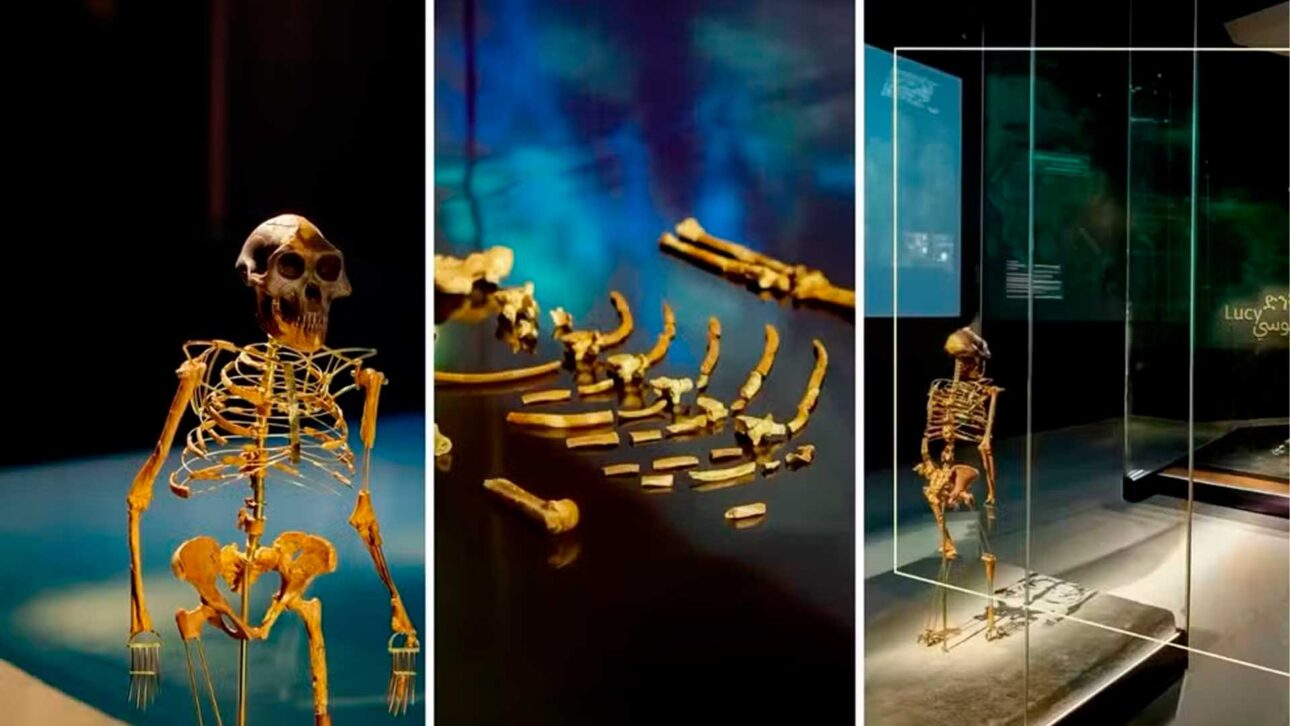
Inside the Abu Dhabi gallery, Lucy appears under controlled lighting and in a showcase prepared to preserve extremely fragile bones. According to the newspaper The National, the fossil is displayed in the area called The Human Story and was loaned by the Ethiopian Heritage Authority, an organization linked to Ethiopia’s heritage.
The surprise of many visitors comes precisely from the authenticity. In museums, the public is usually shown replicas of famous fossils, molds produced to reduce the risk of damage to the originals. In the case of Lucy, Abu Dhabi received the real bones, making the exhibition rare.
The fossil preserves about 40% of the skeleton, a high proportion for such an ancient hominid. Even incomplete, it includes fundamental parts to understand how Lucy moved, among them bones of the pelvis, spine, and legs.
Found in 1974, Lucy changed an old idea about human evolution
Lucy was discovered on November 24, 1974, in the Hadar region, in the Afar Triangle, in northeastern Ethiopia. The find was made by an international team led by paleoanthropologist Donald Johanson, in an excavation that became a world reference.
According to the Cleveland Museum of Natural History, the team found about 40% of the skeleton and later confirmed that the fossils were approximately 3.2 million years old. At the time, Lucy was the most complete fossil of an ancient human relative ever identified.
The scientific name of the specimen is AL 288-1, but the nickname Lucy became known worldwide. It came from the song “Lucy in the Sky with Diamonds” by the Beatles, which was playing at the team’s camp on the night of the discovery. In Ethiopia, she is also called Dinknesh, an Amharic term generally translated as “you are wonderful.”
The central point of the discovery was not just the age of the fossil. Lucy showed that bipedal locomotion, that is, the ability to walk upright on two legs, was already present before the brain growth that would mark later human species.
The science behind the bones shows a small but decisive body
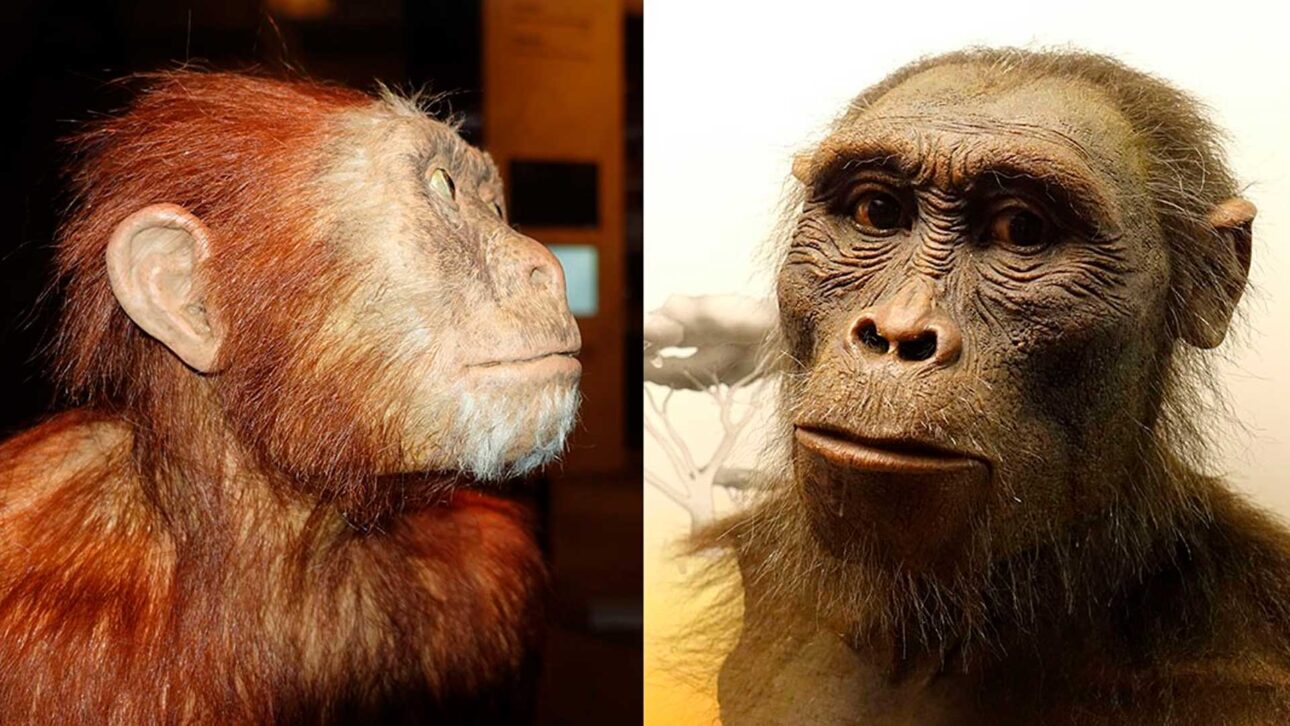
The Natural History Museum in London describes Australopithecus afarensis as a species with a small body, reduced brain, and a mix of features similar to humans and great apes. Lucy would be about 1.05 meters tall and approximately 28 kilograms, with a structure adapted to upright walking, but still showing signs of ability to climb trees.
This set helps explain why the fossil continues to be so cited in books, documentaries, and biology classes. Lucy was not human in the modern sense. Even so, her bones helped scientists reconstruct a decisive stage of evolution.
The position of the pelvis, the shape of the knees, and the structure of the spine indicated a posture closer to upright walking. At the same time, relatively long arms and other body features suggested that she still maintained a strong connection with wooded environments.
This combination took human evolution out of a simple narrative. Instead of a straight line from “ape” to modern human, the fossils point to a tree full of branches, parallel species, and different adaptations happening simultaneously.
The trip to Abu Dhabi was kept secret until the final adjustments of the exhibition
Lucy’s journey to Abu Dhabi required a delicate operation. According to University College London, a small team worked for months on logistics, transport security, and environmental conditions of the showcase before the opening of the Abu Dhabi Natural History Museum in November 2025.
Each bone was packed in special cases, with custom-made supports to reduce any risk of displacement or damage. Technicians from the Ethiopian Heritage Authority and the National Museum of Ethiopia participated in the process in Addis Ababa.
After arriving in the United Arab Emirates, Lucy remained out of public view while final checks on security, temperature, humidity, and gallery assembly were conducted. Curator Sahleselasie Melaku from the National Museum of Ethiopia was responsible for carefully positioning the bones in the showcase.
Lucy’s return to Addis Ababa is scheduled for July 2026. Until then, the exhibition serves as a scientific and diplomatic showcase for Ethiopia and the United Arab Emirates.
Leaving Ethiopia has always generated caution, and recent history helps to understand why
Lucy almost never leaves Ethiopia. Between 2007 and 2013, the fossil participated in a tour across the United States, but the trip received criticism from scientists concerned about the conservation of the bones. The fear was that transport, vibration, environmental variation, and public exposure would increase risks for an irreplaceable material.
In 2025, Lucy and Selam, another famous fossil from the same Ethiopian region, were also sent to the National Museum of the Czech Republic in Prague. The institution reported that the exhibition took place from August 25 to October 23, 2025 and marked the first public display of these original fossils in Europe.
These trips show a change in Ethiopia’s stance. The country remains the owner and guardian of the fossils but has started using occasional loans as a way to increase visibility, strengthen institutional agreements, and bring its scientific history to audiences that might never visit Addis Ababa.
There is also a political layer. For a long time, African fossils were removed, studied, and exhibited in scientific centers in Europe and the United States. Now, the narrative changes when the country of origin itself decides when, where, and how its heritage will be seen.
The debate about Lucy is not over, because the human tree continues to change
Lucy’s presence in Abu Dhabi also comes at a time of scientific review. The fossil remains central to understanding bipedalism, but researchers have debated for years whether Australopithecus afarensis was a direct ancestor of modern humans or a close relative on another evolutionary branch.
In November 2025, the Natural History Museum in London highlighted recent studies on fossils of Australopithecus deyiremeda, found in Ethiopia, which may alter Lucy’s position in the evolutionary tree. The hypothesis still requires more fossils and analysis, but it reinforces that human history is more branched than was imagined in the 20th century.
This does not diminish Lucy’s importance. On the contrary. The fossil remains one of the pieces that forced science to abandon overly simplistic explanations about human origin.
By temporarily leaving Ethiopia and occupying a showcase in Abu Dhabi, Lucy once again fulfills this role. She does not answer alone where we came from, but forces the public to face a bigger question: how much of our history still depends on small, fragile fossils kept for millions of years in the African soil?
Do you think it is correct for original fossils like Lucy to travel for international exhibitions, or should they remain only in the country of origin? Leave your opinion in the comments and join the discussion.