Portuguese
  Spanish


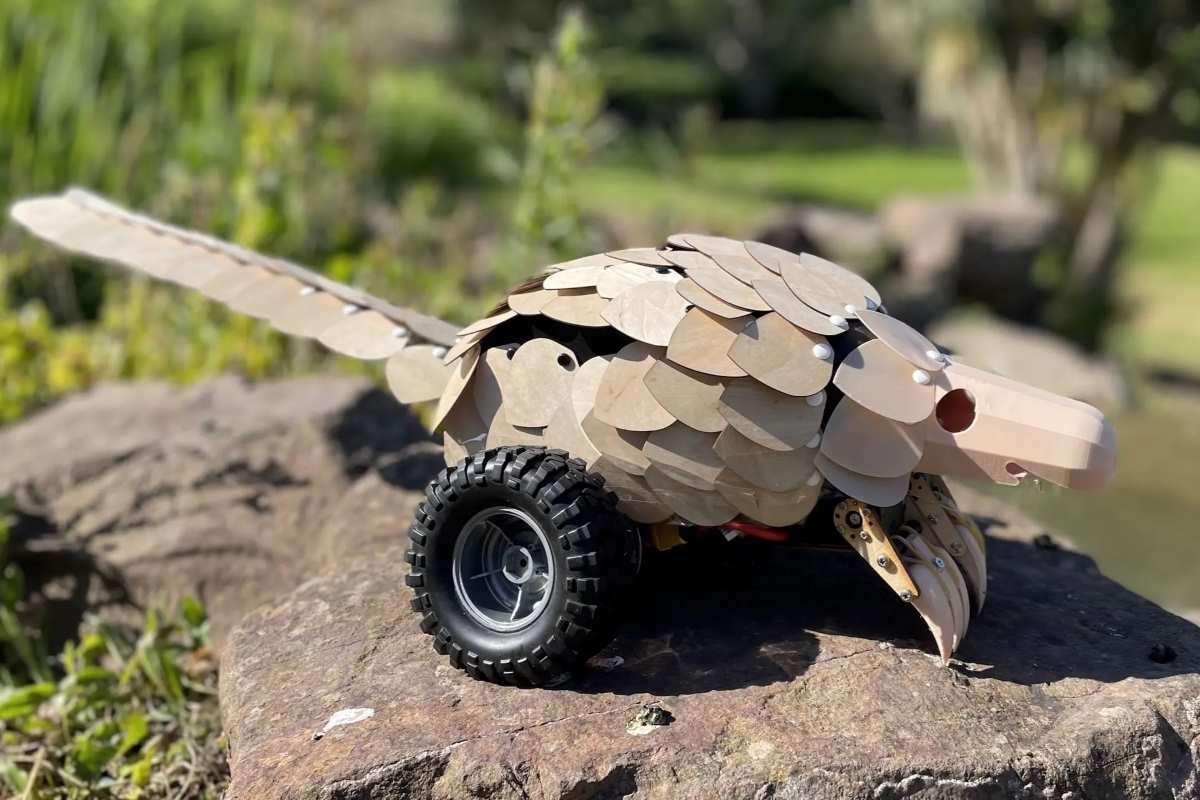

A Robot Created By A Student Is Able To Plant Trees Automatically, Working 24 Hours A Day Efficiently.
With an innovative idea, Dorothy developed a robot capable of planting trees efficiently and automatically, an important step to combat deforestation and promote sustainable development.
A robot inspired by the pangolin, named “Plantolin”, was the grand winner of a robotics competition. Designed by engineers from the University of Surrey in the UK, the original concept was born from Dorothy’s creativity, a high school student from California, USA.
The Inspiration From A Pangolin To Plant Trees
The pangolin, an animal with a peculiar appearance and scales resembling a pineapple, fascinated Dorothy ever since she started studying it. Although they are not fast or fierce animals, pangolins have a charming way of walking and spend much of their time digging for food.
-
The industrial waste that even recyclers didn’t want has gained value in the interior of Bahia: two entrepreneurs invested R$ 2.8 million to transform 350 tons per year of foam, rubber, and plastic into boards that can replace wood and MDF.

-
What is a red flashlight used for, after all? See why it is so commonly used at night.

-
He has never read a line of code, but he already knows how to work: the French company UMA presented in Paris the Northstar, its first AI-powered humanoid robot designed for factories and warehouses, capable of copying tasks just by observing an employee in action.

-
A young Kenyan engineer collects plastic waste from the streets and transforms it into robots that translate physics lessons into sign language in real-time, a machine made with old bottles that teaches what was missing to deaf children left out of science.



It was this characteristic that inspired Dorothy to create a robot that could mimic this behavior, digging the soil and planting seeds.
During her classes in high school, Dorothy learned about the devastating effects of deforestation on climate change and the urgency of restoring forests around the world.
The Plantolin emerges as a technological solution to this problem, aiming to plant trees practically and effectively, even in urban areas where animals cannot perform this function naturally.
The Plantolin Project
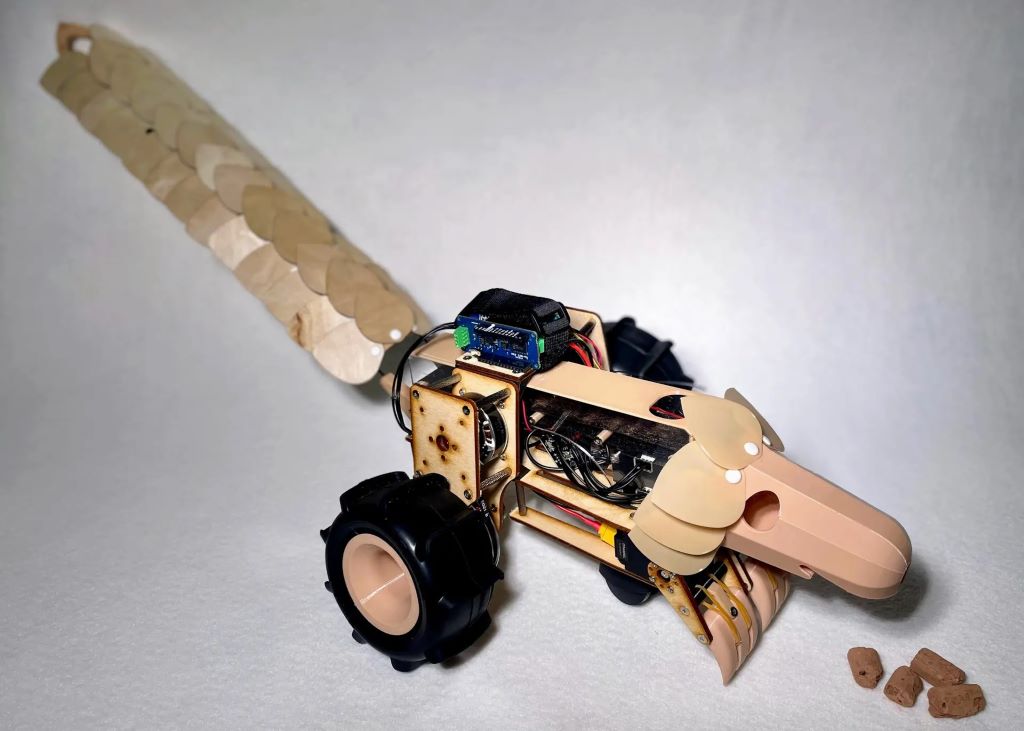
The Plantolin was developed at the University of Surrey, with the collaboration of Dorothy and a team of engineers led by Dr. Robert Siddall, increasing efficiency in planting trees.
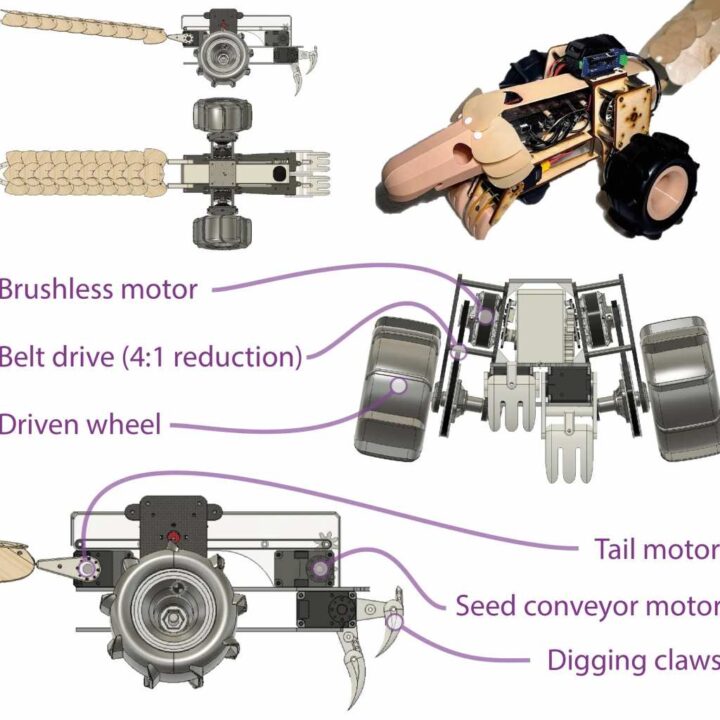
The robot moves on two large wheels and has a long articulated tail that helps maintain its balance on uneven terrain, similar to the balance of a pangolin. The robot’s body is covered in plywood scales, imitating the scaly appearance of the animal.
The “claws” of the Plantolin are key to its function: they dig holes in the soil, where the robot deposits small seed bombs, consisting of a mix of yew seeds and soil.
This process is inspired by how large animals disperse seeds in nature as they move through vegetation.
However, in urban areas, this type of natural dispersal is less common, making the Plantolin a crucial tool for reforestation in these regions.
How The Plantolin Works
The Plantolin is an efficient machine, easy to operate, and designed to function automatically. Here are the key details of how it works:
- Wheeled Movement: The robot moves on two large wheels, allowing it to glide smoothly over the ground, similar to a bicycle. This mobility ensures that the Plantolin can navigate various terrains and reach different planting areas.
- Tail for Balance: The long tail of the Plantolin helps maintain balance while it moves. Just as many animals use their tails for stabilization, the Plantolin uses this structure to ensure it does not lose stability when moving over rough terrain.
- Claws for Digging: Inspired by pangolins, the claws of the Plantolin are designed to dig holes in the soil effectively. Once the hole is dug, the robot is ready to plant.
- Seed Bombs: The Plantolin places small “seed bombs” in the holes it digs. These bombs contain a mix of tree seeds and soil, facilitating the germination and growth process of the seedlings. The choice of yew seeds, in this project’s case, has particular ecological importance for biodiversity.
- Planting in Urban Areas: In forested areas, animals naturally help with planting by moving through the soil and dispersing seeds. However, in urban environments, where this process does not occur, the Plantolin fills this gap, efficiently planting trees on a large scale.
The Importance Of Plantolin For The Future
The Plantolin stands out not only for its technological innovation but also for its commitment to environmental sustainability. The robot’s ability to plant trees in urban and rural areas automatically directly contributes to ecosystem recovery and climate change mitigation.
Dr. Robert Siddall, one of the engineers responsible for the project, emphasizes how nature can be a great source of inspiration for solving environmental problems. “The brilliant design of Dorothy reminds us that we can find solutions to big problems by looking at nature, ” he remarked.
With the success of the Plantolin at the Natural Robotics Competition, it is hoped that this tree-planting robot will inspire more innovations in the field of ecological technology, helping to create a greener and more sustainable planet for future generations.