Portuguese
  Spanish


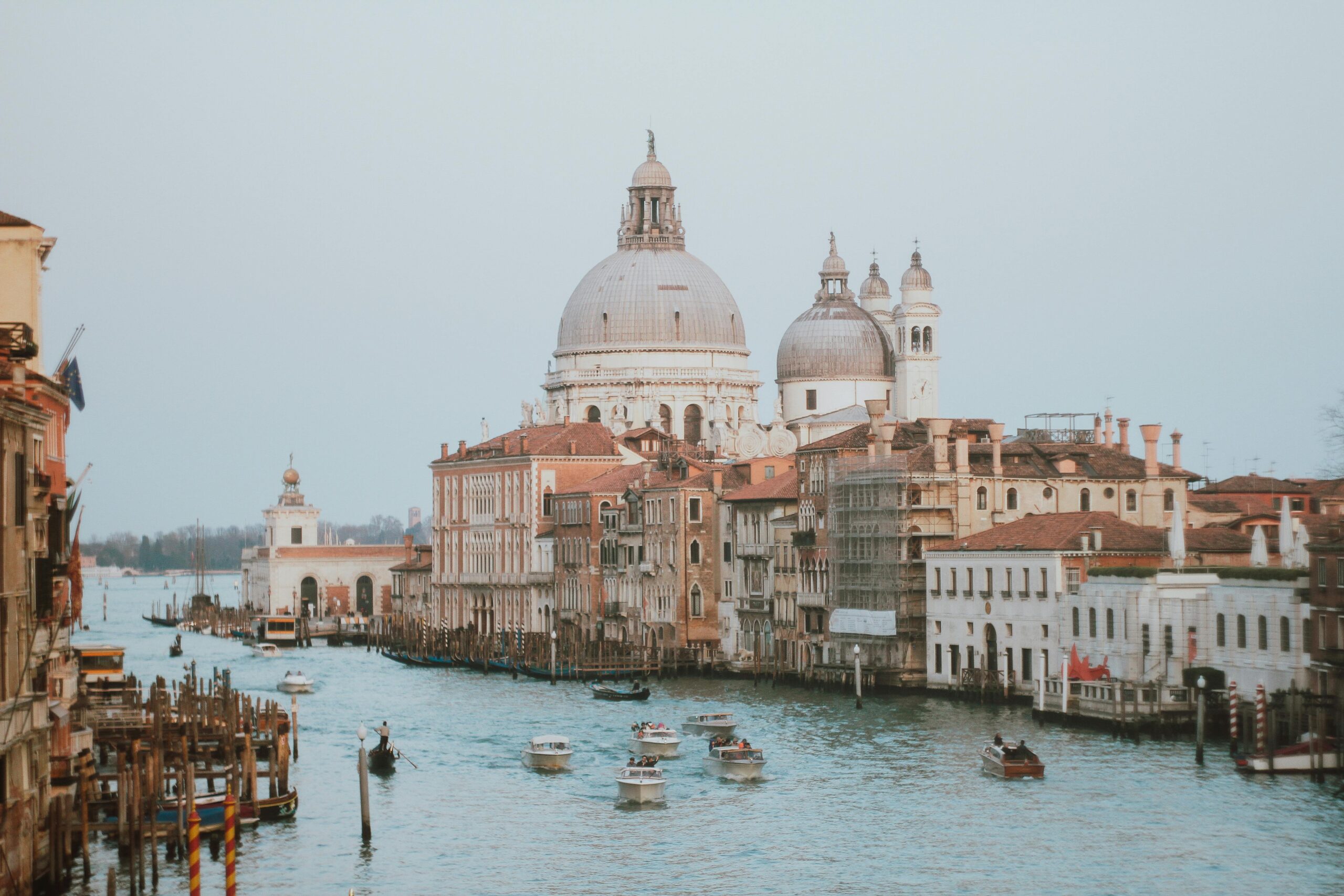


Researchers detail engineering plans and the possibility of abandoning the historical city in light of the acceleration of sea level rise.
The iconic city of Venice, a UNESCO World Heritage site, faces an existential threat due to the rise in sea level.
A new study conducted by an international team of oceanographers, led by Piero Lionello from the University of Salento, examined four radical strategies to prevent the “floating city” from disappearing under the waters in the next three centuries. The proposed solutions range from massive engineering interventions to total surrender, reflecting the severity of the climate crisis in the region.
Currently, Venice relies on the MOSE system, a set of movable barriers that cost about 6 billion euros and became operational in 2022. However, researchers warn that this technology may become insufficient in light of the most pessimistic projections of global warming. To ensure the survival of the urban structure, scientists presented alternatives that require immediate planning, given that large infrastructure projects can take up to 50 years to complete.
-
China Develops Custom 140-Ton Electric Mining Truck with 770 kWh Swappable Battery, Deploys 290 Units in Xinjiang’s Largest Zinc Mine

-
Meta to Launch Arena, a New Prediction App Targeting 3.56 Billion Users, Competing with Polymarket and Kalshi

-
Scientist Challenges Famous Human Evolution Theory, Argues Homo Sapiens Evolved Gradually Over Thousands of Years
-
15-Year-Old American Builds Ocean Generator with PVC Pipe and 3D-Printed Propeller for $12, Wins National Prize, Presents at White House, and Makes Forbes 30 Under 30 List




Isolation strategies: ring dikes and closed lagoon
One of the options discussed in the study is the construction of ring dikes around the most critical areas of Venice. This solution would involve creating circular barriers about 3 meters high, isolating the main islands from the fluctuations of the lagoon waters.
Although effective in protecting monuments against a rise in the sea of up to 6 meters, this measure would drastically alter the aesthetic and cultural connection of the city with its aquatic surroundings, impacting tourism and the ecosystem.
Another even more robust alternative is the permanent closure of the Venetian Lagoon through the complete sealing of its entrances and the raising of the barrier islands. With walls about 5 meters high, this strategy could protect the city against a rise in sea level of up to 10 meters. The environmental cost, however, would be the total sacrifice of the lagoon ecosystem, requiring large-scale pumping and sewage treatment systems to prevent water stagnation and ensure habitability.
Maintenance of the current system and the cost of adaptation
The continuation of the “open lagoon” strategy, which uses the existing movable barriers, is the third option analyzed.
In this scenario, the gates would be activated whenever the risk of flooding reached a certain level, preserving the exchange of water between the lagoon and the Adriatic Sea most of the time. However, with the rise in sea level, the closing of the barriers would have to become increasingly frequent, which could turn the lagoon into a closed environment for months, generating critical problems of oxygenation and pollution.
Experts estimate that engineering options, such as dikes or permanent closure, could cost between 0.5 and 4.5 billion euros, in addition to ongoing operational expenses. The effectiveness of these measures directly depends on controlling global greenhouse gas emissions.
If the rise in sea level exceeds the predicted limits, even the most sophisticated defenses may only delay the inevitable, forcing the city to face increasingly difficult choices.
The retreat option: the end of historic Venice
The fourth and most drastic option presented by scientists is total retreat, which involves the relocation of residents and the dismantling or transport of important monuments to safe locations. Abandoning the historic location of Venice would be a painful and complex process, but it is considered a real possibility if international climate mitigation efforts fail.
This alternative acknowledges that, ultimately, nature may make it technically impossible to maintain the city in its original location.
The study emphasizes that the rise in sea level is a process with great inertia, meaning that waters will continue to rise even if emissions are reduced today. Therefore, the discussion about these strategies is not just theoretical, but an urgent necessity for public managers and the global community.
Saving Venice will require not only billions of euros and cutting-edge engineering but also an acceptance of radical transformations in the identity of the city that the world knows.
Click here to access the study.