






 Portuguese
  Spanish


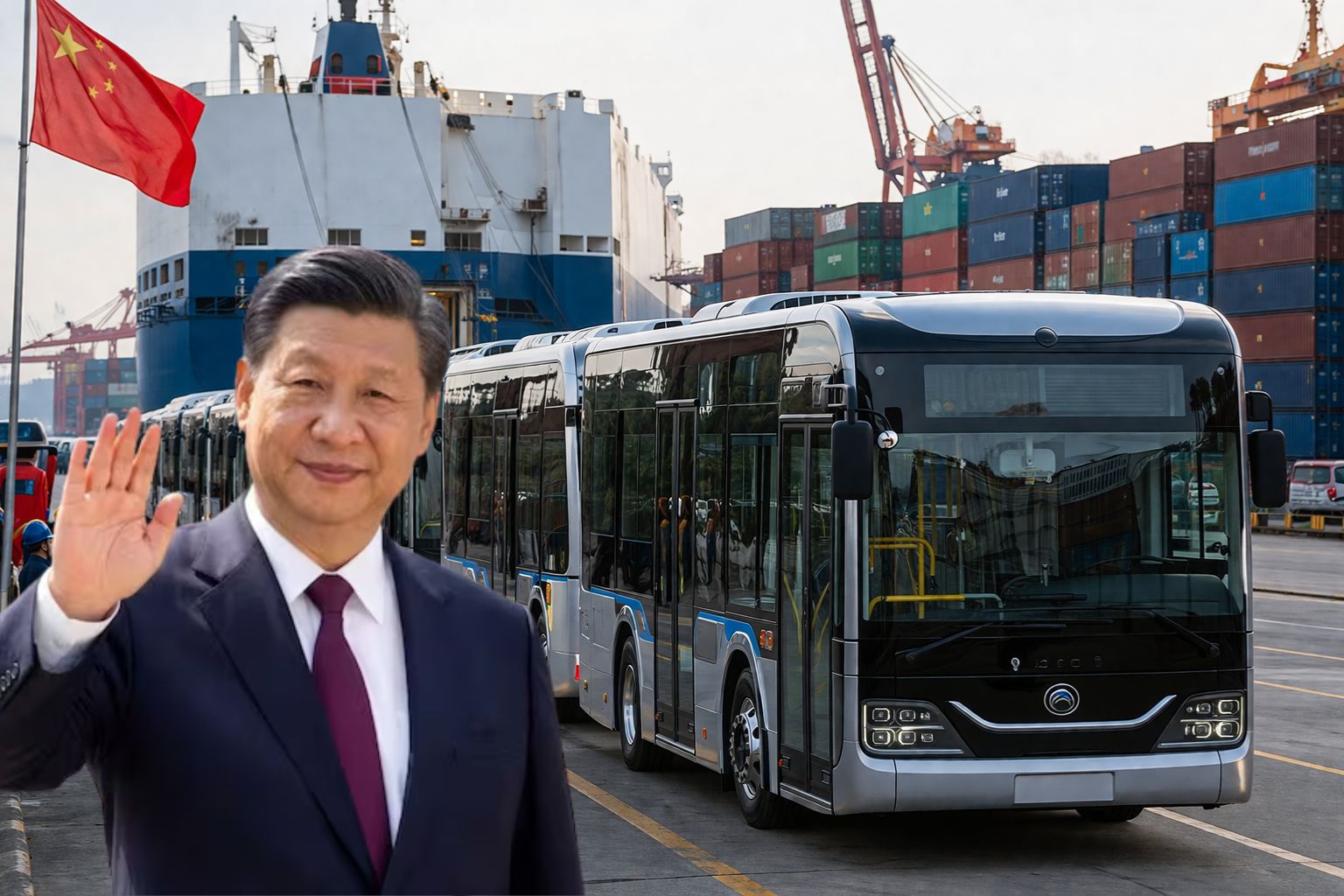


China manufactured 150 GNV buses in just 16 business days and is sending the units to Buenos Aires at a cost between 20% and 30% lower than that of vehicles produced in Argentina. The Chinese manufacturer King Long exports to 150 countries and now puts Argentine body manufacturers on high alert with speeds and prices that the local market cannot match.
The China is about to change public transport in Argentina with an operation that impresses with its speed and price. The Chinese manufacturer King Long produced 150 GNV buses in just 16 business days and is sending them to the City of Buenos Aires, where they will be incorporated into the fleet of the Metropol company. The cost of these buses is between 20% and 30% lower than that of vehicles manufactured in Argentina, according to journalist Jairo Straccia in statements to El Cronista, and the total delivery is expected to occur within 30 days from the acquisition. For local body manufacturers, the message from China is clear: competing in price and speed with the Asian industry is practically impossible.
The operation goes beyond a simple bus sale. China is positioning itself as a supplier of entire fleets of public transport for countries around the world, and Argentina is another market that enters King Long’s export route, a company that already sells to 150 countries. In addition to King Long, another Chinese manufacturer, Yutong, has signed an agreement with the Argentine Nuovobus to produce electric and GNV buses locally, indicating that China does not just want to export but also to establish a permanent industrial presence in Argentina.
How China manages to manufacture 150 buses in 16 business days

The production speed is the most striking data. Manufacturing 150 buses in 16 business days means producing more than 9 units per day, a pace that requires highly automated assembly lines, integrated supply chains, and absolute standardization of components. King Long, the manufacturer responsible for production, operates factories in China with production scales that most Latin American manufacturers simply cannot match.
-
No more TV stuck on the wall: Samsung The Freestyle+, the new projector with over 400 lumens projects on walls, floors, and ceilings, bringing cinema to any corner of the house.

-
A Japanese governor single-handedly stalled the construction of the world’s fastest train for nine years, and only now has he agreed to allow a tunnel excavated at a depth of 1,400 meters.

-
Almost 1 billion euros, two gigafactories, and a million-dollar public investment, Chinese company aims to turn Spanish city into Europe’s new battery hub.

-
Advancement in the industry: Brazilian company creates ultralight material comparable to steel and paves the way for hydrogen cylinders up to 70% lighter, with a direct impact on logistics, the energy industry, and national competitiveness – learn about Forza Composites



In Argentina, the production of a bus can take weeks between body assembly, component installation, and final finishing. The difference lies in the scale: while Argentine manufacturers produce dozens of units per month with semi-artisanal processes, China operates at a massive industrial pace that dilutes fixed costs, reduces the price per unit, and allows delivery times that seem impossible for those used to the local production pace. China’s speed is not a miracle; it is the result of heavy investment in automation and volume that no Latin American market can replicate in isolation.
Why Chinese buses cost up to 30% less than Argentine buses

The price advantage of China over Argentine manufacturers has multiple origins. Production scale is the most important factor: a factory that produces thousands of buses per year for 150 countries can negotiate prices for raw materials, components, and technology that are inaccessible to a manufacturer serving only the Argentine domestic market. Steel, aluminum, engines, electrical systems, and finishes cost less when purchased in gigantic volumes.
In addition to scale, China offers competitive financing that facilitates the purchasing decision. Governments and transport companies acquiring Chinese fleets often obtain more favorable payment terms than those available in the local market, including longer terms and interest rates subsidized by Chinese development banks. For a company like Metropol, which needs to renew 150 buses at once, the combination of lower price, fast delivery, and accessible financing makes China’s offer practically irresistible compared to Argentine alternatives.
The impact of China on Argentine body manufacturers
For the local body industry, the arrival of buses from China is an existential alert. Argentine manufacturers that have historically dominated the supply of vehicles for public transport now face a competitor that produces faster, charges less, and delivers in timeframes that the national industry cannot keep up with. The 20% to 30% price difference is significant enough for bus companies to opt for importation even considering the logistical costs of transoceanic freight.
The scenario places Argentina in front of a dilemma common to several countries supplied by China. Protecting the local industry with tariffs and barriers means paying more for buses and delaying the modernization of public transport. Opening the market to China means obtaining better and cheaper vehicles, but at the cost of industrial jobs and technological dependence on a foreign supplier. The balance between these two paths is a political decision that Argentina will have to make as more Chinese fleets arrive in the country.
China’s Strategy to Dominate Global Public Transport
The operation with Argentina is not an isolated case. King Long, which manufactures the 150 buses sent to Buenos Aires, exports to 150 countries and is positioning itself as one of the leading global companies in the public transport sector, especially in electric and CNG-powered buses. China’s production speed and low costs are attracting global attention, and governments in developing countries see the Chinese offer as an opportunity to modernize fleets without compromising public budgets.
In addition to King Long, Yutong has signed an agreement with the Argentine Nuovobus to locally manufacture electric and CNG-powered buses. This partnership indicates that China is not content with merely exporting ready-made vehicles but wants to establish an industrial presence in the markets it conquers, transferring part of the assembly to the destination country while maintaining control over technology, key components, and design. For Argentina, this could mean local industrial jobs, but also a technological dependency that will be difficult to reverse once consolidated.
What the Arrival of Chinese Buses Means for Argentine Public Transport
For passengers in Buenos Aires, the incorporation of 150 new buses into the fleet brings immediate benefits. CNG-powered vehicles are more efficient, emit fewer pollutants than diesel buses, and produce less noise, improving air quality and the comfort of residents living along urban routes. The lower operational costs of CNG compared to diesel can also translate into more stable fares for passengers, depending on how the operating company passes on the savings.
The modernization of Argentine public transport with Chinese technology reflects a global trend that has already reached Colombia, Chile, Brazil, and dozens of other countries. Each Chinese fleet that goes into operation in a Latin American capital changes the comparison standard for all others, creating pressure for modernization that benefits passengers even in countries that still resist imports. The question is no longer whether Chinese buses will arrive in your country, but when.
China manufactured 150 buses in 16 days and sent them to Argentina at a price up to 30% lower. Do you think Brazil should import Chinese buses or protect the local industry? Let us know in the comments.





A MARCOPOLO QUE SE CUIDE , O BICHO VAI Pegar