Portuguese
  Spanish


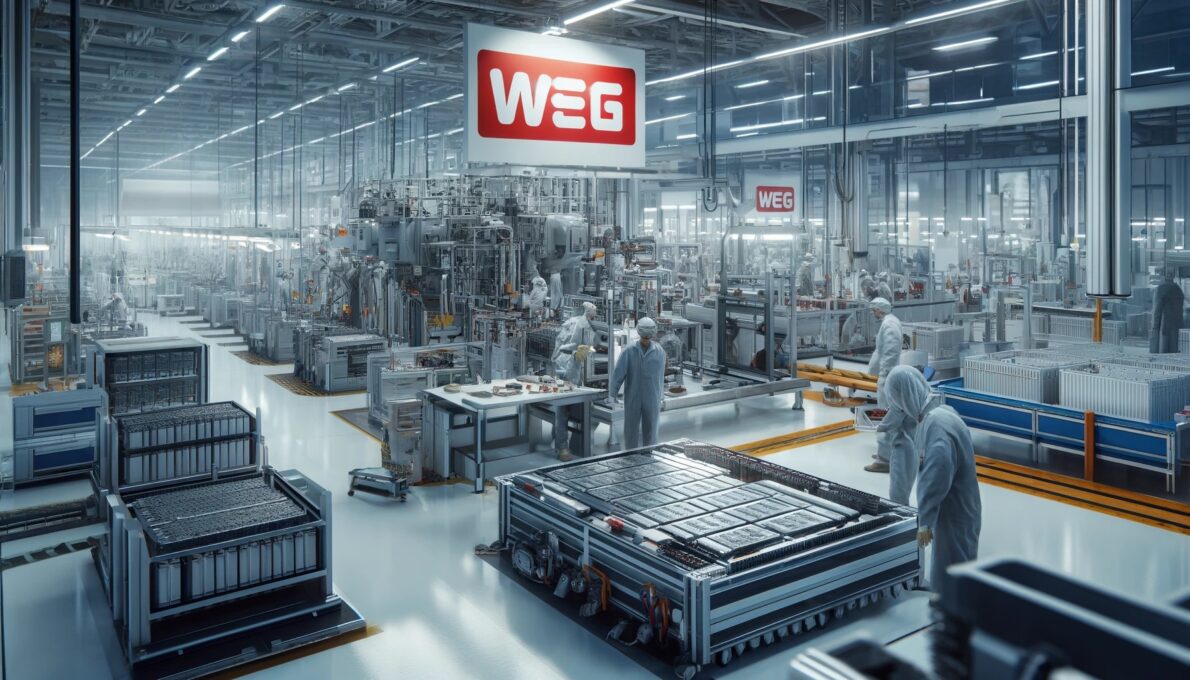


Investment By WEG of R$ 2 Billion Aims to Transform Brazil into a Hub for Electric Vehicle Batteries. Check Out the Details
On Wednesday (30), WEG officially announced an investment cycle of R$ 1.8 billion to produce electric vehicle batteries on a large scale in Brazil. The investment announcement by WEG was made at an event at the Palácio do Planalto, which was attended by President Luiz Inácio Lula da Silva, Vice President Geraldo Alckmin, and other ministers, highlighting the initiative as part of the New Industry Brazil (NIB), launched in January to boost sustainable and technological industrialization by 2033.
Understand the Importance of WEG’s Investment in Electric Vehicle Battery Production
With the NIB, the federal government aims to mobilize R$ 1.6 trillion in investments by 2029, of which 75% should be generated by the private sector, to promote projects that leverage sustainable cities and green mobility.
According to Geraldo Alckmin, this significant volume of investment from WEG and other companies demonstrates the correctness of the focus of the New Industry Brazil, which in this case will strengthen infrastructure and mobility in the country, bringing well-being to citizens while fostering an innovative industry.
-
Volvo’s New Loaders Feature Obstacle Detection, Automatic Braking, and 360-Degree Operator View

-
Chinese Manager Accused of Whipping Worker Sparks Protest by 1,200 Employees at Major Brazilian Factory

-
France Revamps 530 Social Housing Units with Large Balconies and Glass Facades Without Demolishing Existing Buildings

-
10-Year-Old Max Makes History with Paris Fashion Show, Launches Own Brand, Hires Staff, and Sets World Record as Youngest Runway Designer





The partnership between the public and private sectors, especially focusing on electric vehicle batteries, is essential to transform cities, with projects that bring economic development and quality of life to millions of Brazilians.
WEG, known for its global operations in energy generation, transmission, and distribution solutions, is expanding its strategic presence in the electric mobility market with this investment. The company, founded in 1961 in Santa Catarina, operates in over 130 countries and, in the third quarter of 2024, recorded a profit of R$ 1.57 billion and revenue of R$ 9.85 billion.
This growth has been driven by the diversification of its portfolio and the expansion of its international presence, which accounts for about 60% of total revenues.
WEG’s Investment Will Use National Lithium Reserves
In addition to the new focus on electric vehicle batteries, WEG is also investing in technologies focused on generating and transmitting clean energy and providing equipment for global electrical infrastructure, especially in the United States.
In its strategy for Brazil, the company aims to leverage national lithium reserves and other minerals used in battery production, contributing to strengthening a national value chain in the sector.
Currently, most Brazilian mineral resources are still exported; however, WEG’s intention is, with the support of MDIC, to strengthen the domestic market and make electric vehicle battery production more sustainable and less dependent on coal, which is widely used in some countries.
WEG’s Investment Promises to Generate Hundreds of New Jobs
In addition to generating hundreds of job vacancies and fostering economic development, WEG’s investment in electric vehicle batteries aims to utilize Brazilian lithium reserves and other critical minerals for component production.
Currently, a large portion of these resources is exported; however, the goal of the government and the private sector is to strengthen a local battery production chain that reduces dependence on imports and increases sustainability by using renewable energy.
According to MDIC, by promoting electric vehicle battery production in Brazil, the country also plans to position itself as a reference in low-emission technologies, leveraging the use of clean and renewable sources in the production process and promoting the transition to a cleaner energy matrix.
It is worth mentioning that, recently, Pilbara Minerals, the largest hard rock lithium producer in the world and responsible for 8% of the world’s production of this type of mineral, announced plans to establish a lithium base in Brazil.