





 Portuguese
  English
  Spanish
  6 min of reading
  0 comments


Experiment from the University of Manchester published in April 2026 indicates that an ethanol vapor deflagration in the merchant ship’s hold explains the abandonment of the brig found intact east of the Azores in December 1872
The mystery of the mary celeste, a ghost ship found adrift in the Atlantic in December 1872, may finally have been surrounded by science.
According to a report by the magazine Chemistry World, published on April 7, 2026, chemist Jack Rowbotham from the University of Manchester conducted scaled experiments.
The results reproduce the most likely scenario of the disaster.
-
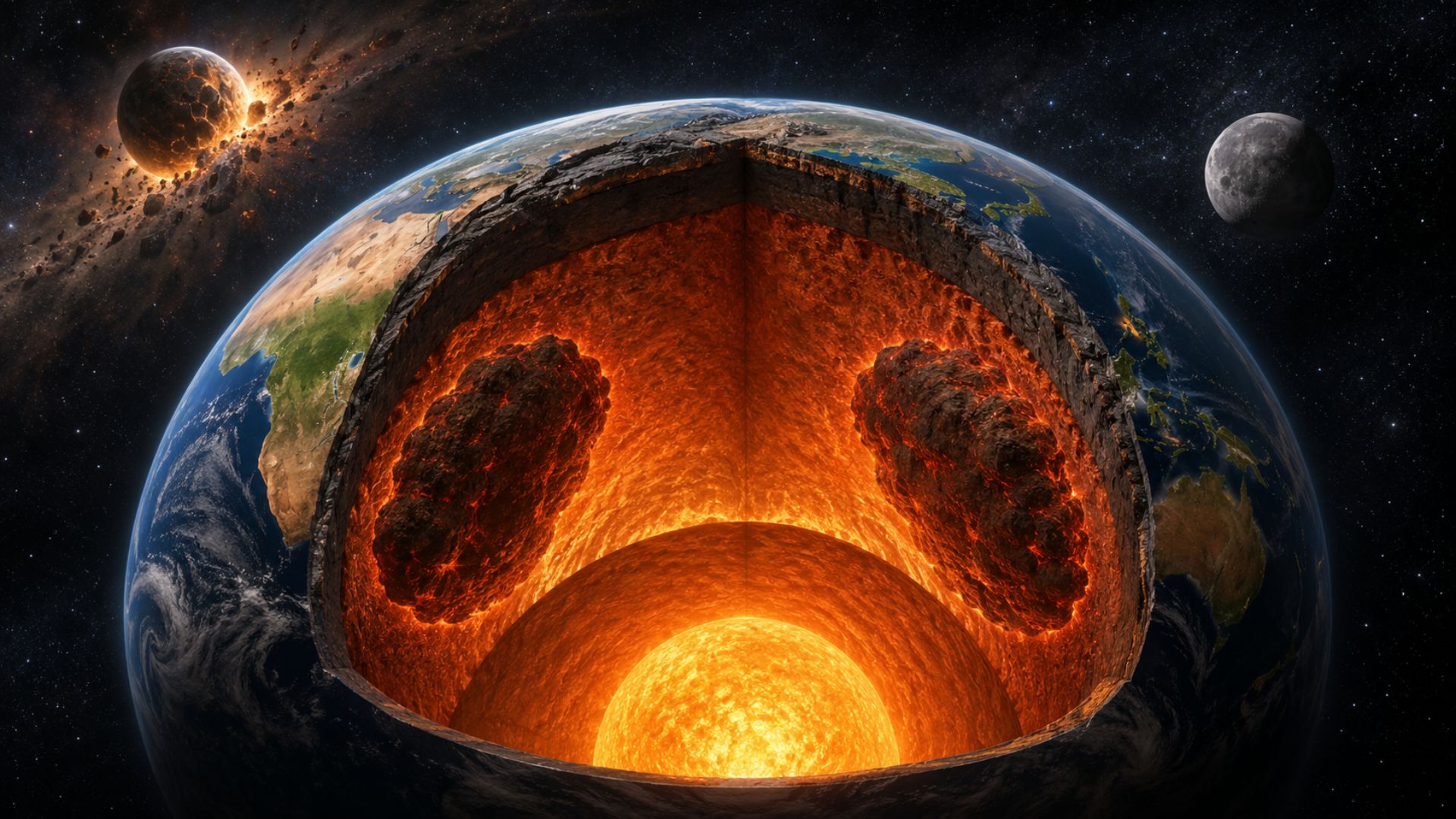
Two gigantic and ancient masses, one beneath Africa and the other beneath the Pacific, have rested at the bottom of the Earth’s mantle for at least 500 million years, and one of the most fascinating hypotheses suggests that they are remnants of the planet that collided with Earth and formed the Moon.

-
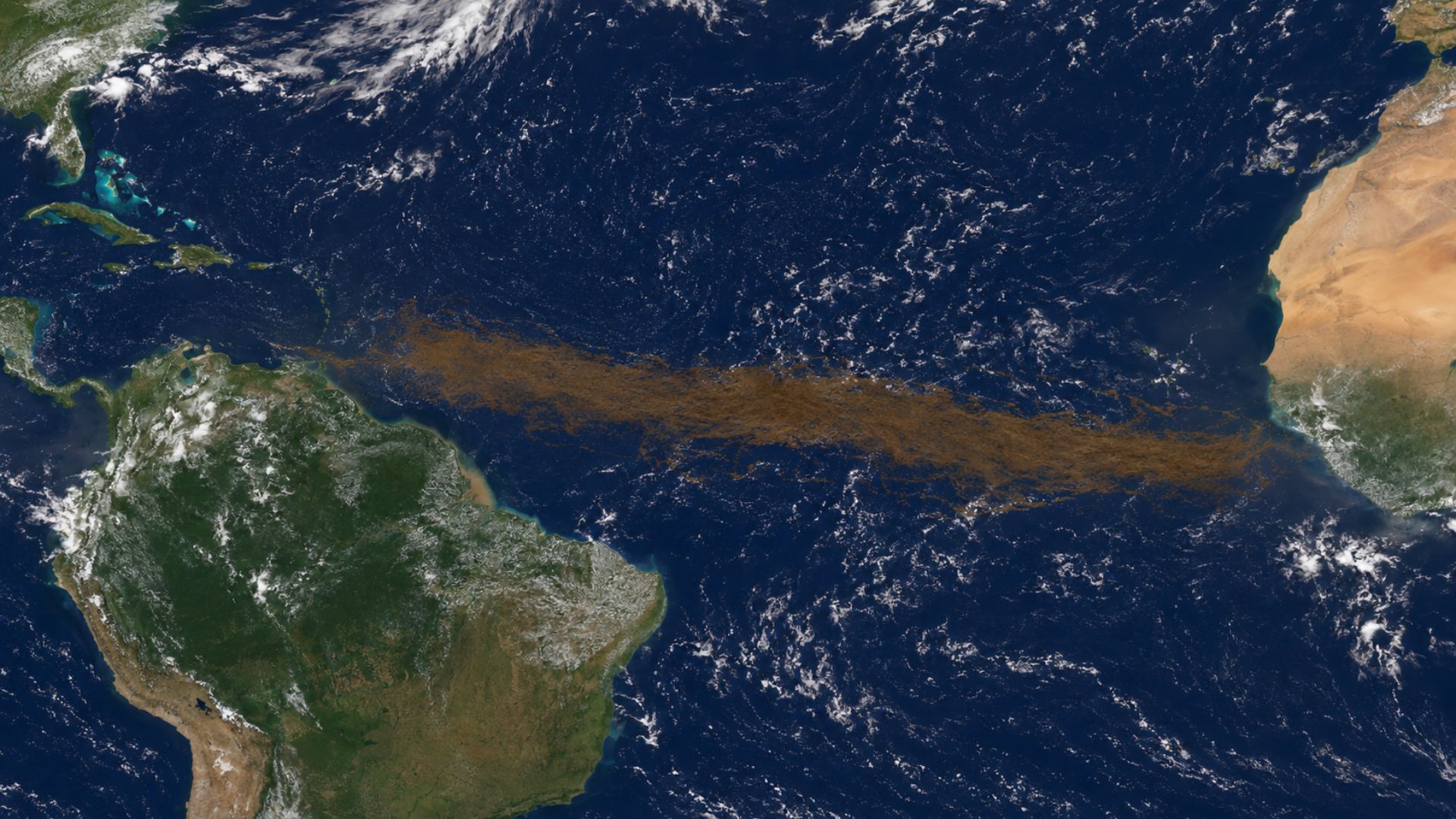
A giant brown band visible from space, approximately 8,850 kilometers long, connected Africa to America in the Atlantic Ocean, and satellites revealed that it is neither land nor pollution, but the largest accumulation of seaweed in the world, which broke records in 2025.
-
Up to R$ 10,000 is what some ads are asking for the golden and extremely rare Cristiano Ronaldo sticker from the 2026 World Cup album, an exclusive edition from the United States and Canada that has become a coveted item among collectors on the eve of the tournament.
-
Maricá records historic decline in monitored indicators and expands use of technology for urban management



In fact, the hypothesis is old, but now it has gained a solid experimental basis. A rapid deflagration of ethanol vapor in the hold could have opened hatches and caused panic.
The captain would have ordered the abandonment of the ship within minutes.
Mystery of the mary celeste: how the ship was discovered
According to official records, the merchant brig Mary Celeste departed from New York on November 7, 1872. It carried 1,701 barrels of industrial alcohol bound for Genoa, Italy.
On board were American captain Benjamin Spooner Briggs, his wife Sarah Elizabeth Cobb, their 2-year-old daughter Sophia Matilda, and seven crew members.
Among them were first mate Albert Richardson, second mate Andrew Gilling, and four German sailors.
On December 4, 1872, the Canadian ship Dei Gratia, commanded by David Reed Morehouse, found the Mary Celeste adrift about 400 miles east of the Azores.
The ship was in navigable condition. It had partially open sails, stocked food, and personal belongings intact.
On the other hand, the lifeboat had been launched. The last entry in the logbook was from November 25, ten days earlier.
Mystery of the mary celeste: the new chemical explanation
Therefore, chemist Jack Rowbotham’s study reconstructed the brig’s hold on a scale. Aged barrels, restricted ventilation, and gradual ethanol vapor leakage were simulated.
According to Chemistry World, the experiment showed that a low-intensity deflagration can increase internal pressure enough to blow off hatches and cargo covers, without causing visible flames or soot.
In practice, this means that the Mary Celeste crew would have witnessed a silent and muffled explosion coming from the holds.
According to historians, for Briggs, with his family on board, any suspicion of fire amid 1,701 barrels of alcohol meant a sensible decision: abandon the ship.

The precedent of UCL in 2006
The chemical hypothesis was not born in 2026. In May 2006, the University College London had already tested in the laboratory the concept of a pressure wave from ethanol vapors.
British researchers observed that it was possible to generate an explosion without leaving visible marks on the structure. However, the novelty of 2026 lies in the depth of the model and modern computational simulation.
According to Chemistry World, Rowbotham’s work relies on two decades of advances in computational fluid dynamics.
High-resolution pressure sensors, unavailable in 2006, complete the apparatus.
Therefore, the explanation gains quantitative contours. It is not just a plausible theory; it is a model replicable in the laboratory.
Other hypotheses fell apart
Over 150 years, the case fueled theories of mutiny, piracy, giant squid attack, waterspout, alien abduction, and even curse. Still, none of them withstand the physical evidence.
According to the portal Smithsonian Magazine, the Gibraltar inquiry of 1873, conducted by prosecutor Frederick Solly-Flood, suspected mutiny.
Subsequent scientific analyses showed that stains on the deck were not blood.
The waterspout theory, popular in the early 20th century, does not explain why the ship was found in navigable conditions.
In comparison, the alcohol vapor hypothesis is the only one that matches:
- Missing lifeboat, indicating abandonment ordered by the captain
- Intact cargo of 1,701 barrels, with no signs of fire
- Partially open sails, compatible with a quick escape decision
- Preserved food and personal belongings, with no indication of looting

The fatal route and the Azores
The Mary Celeste departed from New York bound for Genoa with cargo valued at significant amounts for the time. The brig followed the usual North Atlantic trade route, passing south of the Azores.
According to Smithsonian records, Captain Briggs was an experienced and religious pilot. Moreover, he did not drink, maintained strict discipline on board, and took his family on long voyages.
According to Wikipedia, the ship was found about 400 miles east of the Azores islands.
The lifeboat, a yawl type, had been launched from the stern. This indicates planned abandonment, not chaotic emergency.
To understand the scenario: in the middle of the North Atlantic winter, without an engine, without radio, and with adverse wind, a small boat with 10 people rarely survives more than 72 hours.
Why this matters for maritime safety
Indeed, the case became a reference for transporting flammable cargo on wooden vessels. According to Chemistry World’s analysis, ethanol in aged barrels is especially dangerous for continuously releasing vapor.
Compared to modern transport, the Mary Celeste would today have pressurized compartments, gas sensors, and vapor detectors. In 1872, none of this existed.
On the other hand, the chemical hypothesis also explains why similar cases of ghost ships in the 19th century often involved alcohol and oil cargoes.
In other words, the Mary Celeste was not an exception. It was the most famous case of a pattern.
Currently, standards like the IMO’s IMDG code regulate the transport of flammables on merchant ships.
In practice, it was the sequence of tragedies like the Mary Celeste that motivated these codes.

Enduring cultural impact
The case inspired Arthur Conan Doyle, creator of Sherlock Holmes, to publish the short story “J. Habakuk Jephson’s Statement” in 1884.
The narrative mixed real facts and fiction and contributed to consolidating the supernatural aura of the Mary Celeste in popular imagination.
Indeed, in the early 20th century, dozens of films, plays, and books on the subject emerged.
The ship’s name became synonymous with unexplained maritime mystery, alongside the Bermuda Triangle and the Flying Dutchman.
The Mary Celeste itself met a tragic end. In January 1885, it was deliberately grounded near Haiti in an insurance fraud orchestrated by its last owner.
The captain involved was indicted and died a few months later.

Modern parallels in the Atlantic
Cases of ships adrift without a crew did not end in 1872. Therefore, the Russian freighter Arctic Metagaz drifted for 57 days in the Mediterranean with 60,000 tons of cargo.
According to researchers, today, drifting ships are tracked by satellite and coastal radar in real-time. In 1872, the only way to locate a brig in the North Atlantic was visually.
Another emblematic case involves submerged relics. Additionally, the Temasek shipwreck near Singapore revealed 14th-century porcelains.
According to analysts, current technology closes gaps that remained open for decades. The mystery of the mary celeste enters this category, with science covering the void left by the absence of witnesses.
Limits of the scientific explanation
The ethanol vapor hypothesis is the most robust ever formulated, but it has clear limits. According to Chemistry World itself, the experiment reproduces probable conditions, not certainties.
On the other hand, without witnesses and without wreckage of the lifeboat, no theory can be definitively proven. Thus, science reduces the space for supernatural explanations but does not close the case completely.
Could other 19th-century ghost ships also have holds full of alcohol or turpentine? European insurance documents from the time show that yes, with more frequency than imagined.
Still, it is worth remembering that the mystery of the mary celeste will remain in the collective imagination.
The chemical explanation solves the “how,” but the exact fate of Briggs, his wife, their 2-year-old daughter, and the seven sailors remains without a body, without a grave, and without a witness.







-

2 people reacted to this.