






 Portuguese
  Spanish


While the US Navy lines up 122 ships in the Golden Fleet, Russia is firing the 35-meter, 208-ton Sarmat ICBM that carries 10 warheads and reaches 35,000 kilometers
Vladimir Putin announced on Wednesday, May 13, 2026, the test of the Sarmat ICBM, conducted the day before on May 12.
The launch was made from an underground silo at the Russian test site. According to Al Jazeera, Putin classified the device as “the most powerful missile in the world.”
The system carries the NATO designation Satan II. It measures 35.3 meters in length. It weighs 208.1 tons with onboard fuel.
-
Peru Installs Ocean Intake and Subsea Pipelines in the Pacific to Desalinate 34 Million Liters of Drinking Water Daily Near Lima

-
Rumo Unveils 170-Ton, 45-Meter Rail Machine with Unique Technology in Latin America to Stabilize Freight Train Tracks in Brazil
-
Brazilian Farmer Reflects on 58 Years of Soybean Farming as His Family Continues Legacy with Modern Machinery

-
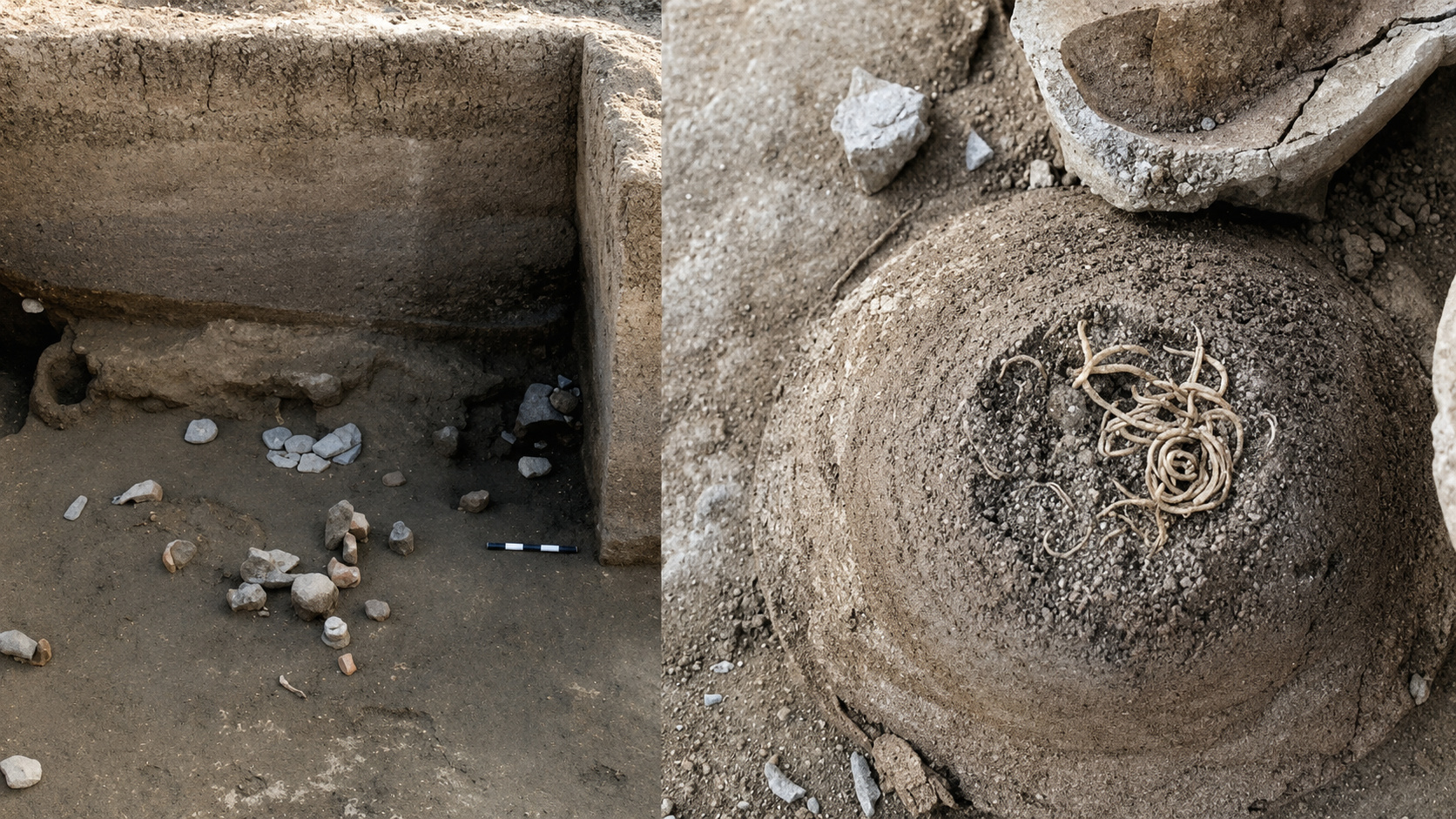
Archaeologists Uncover 4,000-Year-Old Noodles in China’s “Pompeii,” Challenging the Origins of One of the World’s Most Popular Dishes



According to the announcement, the missile carries 10 tons of payload. It accommodates up to 10 independent warheads per vehicle.

According to the Kremlin, the test validates the operational entry of the missile still in 2026. Putin said the system replaces approximately 40 Voyevoda missiles, known in the West as SS-18 Satan.
In other words, Russia is replacing the backbone of the land leg of the nuclear triad for the first time in three decades.
The physical numbers of the Sarmat ICBM: 35.3 meters, 208.1 tons, 10 warheads
The rocket fits entirely in a silo buried beneath the Siberian snow. Even so, its payload exceeds 10 tons, according to official data.
According to Putin, the range exceeds 35,000 kilometers. Western analysts consulted by Al Jazeera estimate a more conservative number.
According to these analysts, the realistic range would be about 18,000 kilometers. Still, this covers any point in the Northern or Southern Hemisphere from Russian territory.
Therefore, the Pentagon treats the system as an “ultra-long-range” intercontinental category.
According to the Russian Ministry of Defense, the number of maneuverable independent warheads (MIRVs) reaches 10 per missile. Each warhead attacks a distinct target after the ballistic phase.
In practical terms, a single missile carries firepower equivalent to an entire squadron of Cold War bombers.
- Length: 35.3 meters — equivalent to a 12-story building lying down
- Gross weight: 208.1 tons — almost 3x an empty Boeing 737
- Payload: 10 tons of warheads and countermeasures
- Independent warheads: up to 10 MIRVs per missile
- Declared range: more than 35,000 km (Putin) or ~18,000 km (analysts)
- Replaces: ~40 Soviet-era Voyevoda SS-18 missiles
Putin calls the system “the most powerful missile in the world”
“This is the most powerful missile in the world,” said Putin in a statement at the Kremlin, according to Al Jazeera.
The phrase echoes similar declarations made in 2018, when the program was first presented to the Russian public.
However, there is a difference between 2018 and now. In 2018 the missile was just an advanced project.

In May 2026, according to the Kremlin, it has just crossed the barrier of integrated testing from an operational silo.
According to spokesman Dmitry Peskov, cited by Al Jazeera, the test covered all phases. There was ignition in the silo, stage separation, and simulated reentry in a defined impact zone in the Russian Far East.
Furthermore, Peskov stated that the system “penetrates any existing or planned missile defense.”
Therefore, the comment reopened concerns about the American Aegis and GMD systems in the face of MIRVs in quantity.
Sarmat ICBM replaces 40 Voyevoda SS-18 inherited from the Soviet Union
The Voyevoda, in Russian nomenclature, or SS-18 Satan in NATO, entered service in 1988.
It was the heaviest ICBM ever operated by any country. It carried 10 warheads of 750 kilotons and a range of 16,000 km.
However, the system reached the end of its useful life. The last units were manufactured at the former Yuzhmash complex in Ukraine, now out of Russian control.
Thus, Russia needed to nationalize the production of the replacement. The new missile is entirely manufactured at the Krasnoyarsk Machine-Building Plant.
The replacement of 40 Voyevoda reduces the fleet numerically but multiplies the total payload per unit.

According to analysis published by The Guardian, the program began in 2011.
Therefore, development took 15 years from paper to operational silo. Sanctions and failures in previous tests delayed the entry into service initially planned for 2018.
Why the system worries US missile defenses
The United States’ Ground-based Midcourse Defense (GMD) operates 44 interceptors in Alaska and California.
It was designed for limited attack scenarios, like those from North Korea. Not for a Russian-scale salvo.
According to Al Jazeera, the missile carries electronic countermeasures, inflatable decoys, and hypersonic reentry vehicles.
In other words, even with 10 real warheads, the GMD radar would see multiple dozens of points. The interception capability would fall proportionally.
On the other hand, independent analysts warn of the gap between rhetoric and real capability.
Still, the announcement has immediate political weight. On May 13, Moscow signals to the West that the modernization of the triad remains on schedule.
Partial orbital trajectory and the southern angle that catches radar by surprise
One of the features highlighted by the Kremlin is the Fractional Orbital Bombardment System (FOBS).
According to this doctrine, the missile can enter partial orbit before descending on the target.

According to analysts cited by Al Jazeera, the approach via the South Pole is one of the possibilities. It bypasses Western radars concentrated on the Arctic axis.
According to technical estimates, the warning time for an Arctic launch is 25-30 minutes. On a partial orbital trajectory via the South, the window drops drastically.
Therefore, debates about the US space alert architecture, currently in SBIRS and Next Gen OPIR, are reopened.
Russian nuclear triad and the strategic race of 2026
The Russian nuclear triad rests on three legs: ICBMs in silos, Borei submarines with Bulava, and Tu-160M bombers.
The new missile modernizes the land leg, which concentrates most of the ready warheads.
Additionally, the Russian naval nuclear fleet has also received heavy investments. Russia operates 150 MW nuclear icebreakers to open the Northern Sea Route by 2030.
On the American side, the response comes on two fronts. First, the renewal of the submarine fleet, with vectors like the USS Idaho of the Virginia class delivered to the Navy.
Second, the expansion of nuclear command systems (NC3) under the Air Force.
According to the Pentagon, the Sentinel program — successor to the Minuteman III — only begins deployment in 2030.
In other words, there is a temporal mismatch. Russia enters with the operational system in 2026; the American replacement only reaches the silo at the end of the decade.
And Brazil? How this connects to the South Atlantic
Brazil is not, under any realistic scenario, on the target list. However, the entry of the missile into service indirectly affects the South Atlantic.
Firstly, any NATO-Russia nuclear escalation raises the cost of maritime insurance, derivatives, and global freight.
Brazil exports ore, soy, and crude oil through routes that cross potentially impacted zones.
Secondly, the FOBS doctrine opens southern approach routes. This increases the relevance of Brazilian radars and national airspace.
As already reported by specialized media, there are internal discussions in the Ministry of Defense about data integration with allies in hypothetical scenarios. Nothing is formalized.
Technical caveats and what still needs to be proven
It is worth remembering that everything we know comes from Russian sources or partially published Western intelligence.
Firstly, the 35,000 km range declared by Putin is considered optimistic by practically all independent analysts.
The Federation of American Scientists works with about 18,000 km as a plausible operational ceiling.
Additionally, the “10 independent MIRVs” configuration depends on the unit mass of the warheads and the level of penetration aids.
On the other hand, the program’s history records delays and at least one public failure in a previous campaign.
In other words, a silo test, although important, does not complete the full acceptance campaign.
Finally, there is the political dimension. Announcing the operational system in the middle of the New START treaty successor cycle is also a bargaining move.
However, even discounting the rhetorical noise, the question remains. How long can Washington sustain the gap between the Sentinel expected for 2030 and the modernized Russian triad today?


