Portuguese
  Spanish


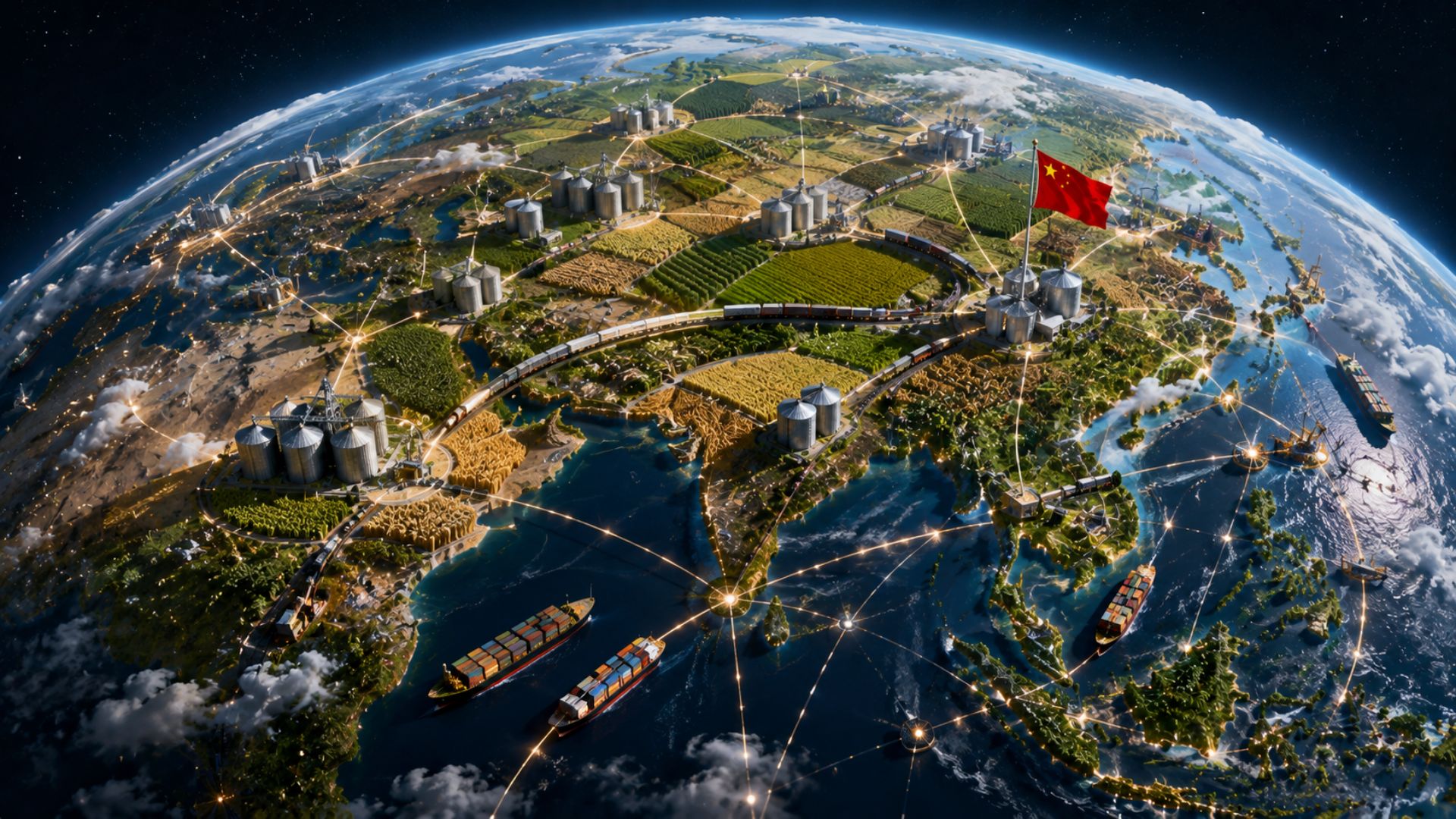


With about 7% of the planet’s agricultural land, China feeds nearly one-fifth of humanity and still accumulates the largest grain reserve in the world. USDA estimates indicate that the country holds about 69% of corn, 60% of rice, and 51% of wheat stored in stock, turning food security into a state strategy.
China achieves a feat that defies conventional agricultural logic: with only about 7% of the planet’s arable land, the country feeds nearly one-fifth of all humanity, approximately 19% to 20% of the world’s population. To top it off, it also accumulates the largest grain reserve in the world, with estimates from the United States Department of Agriculture, the USDA, indicating that in 2022 China held about 69% of the world’s corn reserves, 60% of rice, and 51% of wheat stored in silos.
This performance is not the result of chance, but of decades of strategic planning that treat agriculture and food security as a state issue. Behind the numbers, China combined heavy investment in seed improvement, in one of the largest water infrastructure networks ever built, and in a system of strategic grain stocks unparalleled in the world. Understanding how the country set up this structure helps to understand why food security has become a central piece in the global resource dispute.
How China feeds so many people with so little land

While holding a small slice of global cultivable land, China needs to feed a population of about 1.4 billion people. According to the Yield Gap Atlas, based on FAO data, the country feeds approximately 19% of the world’s population with about 7% of the planet’s arable land, with most of the cultivated area dedicated to food crops like rice, corn, and wheat, which account for more than 90% of total food production.
-
In Brazil’s Arid Northeast, Vineyards Now Produce Wine Grapes Year-Round, Accounting for 98% of the Country’s Grape Exports

-
China Limits Brazilian Meat Imports After Returning 20 Soybean Ships, Causing Factory Shutdowns and Concerns in Brazil’s Meat Industry

-
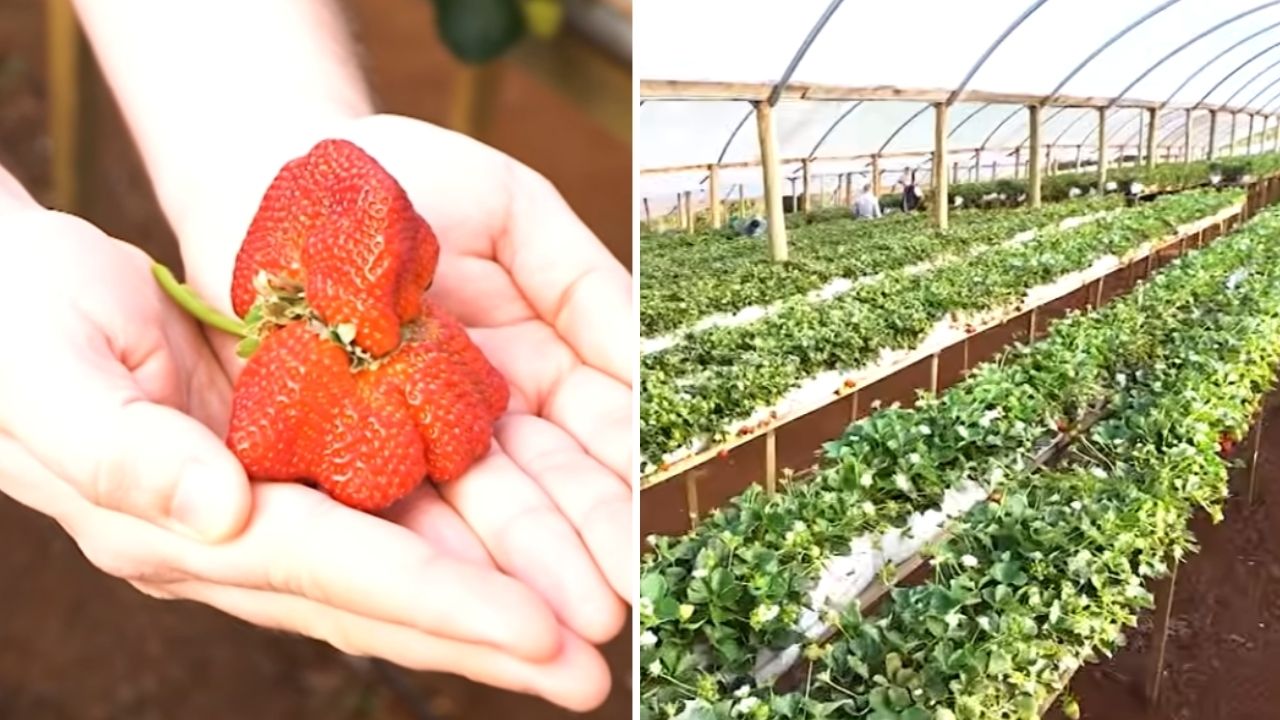
Brazilian Producer Adopts Hydroponic Strawberry Farming in Western Paraná, Achieving Year-Round Harvests and Becoming a Model for Continuous Production

-
Vertical Farming Company Backed by SoftBank and Jeff Bezos Files for Bankruptcy, Valuation Plummets from $1.9 Billion to Under $15 Million



To achieve this result, China invested in agricultural technology. The 14th Five-Year Plan and the 2025 plan of the Ministry of Agriculture and Rural Affairs set goals for mechanization and innovation, focusing on areas such as crop genetic improvement, agricultural robotics, and digital tools for farmers. The philosophy, according to experts cited in international reports, is to optimize for an acceptable yield even in difficult conditions, rather than just seeking maximum yield in ideal conditions, as Western agriculture often does.
Seed sovereignty as China’s strategy
One of the pillars of this structure is control over seeds. China maintains the National Crop Germplasm Bank in Beijing, a facility that holds more than 520,000 distinct seed varieties at very low temperatures, being the second-largest collection of its kind in the world, only behind the Svalbard Global Seed Vault in Norway. The difference is that the Chinese bank is described as operational, meaning the seeds are not just stored but are actively improved, tested, and distributed.
This effort has a clear objective of independence. By internally developing varieties adapted to saline soils, drought, and specific regional conditions, China reduces its dependence on imported seeds and foreign patents. Chinese companies dominate most of the domestic seed market, and foreign varieties must undergo years of testing and approval before being marketed. The country closely observed how dependence on patented seeds affected farmers in other regions and decided to shield its own system, treating seed sovereignty as national security.
The mega water project that brings water to northern China


The second pillar is water. China faces a chronic geographical imbalance: the south concentrates most of the water resources, while much of the agricultural land is in the drier north. To address this, the country built the South-North Water Transfer Project, considered the largest water transfer project ever undertaken in history, with about 2,700 kilometers of canals carrying water from the Yangtze River basin to the arid regions of the north.
The project, divided into eastern, central, and western routes, involves investments of tens of billions of dollars and was conceived as a strategic asset, not just as civil engineering. For the farmer, this infrastructure connects directly to drought-resistant seeds: the varieties developed in the laboratory are designed to yield more under controlled irrigation. It is worth noting that frequently cited numbers about the scale of this network, such as tens of thousands of reservoirs and hundreds of thousands of kilometers of canals, circulate in different sources and help to give dimension to the effort, even though the exact totals vary depending on the survey.
The largest grain reserve in the world
The third and most impressive pillar is the strategic stocks. Estimates from the USDA, reinforced by analyses from the U.S.-China Economic and Security Review Commission of the American Congress, indicate that the Asian country holds the majority of the global grain reserves. In 2022, it would be about 69% of the world’s corn, 60% of rice, and 51% of wheat, and in the 2023/24 season, the share of corn remained around 67% of the world’s final stocks.
It should be made clear, however, that the actual numbers of Chinese reserves are treated as a state secret by the country’s government, so all these percentages are external estimates, calculated from production data, imports, and satellite images. Therefore, projections on how long these stocks would sustain the population vary greatly: while more dramatic versions speak of up to two years, more conservative analyses from the USDA itself and consultancies point to something closer to nine to twelve months of consumption, which is still far superior to the world average.
How China builds and uses its stocks
The way China supplies these reserves is as strategic as their size. The country adopts a minimum purchase price policy, where state-owned companies, such as Sinograin, buy grains directly from farmers at guaranteed prices, often above the market, and store the product. This guarantee encourages planting and gives the State the first option on production before it reaches the private market, consolidating control over the chain.
In the external market, China has also been aggressive. Between 2020 and 2023, the country imported record volumes of grains, buying Brazilian soybeans, American corn, Australian wheat, and barley from various origins, much of it intended precisely to reinforce strategic stocks. When the war in Ukraine triggered global wheat prices, China was in a position to release grains from its reserves to stabilize domestic prices, while other countries faced soaring costs and food insecurity, demonstrating in practice the power of these stocks.
Why food security became strategic power
The Chinese case helps to understand why food security has ceased to be just an agricultural issue to become a piece of geopolitics. When a single country holds a large part of the world’s grain reserves, the traditional market dynamics change, and smaller nations may have more difficulty accessing them during crises. At the same time, China argues that it only ensures food for its huge population, something the country has historically struggled with, recalling episodes of famine in its past.
It is worth avoiding, however, excessively dramatic readings. Some narratives circulating on the internet attribute to China a sort of militarized doctrine of food dominance, with silos prepared to survive nuclear attacks and plans for global blackmail. This type of framing is usually the interpretation of analysts and content creators, not declared official policy. What solid data shows is more sober, yet equally relevant: China has invested decades to reduce its food vulnerability, giving it a margin of maneuver that few countries have.
What this means for Brazil and the world
For Brazil, the largest supplier of soybeans and one of the largest of other grains to China, this strategy has direct effects. Chinese demand supports a large part of Brazilian agribusiness, but projections like those from China’s own agricultural monitoring system suggest that imports may decrease in the coming years as the country increases domestic production and seeks greater self-sufficiency. This brings uncertainty for producers and exporters who depend on the Asian market.
On the global stage, China’s bet on food security is seen by many analysts as a long-term planning model difficult to replicate in democracies, which tend to operate in shorter electoral cycles. Be that as it may, China’s case shows that control of seeds, water, and food stocks can be as decisive for a nation’s power as its military or industrial strength, a debate that is likely to gain importance in a world pressured by climate change and supply chain instability.
China’s ability to feed nearly one-fifth of humanity with a fraction of the planet’s arable land, while accumulating the largest grain reserve in the world, is one of the most remarkable and least understood feats of contemporary geopolitics. Behind the impressive numbers is a combination of technology, infrastructure, and decades of state planning. Separating verified facts from exaggerated narratives is essential to understand the real scope of this strategy and what it means for everyone’s food security.
Do you believe that China’s strategy of accumulating grains is a legitimate measure of food security or a form of geopolitical power over other countries? Do you think Brazil should invest more in strategic food stocks? Leave your comment, share your thoughts on China’s dominance in grain reserves, and share the article with those interested in agribusiness, economy, and geopolitics.