





 Portuguese
  English
  Spanish
  4 min of reading
  0 comments


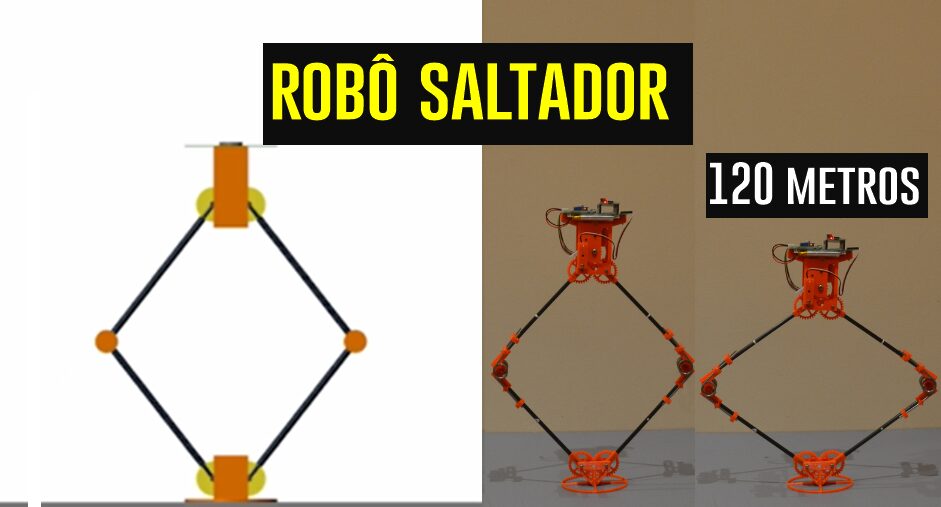
A robot designed to jump higher than the Statue of Liberty is being developed by engineers, and one day it may be sent to space. Discover how this invention can revolutionize robotics and space travel!
A team of engineers has revealed the design of an innovative robot capable of jumping an impressive 120 meters in height. This jump would be high enough to surpass the Statue of Liberty, one of the most iconic monuments in the world.
The potential of this robot does not stop there: it could reach up to 200 meters in height in areas with lower gravity, such as the Moon.
Why Is The Jumping Robot Important?
The primary application of this robot would be in rough terrains, such as caves and dense forests, where conventional robots face difficulties.
-
Q-Day is coming: the quantum threat that can unlock passwords, banks, cryptocurrencies, medical data, and turn internet security upside down

-
Denmark deploys four 10-meter robot ships to monitor the Baltic Sea, protect submarine cables, and track invisible threats following explosions, sabotage, and rising tensions with Russia.

-
Textron Systems presents the Ripsaw M1, a nearly 2-ton military ground robot designed to fight alongside US Marines, hunt drones, launch munitions, and keep soldiers out of the line of fire.
-
Forget regular asphalt: USA, France, Germany, and Switzerland are starting to test highways with armored solar panels capable of supporting heavy trucks, generating electricity for entire neighborhoods, and transforming 1 km of road into an intelligent solar power plant.


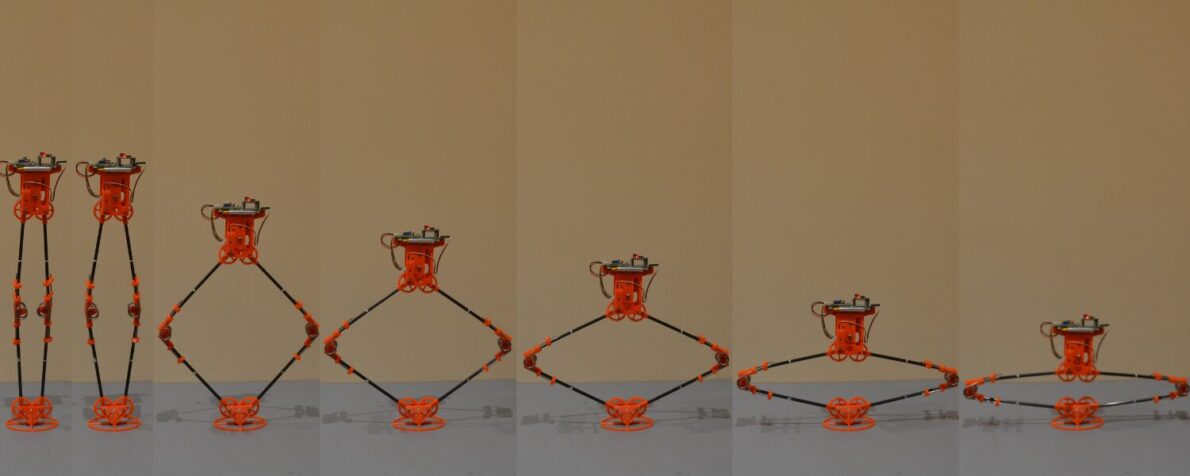
The robot has unique prismatic legs equipped with extendable springs, which maximize efficiency in converting elastic energy into energy during the jump.
According to the researchers, the robot can jump to heights much greater than its own size, reaching over six times the current record for jumping robots. These advancements were published in May 2024 in the scientific journal Mechanism and Machine Theory.
The Innovative Design Of The Robot
The 40 cm tall prototype has already demonstrated the project’s efficiency, being able to make jumps of over 1.6 meters. Although jumping robots already exist, the development of this project faces the challenge of achieving greater heights with energy efficiency.
According to John Lo, one of the lead researchers, the innovative design could revolutionize the performance of jumping robots, especially those powered by springs.
The technology existing in wheeled or legged robots, such as Atlas and Spot models from Boston Dynamics, is not ideal for complicated terrains.
Jumping-legged robots, however, can overcome large obstacles, such as cliffs or steep surfaces.
More Efficient Jumps
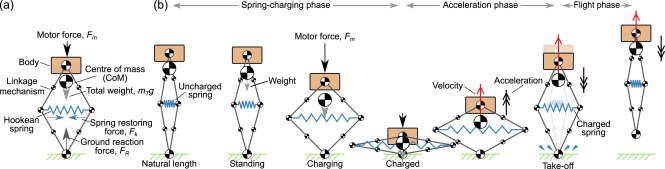
One of the main advantages of the new robot lies in its energy efficiency. The power amplification mechanism, common in animals like fleas and grasshoppers, allows elastic energy to be converted into kinetic energy, resulting in higher jumps.
However, a recurring issue in previous designs is taking off before fully releasing the stored energy in the spring. This wastes jump potential and reduces the machine’s effectiveness.
The engineers on the project team opted for a design that combines the best of both worlds: the linear prismatic motion of the legs, similar to a piston, with a lightweight and aerodynamic design that allows for more stable and efficient jumps.
Challenges And Future Improvements
The research team, led by Ben Parslew from the University of Manchester, had to face several questions about the structure of the robot.
One of the main dilemmas was whether it should have legs like kangaroos or a system more similar to pistons.
Initial tests showed that a prismatic design, with legs moving in a straight line, generated inertia problems, while a rotational design resulted in less effective jumps.
By combining the two designs, the team managed to solve much of these challenges. By shifting the weight to the top of the robot and improving the aerodynamics of the bottom, they achieved greater stability and energy efficiency.
Furthermore, the use of linear prismatic legs ensured that the robot maximized the energy stored in the springs.
The Future Of The Jumping Robot
The next step in developing this jumping robot will be to improve the control of jump direction and reuse the kinetic energy generated upon landing.
With this, the engineers hope to increase the number of jumps the robot can perform on a single energy charge, making it even more efficient for extended missions.
Another focus of study is the creation of compact designs, ideal for space travel. The jumping robot could become an indispensable tool for exploring hard-to-reach areas both on Earth and on other celestial bodies, such as Mars or the Moon.
In summary, this innovation represents an important advancement in the field of robotics, opening doors to a new era of exploration both in inhospitable terrestrial terrains and in future space missions.







Be the first to react!