Portuguese
  Spanish


Footprints found in a cave in Italy reveal how humans and a dog traveled 400 meters over 14,000 years ago.
A discovery made inside a cave in northern Italy allowed scientists to reconstruct an expedition that took place around 14,400 years ago. From footprints preserved on the floor of the Grotta della Bàsura, researchers identified that five individuals from the Epigravettian culture, including at least one child, advanced approximately 400 meters through a dark and potentially dangerous environment. According to information from Olhar Digital, the group was not alone: a dog accompanied them throughout the journey.
The study also revealed details about how the explorers faced the darkness, organized the walk, and planned the journey. The conclusions were published in the scientific journal Quaternary International.
Footprints help reconstruct a prehistoric expedition
Long before the emergence of the first cities, a small group decided to enter a cave that showed signs of bear presence. Thousands of years later, the marks left by this crossing remain preserved.
-
NASA Plans Telescope That Can Be Repaired by Robots 1.5 Million Kilometers from Earth

-
China Launches First Oceanic Medical Rescue Ship with Advanced Facilities to Serve Remote Regions

-
Midea Unveils Portable PortaSplit Air Conditioner: 12,000 BTUs, Quiet Mode, Heating, Dehumidification, App Control, and AI Efficiency Without Professional Installation
-
Singapore Turns Incinerated Waste Ash into Construction “Sand” in Ambitious Project to Revolutionize Megacity Waste Management


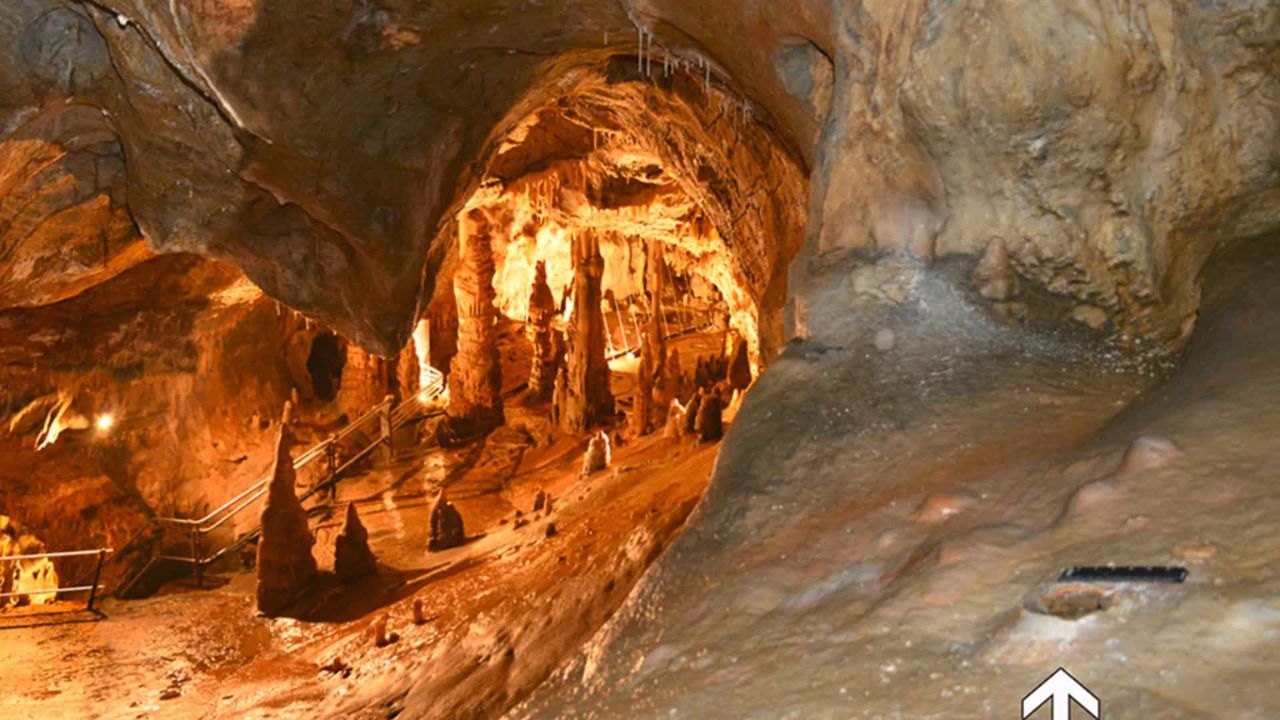
The evidence found shows that the explorers traveled inside the Grotta della Bàsura until they reached an area now known as the Hall of Mysteries. The journey was undertaken under challenging conditions, as the cave holds traces of ancient bears, including skeletal remains and skins.
According to the researchers, the presence of these animals suggests that the incursion required caution and planning.
Among the vestiges analyzed, one of the elements that most caught the team’s attention was the identification of the marks left by a dog.
The scientists consider this record the oldest known evidence of a domesticated dog participating in a human activity of this type. The researchers’ interpretation is that the animal could have played a protective role during the walk.
The hypothesis gains strength because there were children among the members of the expedition and the environment presented considerable natural risks.
How did the explorers illuminate the cave?
Understanding how the group managed to advance through completely dark passages was one of the challenges of the study.
The answer began to emerge after the analysis of pollen grains found inside the cave. The material indicated that, in that region, there were three species of pine trees about 14,400 years ago.
Additionally, 56 fragments of partially burned branches were found. The investigation showed that these pieces of wood had not been collected from the forest floor. On the contrary, everything indicates that they were taken from live trees and then dried to be used as fuel.
To verify the theory, the researchers reproduced part of the route using Scots pine branches similar to those found in the cave.
The experiments demonstrated that small branches, with a length between 20 and 30 centimeters, offered the ideal combination of practicality and illumination.
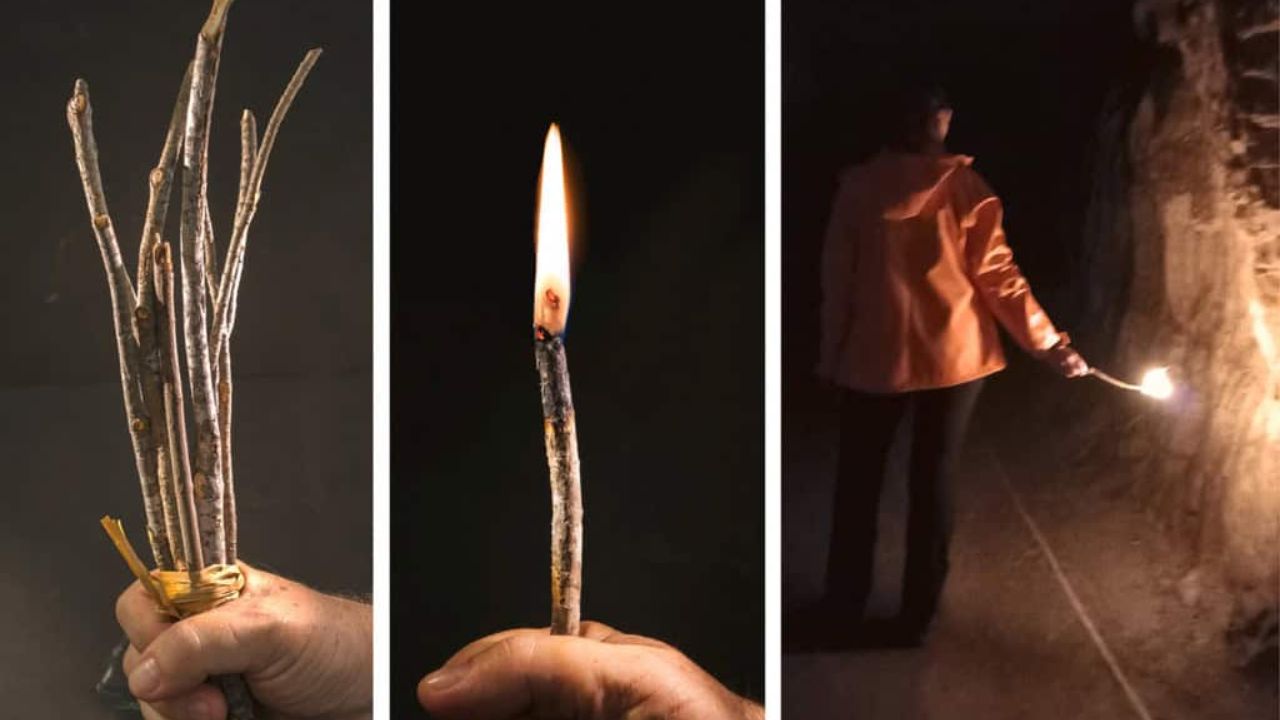
Among the observed advantages were:
- Ease of transport;
- Sufficient light to see the path;
- Possibility of being carried between the teeth;
- Hands free to support the crossing in difficult sections.
On the other hand, larger branches proved to be less efficient. They were heavier and generated excessive brightness, making visual adaptation to the dark environment difficult.
Footprints reveal the strategy adopted by the group
The marks left on the ground also allowed understanding how the expedition moved inside the cave.
According to the analysis, the five members advanced in single file throughout the journey. The dog stayed close to the walls while accompanying the group.
The authors of the study explained that this behavior represents one of the safest ways to move in unknown underground environments. As recorded in the research, moving in a line is similar to the method adopted by animals like bears and wolves when traversing dark places.
The team also highlighted that, in these circumstances, intense lighting was not necessary to ensure the group’s safety.
How many torches were needed for the crossing?
The tests conducted by the researchers also allowed them to calculate fuel consumption during the journey.
According to estimates, each torch burned approximately 18 centimeters of wood in about four and a half minutes. This time was sufficient to cover nearly 100 meters.
Based on these numbers, the scientists concluded that the explorers needed to relight the light sources four times until reaching the destination.
The reconstruction suggests that only two torches lit simultaneously were enough to illuminate the entire line. The most efficient position would be one light near the front of the group and another at the rear.
The calculations also indicate that around:
- Eight branches prepared for the way there;
- Eight branches for the return;
- Sixteen torches throughout the entire expedition.
This result reinforces the idea that the group entered the cave already equipped with material previously organized to face the crossing.
What does the discovery reveal about the first explorers?
More than recording an ancient walk, the preserved footprints in the Grotta della Bàsura offer important clues about human behavior in prehistory.
The research shows that these groups were capable of planning complex movements, transporting necessary resources, and adapting safety strategies for hostile environments.
Furthermore, the discovery highlights the relationship between humans and dogs in an extremely remote period. The combination of footprints, lighting traces, and signs of collective organization allows for the reconstruction of an episode that occurred over 14,000 years ago with a rare level of detail for archaeological studies.
With information from Olhar Digital