Portuguese
  Spanish


Yacht restoration, shipbuilding, rust, engines, and heavy painting appear in a shipyard routine that explains the size of the technical work and makes visible the female participation in the recovery of old boats
At 28 years old, Belinda Cree was working on the restoration of a 30-meter yacht built in 1962, in Southampton, England. The information was published by The Guardian, a British news and analysis newspaper, on October 8, 2022.
The service involved rust, paint, tools, and old areas of the boat that needed attention. The luxury seen by those who enter a yacht only appears after a lot of hard work, done away from the eyes of passengers and visitors.
Belinda Cree’s routine shows that shipbuilding is not only made up of large ships, giant machines, and men in workshops. There are women in technical activities that require strength, practice, care, and knowledge of materials.
-
Belgian Port to Install Shore Power for Cruise Ships by 2027, Cutting Dock Emissions by Up to 5% and Meeting EU Regulations

-
Post-Katrina Engineering System Uses Steel Frames, Floating Blocks, and Guide Posts to Elevate Homes During Floods
-
1910 Sailing Ship Restored After Seven Years Sets Sail for the UK
-
Narrow Canal Boat Transformed into a Floating Home After Eight-Month Renovation to Combat Rust and Leaks




The yacht restoration in Southampton was still ongoing in October 2022
The yacht’s recovery had already been receiving Belinda Cree’s work since October 2021. In October 2022, the restoration was still ongoing, with tasks related to maintenance and the recovery of worn parts of the vessel.
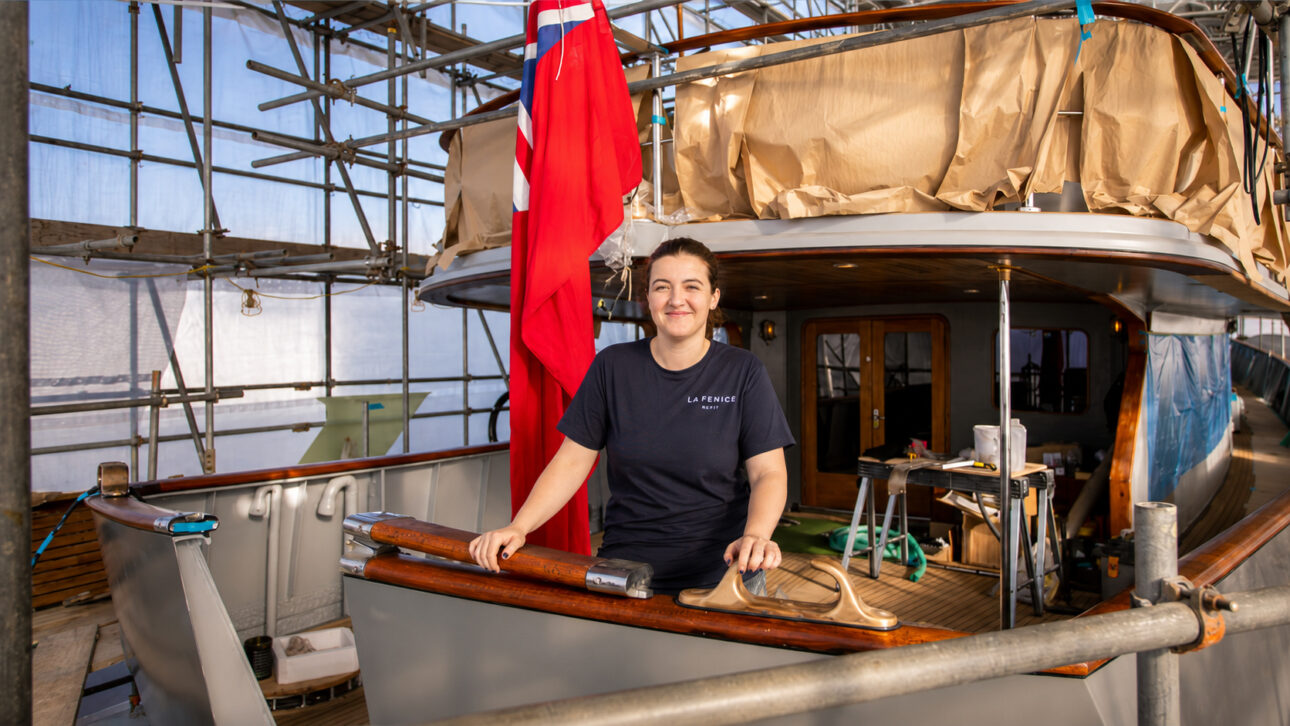
The boat was 30 meters and was built in 1962. In an old vessel, parts, coatings, and metal areas may require more care, as time leaves marks that do not appear in a common renovation.
Yacht restoration is not just about improving appearance. The work deals with parts that need to remain firm, protected, and ready for use at sea.
Naval refit is a renovation that recovers important parts of the boat
Naval refit is the name used for a technical overhaul on boats. In simple English, it is a recovery job that may involve cleaning, repairs, painting, and care for the old parts of the vessel.
In a house, a worn-out wall can receive a new coat of paint and be ready. In a yacht, the painting needs to match the condition of the hull, which is the external part of the boat in direct contact with the water.
The naval refit may also require attention to hardware, wood, metal areas, and places near the boat’s equipment. Each part needs to be treated without compromising the functionality of the whole.
Therefore, yacht restoration combines finishing and maintenance. The goal is not only to make the boat look beautiful but to preserve a structure that faces water, wind, sun, and constant use.
Rust, heavy painting, and engines show why the service is different
Rust appears when metal loses protection and starts to wear out. In an old yacht, this stage requires careful removal and surface preparation before painting.
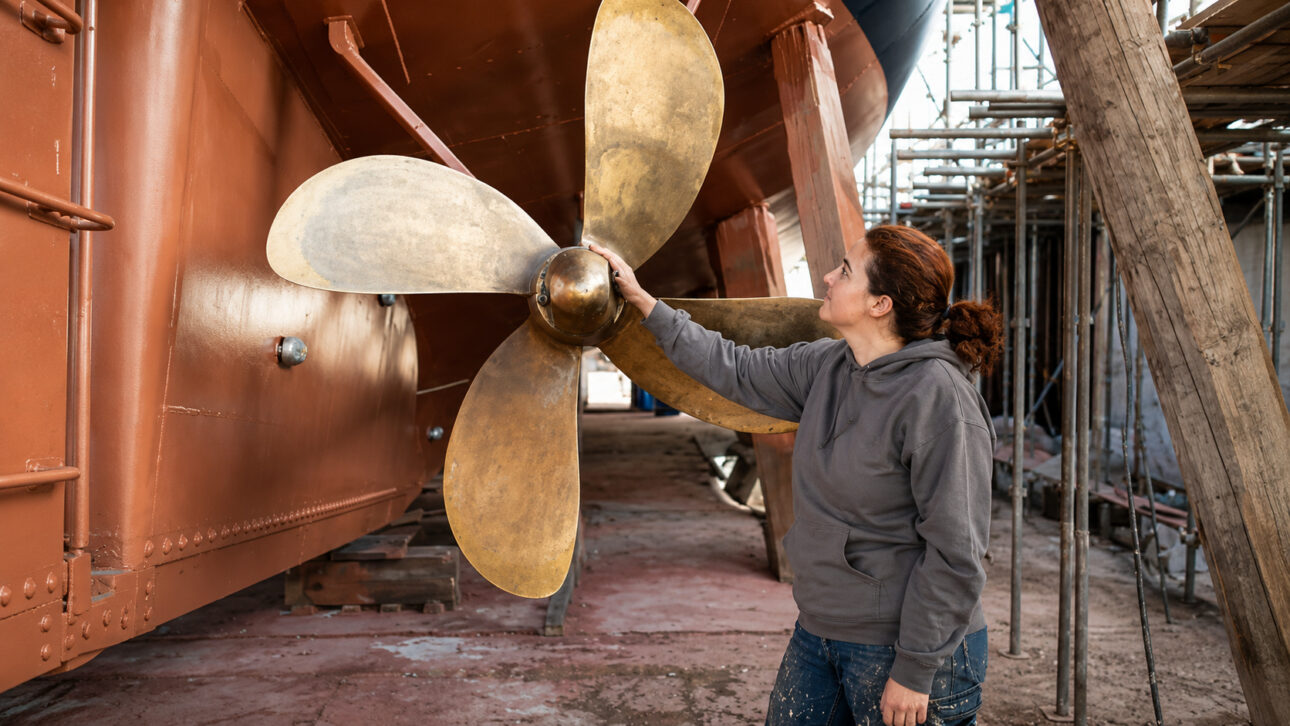
Belinda Cree worked with the recovery of steel areas and surface preparation. It is a task that may require heavy tools, body protection, and care not to affect areas that are still in good condition.
The engines and the space where they are located are also part of a vessel’s reality. Even when the service is related to painting or metal, the team needs to understand that there are important pieces of equipment around.
This difference explains why the overhaul of a boat does not work like the renovation of a house. Each repair needs to consider the movement of the vessel and continuous exposure to water.
Naval construction brings together manual work, technique, and practical experience
The Guardian, a British news and analysis newspaper, reported that Belinda Cree worked independently with the maintenance and overhaul of boats on land and at sea. She worked on the yacht as a contractor for the vessel’s owner.
Her professional journey also included training in traditional navigation and a boat construction course. This learning helps to understand materials, tools, and necessary care in a shipyard.
Naval construction brings together various functions. There are those who work with painting, wood, metal, finishing, cleaning, maintenance, and reviewing parts of the boat. Many of these activities take place before the vessel returns to the water.
The result may seem simple to those who only see the finished yacht. However, each restored area depends on people who know the material and can identify signs of wear.
Women in shipyards occupy roles that still receive little attention
Belinda Cree’s work places women in a lesser-known part of the maritime sector. Painting, repairs, sanding, maintenance, and hull restoration often remain hidden behind the final image of the boat.
The shipbuilder reported pressure to prove her ability in a male-dominated environment. This pressure shows that technical skill doesn’t always receive the same recognition when the tool is held by a woman.
The female presence in shipyards helps change the idea that professions related to metal, wood, and engines belong to a single group. The work requires learning, practice, and responsibility, not a specific gender.
Showcasing these professionals can also increase the interest of young people in technical occupations. There is room for those who like to solve problems, work with their hands, and transform worn materials into useful parts again.
Yacht restoration reveals professions that almost no one sees
A finished yacht draws attention for the shine of its paint, the well-cared-for wood, and the finish. Before that, there is a routine of rust, dirt, tools, and repairs that requires patience.
Belinda Cree’s story reinforces that yacht restoration depends on professionals prepared to handle difficult tasks. The female work in shipyards shows a reality that deserves to appear as much as the restored boat.
The 30-meter yacht, built in 1962, was still under restoration when the story was published in October 2022. Belinda Cree’s activity combined the preservation of an old vessel and female presence in a technical sector.
In the comments, which almost invisible technical profession should receive more recognition, even though it is essential for keeping machines, boats, and cities running?