Portuguese
  Spanish


In Turkey, farmer Mehmet Emin Sualp was preparing the land to plant seedlings when he accidentally unearthed a Roman mosaic of 84 m² and about 1,700 years old, less than 50 cm from the ground. Covered with animals, the discovery excited the country’s archaeology and was excavated by a local museum.
A simple farming task ended in a lucky find for history. In eastern Turkey, the farmer Mehmet Emin Sualp was digging holes to plant seedlings on his land when he accidentally found a huge Roman mosaic buried less than 50 centimeters from the ground. The case was documented by specialized outlets, such as Archaeology News.
The size of the piece impresses with its scale. The Roman mosaic covers about 84 square meters in a single continuous surface and is approximately 1,700 years old, spanning the end of the Roman Empire and the beginning of the Byzantine period. For centuries, it remained hidden just below the cultivated land.
More than large, the floor is rare and full of life. The discovery revealed an ancient floor decorated with dozens of animals and plants, opening a window to the fauna that lived in that region of Turkey almost two millennia ago. Next, see how the farmer stumbled upon this archaeological treasure.
-
Brazilian Researchers Develop Cost-Effective Method for Key Component of Green Hydrogen Electrolyzers, Enhancing Energy Efficiency and Equipment Longevity

-
Brazil launches $1.9 billion plan in response to El Niño, issuing national extreme heat alert and bolstering public health system

-
Polyformer Machine Converts PET Bottles into 3D Printer Filament, Reducing Costs and Expanding to Over 50 Countries
-
Realme C100x Launches in Brazil: Features 8,000 mAh Battery, Military Durability, 120 Hz Display, and Android 16




How the farmer found the Roman mosaic in Turkey
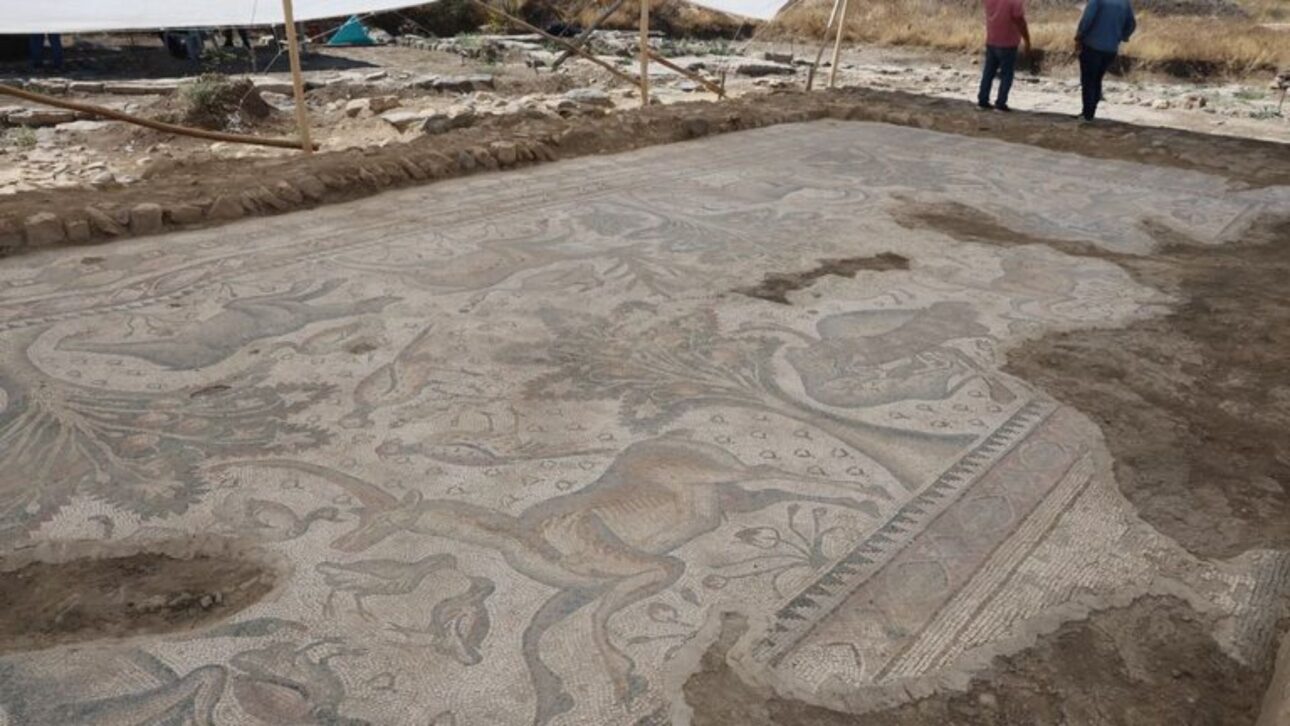
The story began with a simple planting plan. Mehmet Emin Sualp, a resident of the village of Salkaya, in the province of Elazığ, in eastern Turkey, had bought a plot of land a few years earlier and decided to prepare the land to cultivate seedlings. It was during this routine work that everything changed.
While digging holes in the soil, he stumbled upon something unexpected. Just a few centimeters from the surface, less than 50 in total, the farmer noticed pieces of colored stone forming patterns, a clear sign that it was not just any rock. What seemed like ordinary ground hid an entire Roman mosaic.
His reaction was decisive in preserving the find. Instead of continuing to dig or trying to keep the pieces, Sualp reported the discovery to the authorities, notifying the regional museum’s directorate and the local gendarmerie. This attitude allowed specialists to take over the work carefully.
From there, the case was out of the farmer’s hands and became an archaeology project. The Elazığ Museum Directorate, in coordination with the Ministry of Culture and Tourism, organized the excavation that would fully reveal the size and richness of the Roman mosaic hidden in that field.
An 84 m² mosaic with the ancient fauna of Anatolia
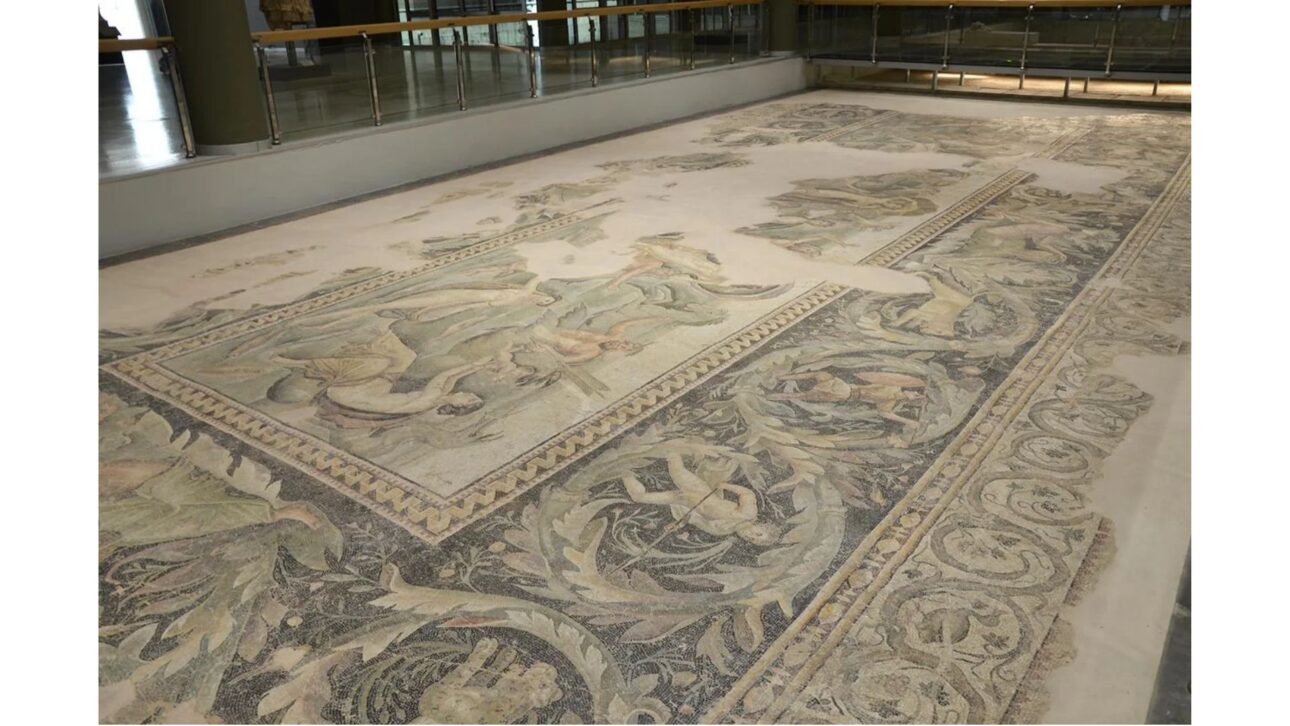
When the archaeologists cleaned the area, the result was impressive. The Roman mosaic extended over about 84 square meters in a single piece, a considerable size for this type of decorative floor. It probably covered the floor of an important building of the time.
What stands out the most is the theme of the images. Instead of simple geometric figures, the floor is filled with animals of all kinds, depicted in rich detail. It is a true catalog of the fauna that inhabited Anatolia during that period, frozen in colorful stones.
The list of animals represented is long. According to reports, the Roman mosaic shows lions, Anatolian leopards, mountain goats, deer, wild boars, bears, hunting dogs, ducks, geese, and pheasants, as well as various trees and plants. Each animal appears with features that make it recognizable.
This animal portrait has scientific value, not just aesthetic. For archaeology, seeing which species were chosen to decorate the floor helps understand that society’s relationship with the surrounding nature. The farmer, unknowingly, unearthed a visual document of ancient wildlife.
The presence of large predators draws attention. Lions and Anatolian leopards, now extinct or very rare in the region, indicate that the local fauna was much more diverse 1,700 years ago. For researchers, the Roman mosaic functions almost like an environmental record, showing animals that have disappeared from the landscape over the centuries.
1,700 years: from the Roman Empire to the early Byzantine
The age of the floor places it at a moment of transition. At about 1,700 years old, the Roman mosaic dates from a period that links the end of the Roman Empire to the beginning of the Byzantine era, when the region of present-day Turkey was an important center of the ancient world. It was a time of great circulation of people and ideas.
Floors like this were status symbols. Detailed mosaics, made with thousands of small stones called tesserae, decorated the houses of wealthy families, villas, and public buildings. Commissioning such a large and elaborate Roman mosaic required money and specialized labor, a sign of who ruled the region.
Researchers are still investigating which building the floor belonged to. A Roman mosaic of this size usually covered the hall of a luxurious villa, a wealthy rural property, or a public building. Identifying the type of building helps to understand who lived there and the importance of the location at the time.
The location helps to understand the importance of the find. Anatolia, where today’s Turkey is located, was crossed by Roman roads and prosperous cities, leaving a huge amount of remains underground. Each new discovery completes the map of this past a little more.
Therefore, the floor is more than a beautiful work. It functions as a time capsule, showing the artistic taste, technique, and even the fauna from almost two thousand years ago. For archaeology, recovering such a complete piece is a valuable opportunity to study that world.
Why this mosaic is so rare
The rarity of the find goes beyond its size. According to reports, this is pointed out as the first Roman mosaic in Turkey to survive intact and to depict, together, the animals that lived in that area. Having the complete floor, and not in pieces, is what makes it so special.
Mosaics with animals exist in various parts of the ancient world, but they rarely remain intact. Time, construction, and looting often fragment these pieces, which makes a complete example like the one in Turkey even more valuable. It’s a bit like finding an ancient book with all the pages in place.
The state of preservation is also surprising. Despite being buried for centuries and the land being worked over it, the Roman mosaic has retained much of its colors and designs. This allows us to see the details of the animals almost as they were originally, something uncommon in such ancient pieces.
The shallow depth is part of the story. The fact that the floor is less than 50 centimeters from the surface explains why it was a farmer, and not a planned excavation, who found it. At the same time, it shows the luck of it having survived so long so close to the farmland.
All this gives the find enormous weight for local archaeology. A whole, well-preserved Roman mosaic full of information about ancient fauna is the type of discovery that can yield years of study and even become a cultural attraction in the region.
The right attitude: notify the authorities
The positive outcome of the case is largely due to the decision of the farmer. Upon realizing he had found something ancient, Mehmet Emin Sualp did not attempt to hide, sell, or exploit the floor on his own. He reported the discovery to the Elazığ museum directorate and the gendarmerie.
In Turkey, as in many countries, archaeological finds belong to the State and must be handed over. Those who find something ancient and notify the authorities are usually recognized for their cooperation, while hiding or selling an item is a crime. Therefore, the farmer’s decision to report the discovery was also the safest for him.
This choice made all the difference for preservation. With the notification, specialized teams were able to excavate the Roman mosaic with technique, recording every detail and avoiding damage. When such a find is handled carelessly, precious information is lost forever.
It is worth noting that the value here is historical, not a cash prize. Unlike a treasure of coins, a Roman mosaic fixed on the ground does not become personal fortune: it is cultural heritage, belonging to the community and the State. The farmer’s gain was entering history, not getting rich.
This type of attitude is precisely what archaeology expects from citizens. Lucky finds happen all the time in construction and farming, and what separates a saved treasure from a lost treasure is often the decision to notify the authorities, as Sualp did in Turkey.
Turkey, a ground full of history
The case of Elazığ is not an exception in that country. Turkey is among the richest places in the world in ancient remains, with layers upon layers of overlapping civilizations underground. Romans, Greeks, Byzantines, and many other peoples left cities, temples, and decorated floors there.
Some of these floors are world-famous. The ancient city of Zeugma, in southern Turkey, houses spectacular Roman mosaics, now gathered in a museum dedicated solely to them. Finds like the one in Salkaya show that much of this treasure is still hidden under the country’s fields and villages, waiting for a hoe or construction work.
Not surprisingly, discoveries frequently emerge during common work. Plowing the land, laying foundations, or building roads often reveal ruins, coins, and mosaics hidden for centuries. The country’s underground functions as a vast museum not yet fully explored.
Mosaics hold a prominent place in this heritage. In various regions of Turkey, Roman and Byzantine floors have already been found and today attract visitors, some displayed in famous museums. Each new Roman mosaic recovered adds to this rich tradition.
It is in this context that Salkaya’s piece gains even more meaning. It reinforces why archaeology looks at the interior of Turkey with such attention and why protecting these finds, often made by farmers, is so important to preserve the memory of the ancient world.
How a mosaic survives 1,700 years buried
It may seem strange that such an ancient work withstands so much time in the ground. The secret lies in the very technique of the Roman mosaic, made with thousands of small stones, the tesserae, fitted onto a sturdy base of mortar. This set is much more durable than a painting.
The earth covering the floor also helps in conservation. By burying the Roman mosaic, the soil protects it from rain, sun, and trampling, creating a kind of cover that holds the pieces in place. Therefore, many of these floors reach the present day in good condition, even after centuries.
The shallow depth, of less than 50 centimeters, is a revealing detail. It shows that, at some point, the original building was abandoned or destroyed, and the land became a field. Over time, dust and cultivation covered the floor, hiding the discovery that would only appear much later.
When it finally comes to light, the challenge becomes conservation. Archaeology works to clean, stabilize, and protect the Roman mosaic as soon as it is exposed, since contact with air and water can accelerate damage. Therefore, excavating carefully is as important as finding.
In the case of Salkaya, this care ensured that the Roman mosaic arrived almost intact in the hands of archaeology, ready to be studied and, one day, displayed to the public as another treasure of Turkey.
What this has to do with Brazil
Although Brazil does not have Roman mosaics, the lesson from the case is very valuable here. Just like in Turkey, Brazilian archaeological finds often appear by chance, during farming, works, and constructions. The difference is that, instead of Roman floors, urns, ceramics, and traces of ancient peoples emerge.
Such cases have happened many times here. Subway, road, and building works in Brazilian cities occasionally reveal sites, ancient burials, and ceramics, requiring the involvement of archaeology before construction can proceed. Knowing how to recognize and respect these finds is part of protecting the national heritage.
The country’s heritage is rich and varied. The rock art of Serra da Capivara in Piauí, the shell mounds of the coast, and the Marajoara ceramics of Marajó Island are examples of treasures left by peoples who lived here long before the arrival of Europeans. Each one is as valuable as a Roman mosaic for local history.
The protection rule is also similar to that of other countries. In Brazil, archaeological sites and objects are Union heritage, and any discovery of this kind must be reported to Iphan, the federal institute responsible. Just like the Turkish farmer, anyone who finds something ancient must report it, not keep it.
Finally, there’s a message about citizenship and memory. Mehmet Emin Sualp’s example shows how the attitude of an ordinary person can save a piece of history for everyone. In Brazil, where much heritage is still lost due to neglect, this lesson from Turkish archaeology is more than timely.
And you, would you know what to do if you found such a treasure?
The story of the farmer Mehmet Emin Sualp shows that great chapters of the past can be right beneath our feet. While preparing the land to plant seedlings in Turkey, he unearthed an 84-square-meter, 1,700-year-old Roman mosaic full of ancient animals, and had the wisdom to hand the discovery over to archaeology, instead of keeping it.
And you, would you know what to do if you stumbled upon an archaeological treasure in your backyard or farm? Share in the comments what you would do in the farmer’s place and what impresses you most about this Roman mosaic that remained hidden for almost two thousand years.