






 Portuguese
  Spanish




Named BEACON, Hannah Herbst’s ocean generator used the energy of currents to light LEDs and power small desalination systems. A decade later, the race for sea energy is moving towards small, autonomous devices like that high school project made with just R$ 61.
At 15, an American built an ocean generator with a PVC pipe and a 3D printer propeller for R$ 61, about US$ 12, won a national award, presented the project at the White House, and made the Forbes 30 Under 30 list. The story shows how a simple idea gained relevance over time.
A decade ago, American student Hannah Herbst, then 15, demonstrated that it was possible to make technology smaller, simpler, and much cheaper. Her invention, named BEACON, an acronym in English for something like bringing electricity access to countries through ocean energy, was a small hydrokinetic generator made with a PVC pipe, a 3D printed propeller, and components that cost only R$ 61. According to Xataka Brazil, the device didn’t power a city but could light LEDs or power small desalination systems, and that high school project started to make more and more sense as the race for sea energy turned to small and autonomous devices.
The BEACON ocean generator and the R$ 61 in parts
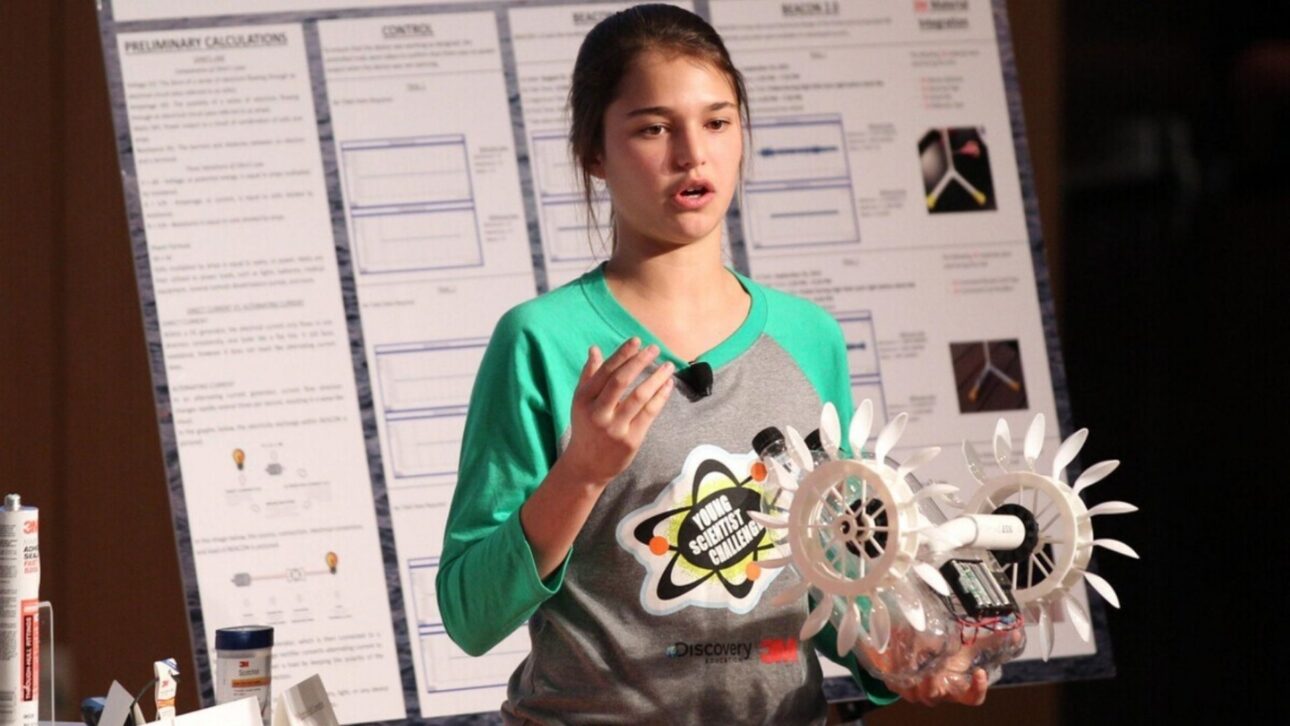
Hannah Herbst’s invention was named BEACON and was born as a small hydrokinetic generator. The ocean generator was built with a PVC pipe, a 3D printed propeller, and components that cost only R$ 61, about US$ 12.
-
China Develops Custom 140-Ton Electric Mining Truck with 770 kWh Swappable Battery, Deploys 290 Units in Xinjiang’s Largest Zinc Mine

-
Meta to Launch Arena, a New Prediction App Targeting 3.56 Billion Users, Competing with Polymarket and Kalshi

-
Scientist Challenges Famous Human Evolution Theory, Argues Homo Sapiens Evolved Gradually Over Thousands of Years
-
$12 Billion Invested in AI Data Centers in Semi-Desert Mexican State, But 17 of 18 Municipalities Now Face Water Shortages, Residents Receive Water Only 3 Days a Week




The device was not capable of powering a city but could light LEDs or provide energy for small water desalination systems. Over the years, that high school project, made about a decade ago, started to make more and more sense as the race to harness ocean energy turned to small and autonomous devices, capable of bringing energy to places where a conventional power grid is unfeasible.
How the Ocean Generator Harnesses the Power of Water


The ocean generator is based on a relatively simple idea: harness the kinetic energy of moving water without needing to build dams or alter the natural course of the environment. The secret lies in the very nature of the ocean, as saltwater is about 800 times denser than air, so even seemingly gentle currents hide an enormous amount of energy.
In Hannah Herbst’s prototype, a small 3D-printed propeller spun with the flow of water and transmitted this movement to a generator capable of producing electricity. It’s the same principle used by today’s large marine turbines, reduced to a tiny size and designed to offer an affordable solution where large energy infrastructure is not feasible.
The Challenge of Keeping the Device at Sea
The most difficult aspect of scaling up an ocean generator like this would be ensuring that the device remains operational for months or years at sea. Saltwater accelerates the corrosion of metal components, and marine biofouling causes algae, barnacles, and other organisms to attach to surfaces, obstructing the propellers and reducing performance.
For this reason, current commercial systems rely on composite materials, special coatings, and corrosion-resistant alloys that greatly increase durability but also raise the price exponentially. The contrast shows the distance between an accessible school prototype and a system ready to operate for long periods in the ocean.
The Industry Also Wants Small Generators
Although large marine energy projects continue to advance, part of current research is focused on smaller, modular systems, in the same spirit as the ocean generator, capable of bringing energy to coastal communities, ports, scientific sensors, or small islands that still rely on diesel generators. This philosophy aligns with the so-called blue economy, which seeks to harness ocean resources more sustainably.
Initiatives like the Center for Decarbonization and Marine Energy of British Columbia, as well as companies like Minesto and CorPower Ocean, are developing technologies adaptable to different scales.
One of the main advantages is the predictability of tides and ocean currents, whose cycles can be calculated much more accurately than other climate-dependent renewable sources, and these systems can also power reverse osmosis desalination plants and provide drinking water far from large infrastructures.
Built when Hannah Herbst was just 15 years old, the BEACON ocean generator earned her the Discovery Education 3M Young Scientist Challenge award in 2015 and led her, a year later, to present the work at the White House Science Fair, organized by the Barack Obama administration.
Today, her career remains linked to innovation and technology, which earned her a spot on the Forbes 30 Under 30 list, and she is also an entrepreneur in the medical technology field. A decade after that $61 project, the idea of small autonomous ocean energy devices seems increasingly ahead of its time, precisely where part of the industry is heading now.
And you, what did you think of the story of the young woman who built an ocean generator with just $61? Do you believe that small marine energy devices can bring electricity and water to isolated regions? Share your opinion and exchange ideas with other readers about energy and innovation.






