Portuguese
  Spanish




In the semi-desert state of Querétaro, in central Mexico, giants like Microsoft, Google, and Amazon have made the region a hub of data centers since 2022. As artificial intelligence advances, neighboring communities cope with water stress and receive water only three days a week, according to an investigation by Context.
There is a new symbol of the thirst of the modern world, and it is neither a plantation nor a factory. They are warehouses full of servers that support artificial intelligence, the so-called data centers, which need rivers of water to avoid overheating. In the Mexican state of Querétaro, a semi-desert land that lives under drought alert, these buildings have multiplied to the point that the region has earned the nickname of the data center valley. The problem is that while money flows, water disappears from the taps. The investigation is by Context, linked to the Thomson Reuters Foundation.
The contrast is brutal. On one side, $12 billion in foreign investment since 2022, coming from companies like Microsoft, Google, and Amazon. On the other, families who turn on the tap and see nothing come out. In communities neighboring the data centers, residents report receiving water only three days a week, and some go weeks without supply. It is the version in liters of an uncomfortable question: to whom does the water belong when artificial intelligence is here to stay?
The data center valley in a drying state
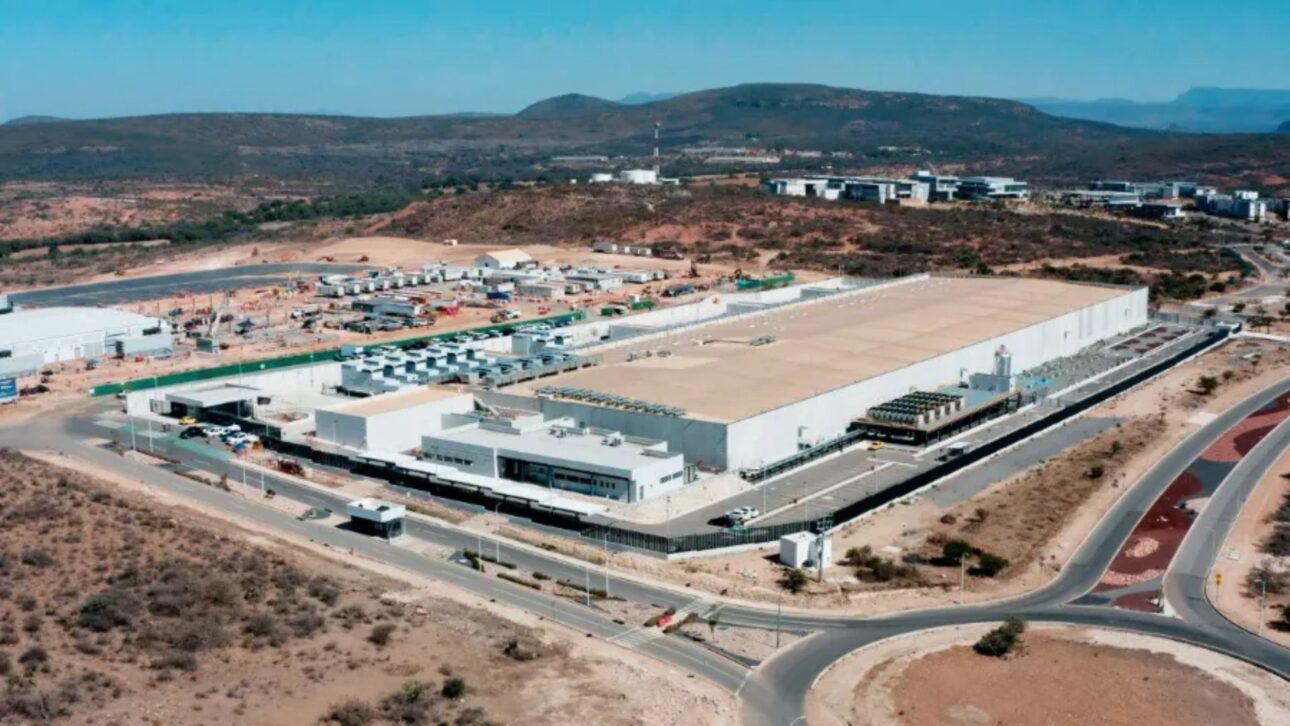
Querétaro has become the darling of tech giants. The state government itself treats this as an achievement. “Querétaro is becoming the valley of data centers,” summarized Marco del Prete, the state’s Secretary of Sustainable Development, in a statement that turns into an investment attraction advertisement. The logic is classic: employment, modernization, and the promise of putting the region on the global map of artificial intelligence.
-
15-Year-Old American Builds Ocean Generator with PVC Pipe and 3D-Printed Propeller for $12, Wins National Prize, Presents at White House, and Makes Forbes 30 Under 30 List

-
How Much Does Starlink Satellite Internet Cost for Cars, Trucks, and RVs? Prices for Antenna, Accessories, and Plans

-
Scientists Convert Food Waste into Aviation Fuel, Successfully Test 50% Blend with Conventional Kerosene to Cut Emissions and Promote Sustainable Flights
-
OnePlus N6 Smartphone to Launch in India with 8,000mAh Battery and 45W SuperVOOC Charging, Lasting Up to Three Days



The numbers of the boom are impressive, even though they vary depending on the source. The counts range from about a dozen data centers already in operation to dozens under construction or announced, depending on who measures and when. What no one disputes is the direction: the pace of arrival of these enterprises is only accelerating, and Querétaro leads this race in Mexico.
The detail that often escapes notice is where all this is happening. Querétaro is a semi-desert state, historically prone to drought. Installing a thirsty industry like data centers, which depend on water to cool machines that operate 24 hours a day, in a place that already struggles to supply its population, is the contradiction that drives the whole story. Artificial intelligence has arrived, but the water it requires does not spring from nowhere.
17 out of 18 municipalities in drought
The extent of the water crisis is not an activist exaggeration; it is in the official data. According to the Drought Monitor of Conagua, the national water commission of Mexico, 17 out of 18 municipalities in Querétaro face some degree of drought. In recent peaks, between February and March, all 18 municipalities were classified at levels of extreme and exceptional drought, the most severe on the scale. The water stress there is structural, not a passing misfortune.
The warning, by the way, is not new. As early as 2015, Conagua itself had pointed out that the area’s aquifers were in deficit and recommended not granting more water use licenses. The recommendation remained on paper. Since then, companies have not stopped arriving, and the pressure on the groundwater has only increased, worsening the water stress for those who live in the region.
This is the backdrop that makes the advance of data centers so controversial in Querétaro. It is not a region with surplus water that could share a little. It is a territory where every drop is already contested, and where the arrival of a giant industrial consumer changes the equation for everyone.
Water only 3 days a week

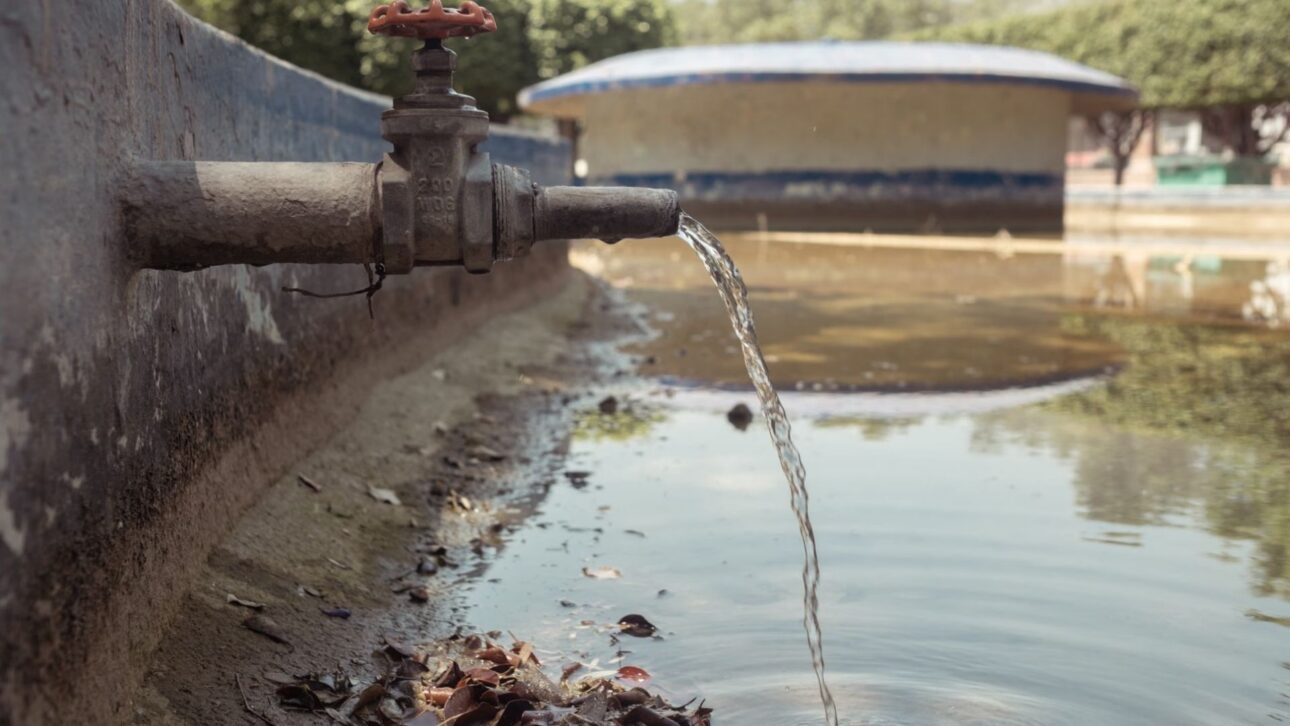
For those who live there, the crisis has a face, name, and routine. In communities near the data centers, water supply has become a lottery. There are reports of families receiving water only three days a week, and even worse situations, with people going eight, fifteen days, or even an entire month without a drop reaching them through the network. Agriculture, which supported many people, has withered along with it.
The stories gathered by the Context report set the tone of the drama. In communities in the municipality of Colón, residents reported that water arrives increasingly sporadically, forcing families to manage as best they can. The leader of the Antorchista movement in the state, Jerónimo Gurrola, described scenes of people desperate for the basics. “Companies use enormous volumes of water, millions of liters, to produce their products,” he stated, while residents, according to him, are forced to walk hours through the hills in search of small springs.
The chasm between the two worlds is what angers the most. While the population is told there is no water and that the cuts will continue, the government keeps inviting companies that need a lot of water to operate. The burden of water stress, in practice, falls on those who have less, and the water consumption of the new industrial neighbors appears as the tipping point.
How much water does a data center really consume
This is the hardest part to measure, and that’s no accident. The water consumption of data centers is shrouded in opacity. Industry estimates indicate that a 1-megawatt data center can consume about 25 million liters of water per year when using a conventional cooling system. Multiply that by the number of units Querétaro hosts, and the size of the problem becomes clear.
Concrete cases reinforce the concern. According to Context, one of Microsoft’s units in Colón could consume the equivalent of almost a quarter of all the water allocated for public and urban use in that municipality. The problem, researchers denounce, is that these numbers are rarely disclosed transparently. “There is concrete evidence that has not yet been quantified, but that is precisely the goal of the opacity, to prevent us from knowing,” criticized Paola Ricaurte, a researcher at Tecnológico de Monterrey, in an investigation reproduced by La Jornada.
Part of the haze is intentional, according to critics. Many data centers register as service industries, a category facing more lenient environmental rules, rather than what they actually are, facilities that generate a lot of heat and demand a lot of water consumption. Without transparency, it’s difficult even for public authorities to gauge the impact of artificial intelligence on the aquifer.
“It’s not drought, it’s plunder”: resistance and threats
In the midst of this dispute, voices have emerged that do not accept the official discourse. Groups of residents and activists took to the streets with a phrase that became a symbol of the movement: “It’s not drought, it’s plunder,” originally in Spanish “No es sequía, es saqueo.” The idea behind the poster is direct: the lack of water, they say, is not just a result of the climate, but a choice about who has priority in using the resource.


One of the central figures of this resistance is Teresa Roldán, a member of the group Voceras de la Madre Tierra. She demands transparency and questions the priority given to data centers in a thirsty state. “If there is no water for the population, there will be even less water for companies,” she stated. In another statement, she went further: “We are facing a severe drought in Querétaro, it is one of the first cities that should run out of water.” Her group even filed requests for access to information to find out how much water goes to the data centers, without receiving a response.
However, activism came at a high price. Teresa Roldán began to suffer death threats and online harassment because of her actions against the data centers. The case exposes a dark side of the conflict: when money and water collide, those who denounce become targets. Even so, the pressure from residents continues, focusing precisely on the opacity regarding the companies’ water consumption.
The warning that reaches Brazil
The drama of Querétaro is not distant, it is a mirror of what Brazil is beginning to experience. In February 2026, the Chamber of Deputies approved Redata, the special incentive regime for data centers, which offers tax exemptions to attract these investments to the country. The promise is to transform Brazil into a hub of artificial intelligence, with the same logic of job creation and modernization that seduced Mexico.
The difference is that Brazil is trying to learn from the mistakes of others. The text of Redata conditions the benefits on the use of 100% clean or renewable energy and requires efficiency indices in water consumption for cooling equipment. The intention is to prevent the data center rush from repeating the Mexican water stress here. The risk exists, and it is concrete, as part of the new projects targets regions like the Alto-Tietê and PCJ basins, among the most pressured in the country in terms of water resources.
That’s why the story of Querétaro matters so much to the Brazilian reader. It shows, in real-time, what happens when the thirst for artificial intelligence meets a territory without surplus water. Brazil still has time to choose a different path, demanding transparency about water consumption and planning where each data center can or cannot be installed.
The case of Querétaro puts on the table a choice that the whole world will have to make. Data centers drive the artificial intelligence that is already part of our daily lives, but their water consumption exacts a real price from communities already living in water stress. We can’t pretend that the cloud is light: it drinks water, and a lot of it.
And you, do you think Brazil should slow down the installation of data centers in regions with little water, even if it deters billions in investment? Or is it possible to reconcile the arrival of artificial intelligence with the guarantee of water for the population? Share in the comments how you would balance this equation.