






 Portuguese
  Spanish
  5 min of reading
  0 comments


Maritime Accident in the Pacific Spread Nearly 30 Thousand Toys Across the Planet and Transformed Plastic Waste into an Unexpected Reference for Studies on Ocean Currents, Arctic Ice Melting, and Connection Between Oceans Over More Than Three Decades.
On January 5, 1992, a strong storm in the middle of the Pacific Ocean shook a cargo ship and caused a wave to rip a container from the vessel, tossing the entire cargo into the sea.
The accident occurred about 2,400 kilometers off the coast of Alaska and, at first glance, seemed just another logistical loss in international maritime transport.
Decades later, however, the episode would be remembered as one of the most curious cases ever associated with ocean observation, as reported by the Calendarizing channel while reconstructing this story.
-
As the polar cold wave freezes the South this week, archaeology reminds us how the Kaingang dug underground houses on the Santa Catarina plateau to survive frosts millennia ago.

-
Federal Police involved in the case to identify the person responsible for hacking the Civil Defense system, which sent ten false alerts, frightened residents of different capitals, and turned messages about real risks into notifications with “misanthropy” and even alien attacks.

-
Extreme drought causes ghost village to reappear at the bottom of the reservoir that supplies Athens, revealing houses, a school, and ruins swallowed since the 1980s as the lake shrinks and exposes the water crisis threatening the capital of Greece.

-
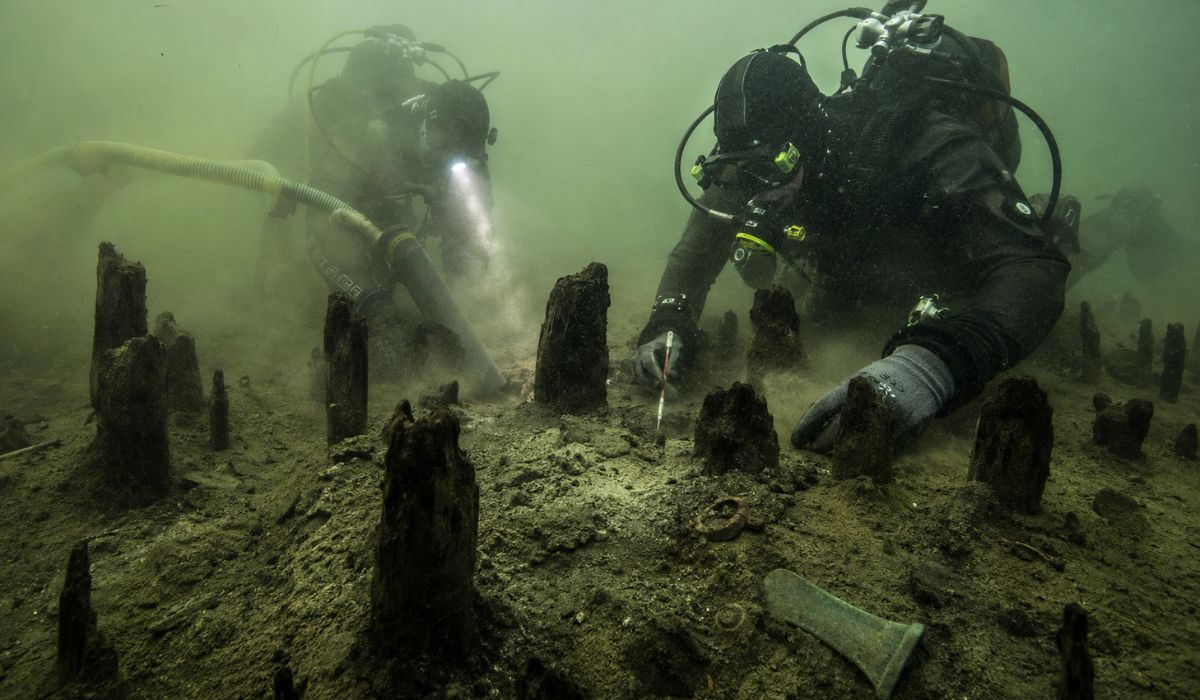
An entire village lay asleep at the bottom of a lake for 3,000 years: divers suction sediments in Italy and reveal more than 600 wooden stakes, bronze tools, and traces of a Bronze Age settlement hidden underwater.


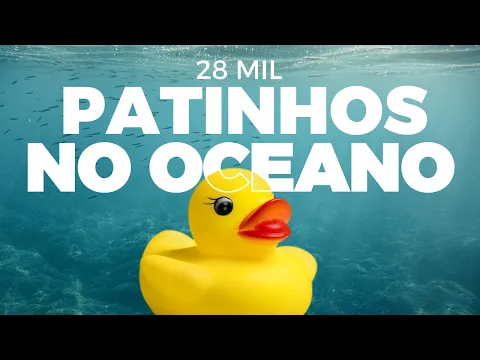
The container was carrying 7,200 sealed boxes of plastic bathtub toys.
Each box contained four units, totaling 28,800 floating pieces.
Among them were yellow ducks, green frogs, red turtles, and blue beavers, all designed to float.
From the moment they fell into the sea, these objects began to disperse, initiating an unexpected journey.
Plastic Toys Scattered in the North Pacific
Having been released into the ocean at the same location and on the same date, the toys ended up functioning as involuntary markers of water movement.
This detail is central to the significance of the episode, highlighted by Calendarizing as it narrates how a commercial accident transformed into long-term monitoring.
In the months following the fall of the container, there were no immediate reports about the whereabouts of the cargo.
Only in November 1992, about ten months after the accident, reports began to emerge of toys appearing on Alaskan shores.
Residents found hundreds of ducks, frogs, and turtles scattered along the shoreline, something unusual, but initially treated as just another case of marine debris brought in by currents.

Appearances in Hawaii, Japan, and Canada Indicated Continuous Displacement
The sequence of appearances did not stop there. In 1993, similar toys began to be found in Hawaii.
The following year, sightings emerged in Japan. By 1995, pieces of the same type appeared on the west coast of Canada.
The pattern drew attention for indicating that the objects were in continuous movement, traveling great distances across the North Pacific.
According to the account presented, these toys followed a major ocean current that circulates clockwise in the Pacific.
The average speed attributed to this movement was approximately 100 kilometers per day.
The path, however, was not linear.
The objects swirled, returned, and followed secondary branches, which explained the uneven dispersion over the years.
Oceanographer Began to Track the Found Objects
It is at this point that the figure of Kurt Ebensmer emerges, described as an oceanographer interested in tracking lost objects at sea.
As recounted by Calendarizing, he was already monitoring cases involving sneakers, balls, and other items that fell from ships.
The goal was to use the reappearance points to understand the behavior of ocean currents.
Interest increased given the scale of the accident.

For the first time, there were tens of thousands of floating objects released at once, creating a sort of natural experiment difficult to reproduce.
Each new find was documented with date, location, and condition.
Toys Trapped in Arctic Ice for Years
By around 2000, some of these toys had managed to cross the Bering Strait between Alaska and Russia.
As a result, they reached the Arctic Ocean.
In this region, marked by extensive areas of sea ice, the objects would have been trapped for years.
When the ice melted during the summer, the toys would begin to move again.
The text associates this freezing and releasing interval with observations about the behavior of sea ice.
According to the narrative, ducks trapped in the ice in 2001 began circulating again in 2003.
This period is considered short within what was expected for this type of formation.
Route Across the Atlantic Took Toys to Europe
In 2003, 11 years after the initial accident, reports emerged of toys on the east coast of the United States.
The described path included passage through the Arctic, a descent through Greenland, and entry into the North Atlantic.
The trajectory suggested that part of the cargo had completed a long circuit between oceans.
In 2007, new records indicated the presence of these toys on the beaches of Scotland, England, and Ireland.

An item manufactured in Asia, transported by a ship destined for North America and lost in the Pacific, reappeared more than a decade later on European shores.
The chain of this data is presented by Calendarizing as evidence that the oceans are interconnected.
What the Toys Revealed About Oceans and Plastic
The story attributes three main learnings.
The first involves the possibility of estimating more accurately the speed and direction of ocean currents, by comparing theoretical models with observational data.
The second concerns sea ice in the Arctic.
The relatively fast release of toys trapped in the ice was interpreted, in the account, as a relevant indicator within the observed period.
The third point involves the persistence of plastic in the marine environment.
If small toys can traverse oceans for decades without disappearing, the same principle applies to much larger volumes of waste discarded every year.
Toys Became Collectibles and Objects of Search
Over time, the toys also began to spark interest outside the scientific community.
According to the account, Ebensmer offered rewards for those who found and sent a duck with detailed information about the location and conditions of the find.
This encouraged searches on beaches and the exchange of information among curious individuals.
Some pieces began to be sold on auction sites and online groups.
A yellow duck identified as part of the 1992 batch was even listed for high prices.
The common object became treated as a collector’s item, as Calendarizing recalls while addressing the cultural impact of the episode.
More Than 30 Years Later, Finds Continue to Occur
Even after more than three decades, the text states that new records are still emerging.
There are mentions of a duck found in 2019. Another record cites a frog located in Scotland in 2022.
In 2024, a turtle was reportedly found in Australia.
The interpretation is that thousands of toys may still be circulating, caught in currents, frozen, sunk, or reappearing sporadically.
From the accident that occurred in January 1992 to the monitoring that extended over decades, the story shows how an unexpected episode became a curious reference in ocean observation, as the Calendarizing channel synthesizes while gathering these accounts.
If such simple objects can travel the planet for so long, what else might be following the same routes without attracting attention?





-

1 person reacted to this.