






 Portuguese
  Spanish


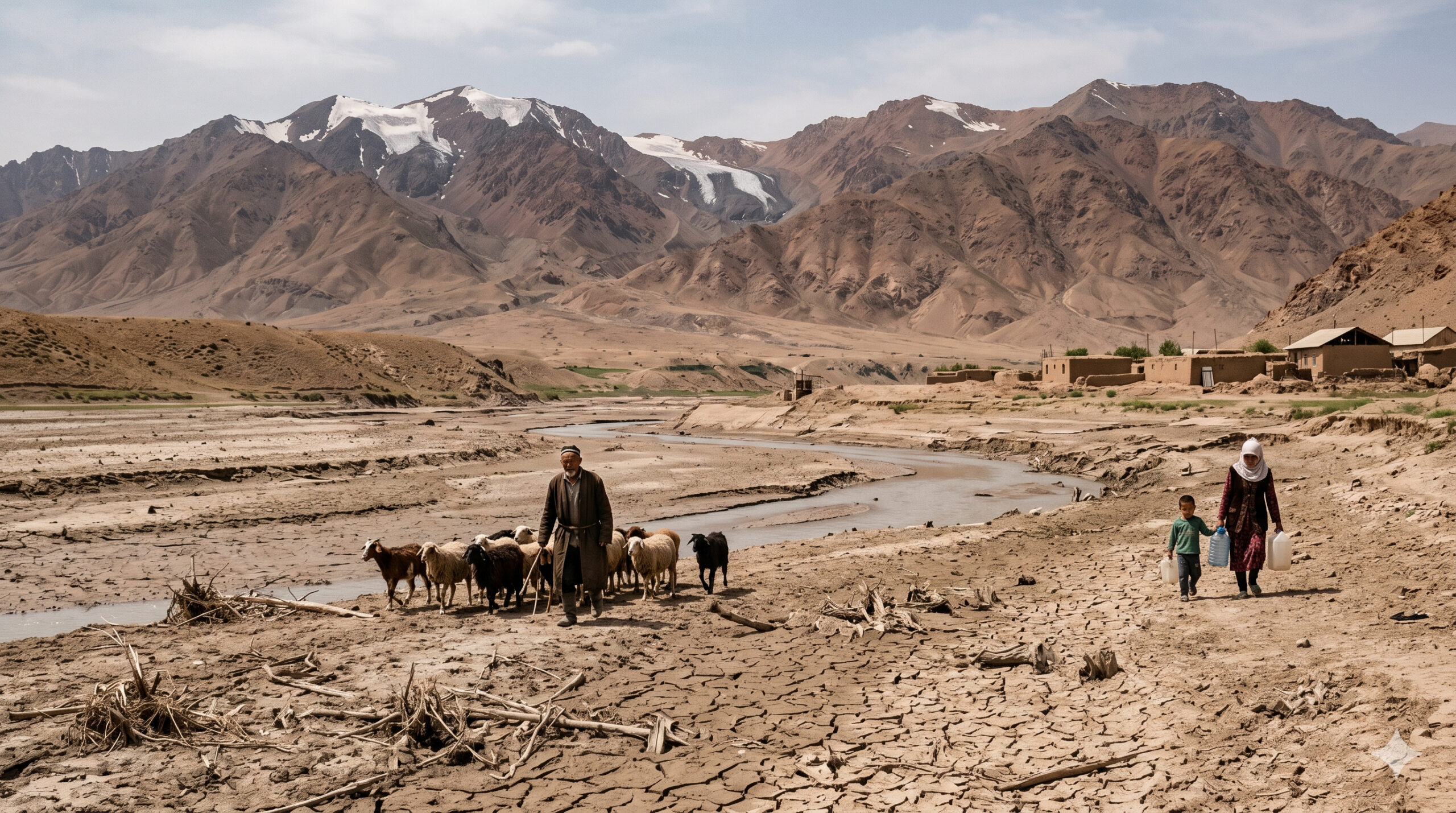

Central Asia faces growing risk of extreme water scarcity as rivers, glaciers, and aquifers enter climate collapse.
One of the planet’s driest and most geopolitically sensitive regions has entered a new phase of water stress. In Central Asia, comprising Kazakhstan, Uzbekistan, Turkmenistan, Kyrgyzstan, and Tajikistan, the combination of warming, melting glaciers, population growth, deficient infrastructure, and intensive irrigation use already threatens more than 82 million people, according to an Atlantic Council report released on February 7, 2025.
The problem is no longer just a distant projection. The World Bank, on September 26, 2024, warned that growing demand, scarcity, and climate change increase stress on drinking water, sanitation, and production in the region, while the Istituto Affari Internazionali, on May 30, 2025, pointed out that the crisis also involves migration, agriculture, energy, and political tensions between countries that depend on shared rivers.
The three names of the experts are Ariel Cohen, Wesley Alexander Hill, and Wilder Alejandro Sánchez. They authored the Atlantic Council article, published on November 27, 2024, on Central Asia’s water crisis, in which the text states that the crisis threatens more than 82 million people in the region.
-
Brazilian Researcher Develops Protein Supplement from Tilapia Waste, Combining Innovation and Sustainability with Economic Potential

-
Women in São Paulo Unknowingly Tracked by Coin-Sized Tags Hidden in Cars and Belongings, Raising Stalking Concerns
-
Near a $750 million AI data center in Brazil, a resident’s well runs dry, leaving her unable to afford the $25,000 needed for repairs.

-
16-Year-Old from Brazil’s Sertão Wins Young Scientist Award for AI Predicting Rainfall with 94.5% Accuracy to Aid Farmers


Region heavily relies on glacier-fed rivers
Much of the water used in Central Asia comes from rivers fed by melting mountains. Systems like the Syr Darya and Amu Darya rivers have immense strategic importance for human supply, agriculture, and energy generation.
The problem is that these basins heavily depend on the glaciers of the Pamir and Tian Shan mountain ranges.
With global warming accelerating glacial melt, experts fear profound changes in future water availability.
Glaciers are melting faster in critical areas of the region
International climate reports show that Central Asian glaciers are losing mass at an accelerated rate.

Initially, increased melting may temporarily raise river flows. But in the long term, the reduction of glacial stock precisely threatens the stability of water supply during dry periods.
This means the region may first face temporary water excess and then more severe structural scarcity.
Intensive agriculture consumes most of the available water
Central Asia’s water stress doesn’t come solely from the climate. Much of the regional water is used in irrigated agriculture, especially for cotton production and other intensive crops.
For decades, enormous volumes of water were diverted from rivers for irrigation. It was precisely this model that helped cause the environmental disaster of the Aral Sea.
The Aral Sea was once one of the largest lakes on the planet. But massive water diversions for irrigation throughout the 20th century caused a catastrophic retraction of the lake.
Satellite images show areas once covered by water transformed into a saline desert.
The disaster affected fishing, regional climate, public health, and the local economy. Now, experts warn that new water imbalances may emerge in other parts of the region.
82 million people already live under increasing water pressure
Water insecurity already affects a large part of the regional population. According to international documents linked to the UN and recent climate analyses, about 82 million people live in vulnerable conditions related to water supply.

This includes:
- limited access;
- quality degradation;
- excessive reliance on aquifers;
- aging infrastructure;
- agricultural pressure;
- prolonged droughts.
Underground aquifers also face overload
In addition to surface rivers, various areas of Central Asia have been increasing their reliance on groundwater. In several agricultural and urban regions, aquifers are being exploited at a rate higher than natural recharge.
This creates a risk of gradual depletion, falling groundwater levels, and deterioration of water quality. Global warming is increasing average temperatures in the region above the world average in some continental areas.
More heat means:
- greater evaporation;
- drier soils;
- higher agricultural water demand;
- reduction in available moisture.
Furthermore, extreme events such as prolonged droughts may become more frequent.
Water has become a geopolitical issue among countries in the region
Another critical factor is that many rivers cross national borders. Upstream countries control part of the flow that supplies downstream regions.
This turns water into a sensitive geopolitical issue involving agriculture, hydroelectric power, and national security. In times of scarcity, disputes over dam management and flow rates can intensify.

Part of the regional electricity generation depends directly on water. Mountainous countries like Kyrgyzstan and Tajikistan use important hydroelectric plants for energy supply. Changes in thaw and flow regimes can affect future electricity production.
Absolute water scarcity is considered one of the most severe scenarios
Experts use the term “absolute scarcity” when water availability per person falls below levels considered critical for basic human needs and sustainable economic activity.
Climatic and hydrological reports indicate that parts of Central Asia could approach this scenario by 2050 if there is no regional cooperation and structural changes in water management.
The problem involves not just a lack of rain, but an entire system simultaneously pressured by climate, agriculture, population growth, and limited infrastructure.
Desertification and dust storms are already advancing in some areas
Water degradation also contributes to increasing desertification. Regions affected by the collapse of the Aral Sea are already facing dust storms carrying salt, sediments, and pollutants.
This affects respiratory health, agriculture, and regional environmental quality. International organizations have been advocating for greater regional integration in water management.
This includes:
- irrigation modernization;
- waste reduction;
- transboundary cooperation;
- climate monitoring;
- glacier preservation;
- shared basin management.
But experts warn that challenges are growing faster than many current policy responses.
Central Asia could become one of the world’s major laboratories for the water crisis
The combination of retreating glaciers, overexploited rivers, increasing heat, intensive agriculture, and the legacy of the Aral Sea transforms Central Asia into one of the planet’s most vulnerable regions to the water crisis. The scenario is concerning because water sustains practically all regional pillars:
- urban supply;
- agricultural production;
- energy;
- economic stability;
- food security.
Now, the main question is whether the countries in the region will be able to reorganize their water model before the combination of global warming and resource overload transforms parts of Central Asia into one of the largest water scarcity zones of the 21st century.


