






 Portuguese
  Spanish
  5 min of reading
  1 comment


From an artificial island built in the middle of the Gulf, Abu Dhabi’s state oil company drilled a well over fifteen kilometers horizontally and claimed a rare engineering title, the longest well ever drilled in the world, reaching the oil below without needing to set up a platform over it.
When we think of oil drilling, we immediately imagine a drill going straight down to the bottom. But there is a type of well that takes a different path, it enters almost sideways and travels for kilometers underground until it reaches the oil that is far away, at sea. This is called long-reach drilling, and Abu Dhabi’s state company has just taken it to an extreme that seemed impossible, a well of 15,240 meters in length.
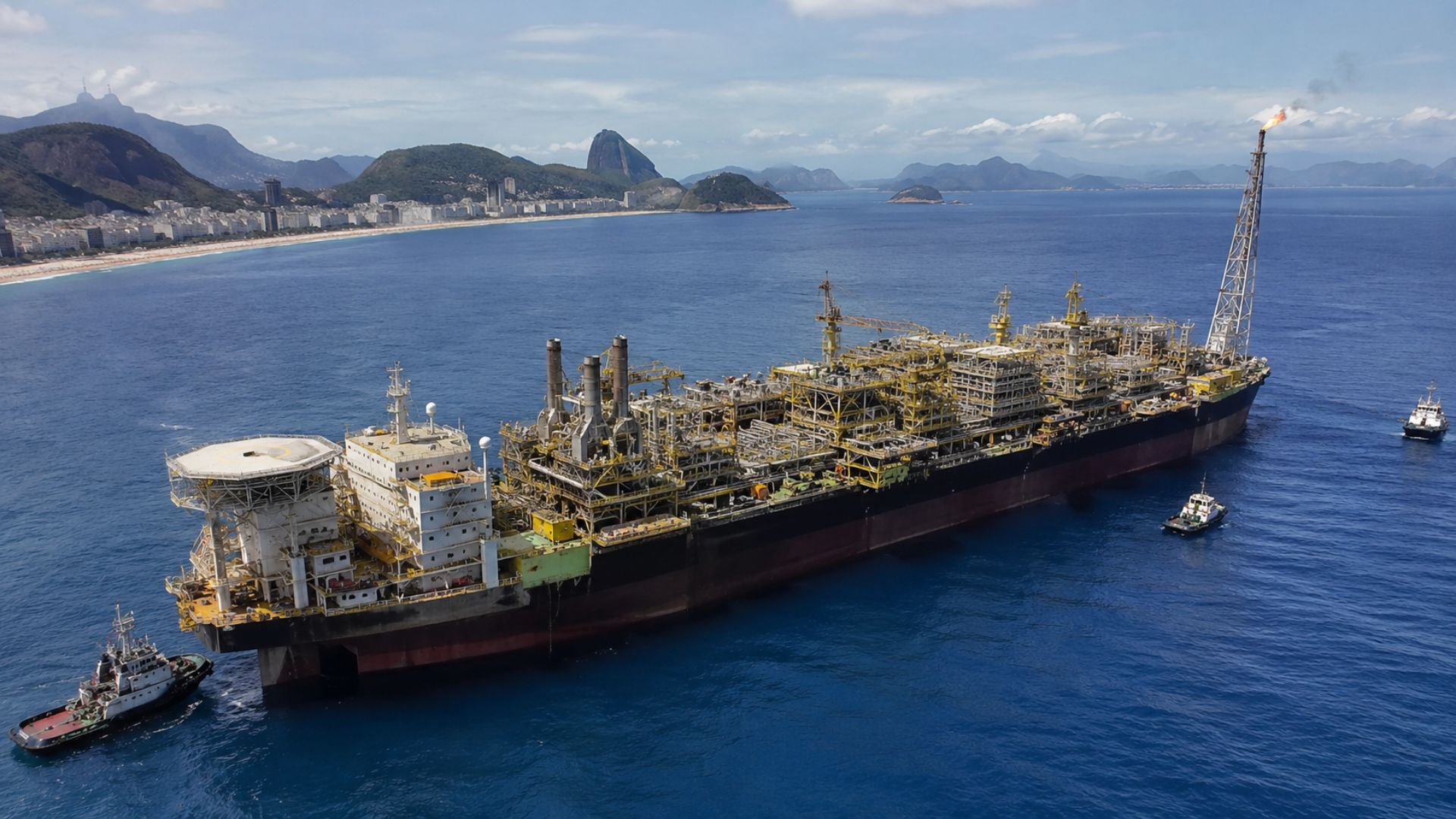
The detail that makes the feat even more impressive is where it starts from. Instead of installing a floating platform over the underwater field, engineers built an artificial island in the Gulf, called Umm Al Anbar, and from there drilled horizontally for more than fifteen kilometers to reach the Upper Zakum field, one of the largest oil reservoirs in the world. With this, they surpassed the record that came from the Russian field of Sakhalin.
Drilling sideways to reach what is far away
The logic behind this engineering is brilliant in its simplicity. Building and maintaining platforms at sea is expensive, risky, and complicated. An artificial island near the coast, or a fixed point in shallow waters, is much more stable and cheaper to operate. So, instead of taking the structure to the oil, engineers take the drill, making it travel kilometers horizontally under the seabed until it finds the reservoir.
-
The urgent need to implement a severe cut in public spending and a massive increase in taxes, in addition to drastically compromising the quality of basic services and the purchasing power of the population, could result in social unrest in the country, with the population leading protests, strikes, and frequent disturbances.

-
FIRJAN’s mega plan of R$ 526.3 billion for Rio de Janeiro aims to revive Brazil’s largest industry, with two-thirds of the investments going to oil and gas.

-
China signals an increase in beef imports, Brazil has already consumed 70% of the 1.106 million ton quota and seeks to renegotiate the tariff that jumps from 12% to 55%, while demand from the US also skyrockets.
-
Food inflation rose 302% in 20 years in Brazil, but the supermarket changed: purchasing power yielded 87% more mortadella and 31% less fruit, and ultra-processed foods took over the cart.



The problem is that controlling a drill so far from the starting point is brutally difficult. Imagine digging a tunnel over fifteen kilometers and needing to hit a target at that distance without seeing anything, guided only by sensors. Any slight deviation at the start turns, at the end, into hundreds of meters off target. I confess that it’s the kind of precision that borders on the unbelievable.

The technology that guides the drill blindly
To achieve this feat, an orchestra of technology is needed, acting kilometers deep. Sensors at the drill tip measure inclination, direction, and rock type in real-time, sending data to the surface that allows for course correction meter by meter. It’s a work of patience and precision that can take months, with the drill advancing slowly while the team adjusts each movement to stay on the planned path.
This type of well, known in the industry as extended-reach, has become one of the most contested frontiers in oil engineering. Each new record shows that it’s possible to reach increasingly distant reservoirs from a single point, reducing the number of platforms needed and lowering the cost and impact of the operation. With this well, the Abu Dhabi state company is planting its flag at the top of this competition.

Fewer platforms, more reach
There is a gain that goes beyond the pride of the record. When an entire field can be reached from a single island or a few fixed points, it avoids spreading dozens of platforms across the sea. This means fewer structures to build, maintain, and eventually dismantle, as well as a smaller footprint on the marine environment. Long-reach drilling is, in this sense, a way to extract more oil while concentrating less on the operation.
It is also a demonstration of technological prowess. Drilling more than fifteen kilometers horizontally is not something any oil company can achieve; it requires cutting-edge equipment, advanced software, and a team that masters this rare art. By breaking the world record, Abu Dhabi shows that it is in the absolute elite of extraction engineering, alongside the most advanced names in the industry.
To gauge the feat, it’s worth remembering who it dethroned. The previous record belonged to the Russian field of Sakhalin, in the far east of Russia, where long-reach wells were already nearing fifteen kilometers and were treated as the pinnacle of extraction engineering. Taking this title from such a renowned project shows how much technology has advanced in a short time, and how the race for these records has also become a prestige contest among the great oil powers. Each additional meter is a public demonstration of technical capability, read by the entire sector as a message.

The drill that traveled fifteen kilometers
I imagine the scene down there, a solitary drill advancing over fifteen kilometers of rock, guided only by electrical signals from the surface, until it touches exactly the planned point in an invisible reservoir. It’s the kind of feat that we almost never see reported, but that represents the most sophisticated aspect of human engineering.
Such records usually last a short time because there is always a team somewhere trying to drill a little further. But for now, the fifteen-kilometer well raised from an island in the Gulf is the maximum limit humanity has reached in this art of drilling sideways to get where the drill shouldn’t be able to, a milestone that will last until someone dares to drill even further.
Are you more impressed by the distance this drill traveled or the precision of hitting the target blindly at fifteen kilometers?




Respect am so pleased.maintain