Portuguese
  Spanish


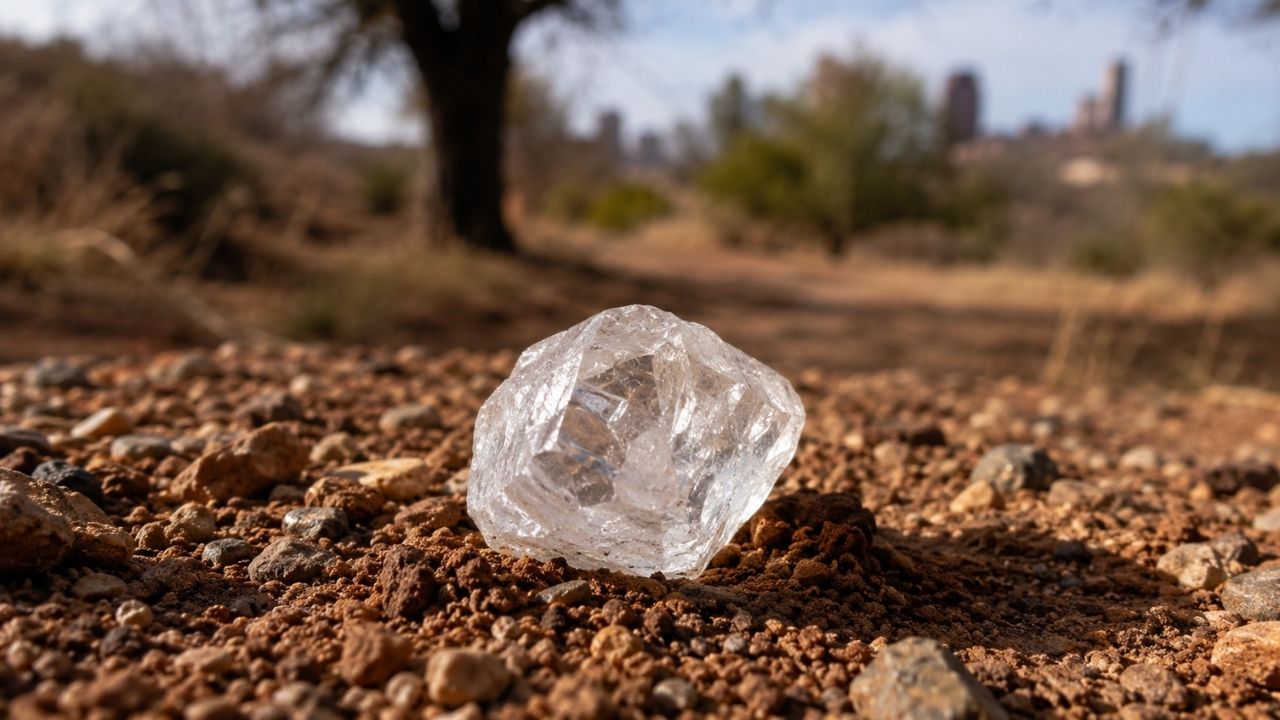


The 3.09-carat white diamond was found by Keshia Smith at the Crater of Diamonds State Park in Arkansas during a period of mourning for the death of her father and son. The rare stone, valued at up to R$ 240,000, became a symbol of unexpected joy in the United States.
The white diamond was found by Keshia Smith, a woman from Pennsylvania, during a visit to the Crater of Diamonds State Park in Arkansas, United States. The case was reported on May 14, 2026, and attracted attention for combining rarity, financial value, and a personal story marked by family losses.
According to the portal nd+, the stone is 3.09 carats and was found in an area open to the public for mineral searching. According to the park, visitors can take home any item found on site, a rule that turned Smith’s discovery into an unexpected moment of joy during a period of mourning for the death of her father and son.
Woman found rare stone during park visit
Keshia Smith was walking through the search area of the Crater of Diamonds State Park when she found the white diamond. The stone was described as flat, smooth, and nearly colorless, with a size similar to that of a small bead.
-
2,500-Year-Old Biblical Figurine Discovered by Israel Antiquities Authority Sheds Light on Ancient Child Protection and Fertility Rituals in the Negev Desert

-
Young Innovator from the Brazilian Amazon Develops Acai Seed Brick, Turning Fruit Waste into Building Material, Wins Over 25 Awards, Showcases Globally

-
From Street Vendor to Startup Success: At 25, Brazilian Entrepreneur Projects $90 Million Revenue by 2026 Solving Retail Giants’ Challenges
-
Brace for Cold: Rare Cyclone and Polar Air Mass to Plummet Temperatures in Brazil, Risk of Frost and Subzero Temperatures in Southern Highlands


The find gained attention because it happened at an emotionally delicate moment. Smith was mourning the loss of her father and son when she found the rare stone, which gave the episode a symbolic weight beyond its market value.
According to information released by the park, the diamond can be valued between R$ 4,000 and more than R$ 240,000. The variation depends on factors such as quality, cut, purity, color, demand, and expert appraisal.
The discovery was treated by the park administration as an “unexpected moment of joy” for the visitor. Instead of being just a news story about a precious stone, the case also circulated as a story of overcoming and surprise.
Diamond received name in tribute to family

After the discovery, Keshia Smith named the jewel Za’Novia Liberty Diamond, an expression that can be translated as “Za’Novia Freedom Diamond.” The chosen name honors her grandchildren and also references the 250th anniversary of the United States’ independence.
Giving the stone a name made the find even more personal. The diamond ceased to be just a rare mineral found in a park and began to carry a family memory amid the grieving process.
This type of naming is common in discoveries of great emotional or commercial impact. When a rare stone is found by visitors, the naming helps transform the find into an identifiable story.
In Smith’s case, the chosen name reinforces the connection between family, loss, and new beginnings. The jewel appeared in a moment of sadness but ended up associated with freedom, memory, and continuity.
Park allows visitors to take what they find
The Crater of Diamonds State Park is known for an unusual rule: whoever finds diamonds or other minerals can take the find home. This makes the place one of the most curious spots in the United States for visitors interested in precious stones.
The park is located in Arkansas and is presented as the only place in the world where tourists can search for natural diamonds directly in an original volcanic formation. This characteristic transforms the visit into a mix of a tour, recreational mining, and real discovery expectation.
The area open to the public is approximately 15 hectares and is plowed to allow visitors to search for minerals in the soil. People from different states visit the space precisely for the chance to find something rare.
Most leave without a valuable stone, but cases like Keshia Smith’s maintain the park’s fame. The possibility of a real discovery is part of the site’s allure.
More than 37,000 diamonds have already been found
Since the space became an Arkansas state park in 1972, more than 37,000 diamonds have been found by visitors, according to local administration data. The number helps explain why the park continues to attract the curious.
Even so, finding a 3.09-carat diamond is not common. Larger stones with good appearance usually receive attention on the park’s social media and in news about rare discoveries.
The administration usually publicizes finds considered important, especially when they involve stones of above-average size, color, or commercial value. This helps to fuel public interest in the location.
In Smith’s case, the repercussion was amplified by the personal story. The discovery attracted attention not only for the estimated value but also for the context of mourning in which it occurred.
Value may vary according to specialized evaluation
The estimate between R$ 4,000 and more than R$ 240,000 shows that the value of a diamond can vary greatly. The carat weight is important, but it is not the only factor used to calculate the price.
Characteristics such as color, transparency, inclusions, natural shape, and cutting potential directly influence the evaluation. A rough diamond may have a different value after technical analysis and eventual cutting.
Therefore, the news should be read with caution. The stone is rare and attracts attention due to its size, but the final value depends on specialized and market evaluation.
Even so, the emotional impact of the find does not depend solely on the quotation. For Keshia Smith, the diamond appeared during a difficult phase and was described as an unexpected joy.
When a rare discovery gains personal significance
The story of the diamond found in Arkansas shows how a material find can gain much greater significance when it appears at a moment of loss. For any visitor, a 3.09-carat stone would already be a surprise. For Smith, it emerged during a period of mourning.
The contrast between pain and discovery explains why the case attracted so much attention. A visit to the park ended with a rare stone, a symbolic name, and a story capable of moving those following from afar.
The episode also reinforces the fame of the Crater of Diamonds State Park as a place where ordinary tourists can experience unusual discoveries. There is no guarantee of finding something valuable, but there is a real possibility.
Do you believe this diamond appeared as a rare coincidence, or do you think some discoveries gain special significance precisely because of the moment they happen? Leave your opinion in the comments.