






 Portuguese
  Spanish


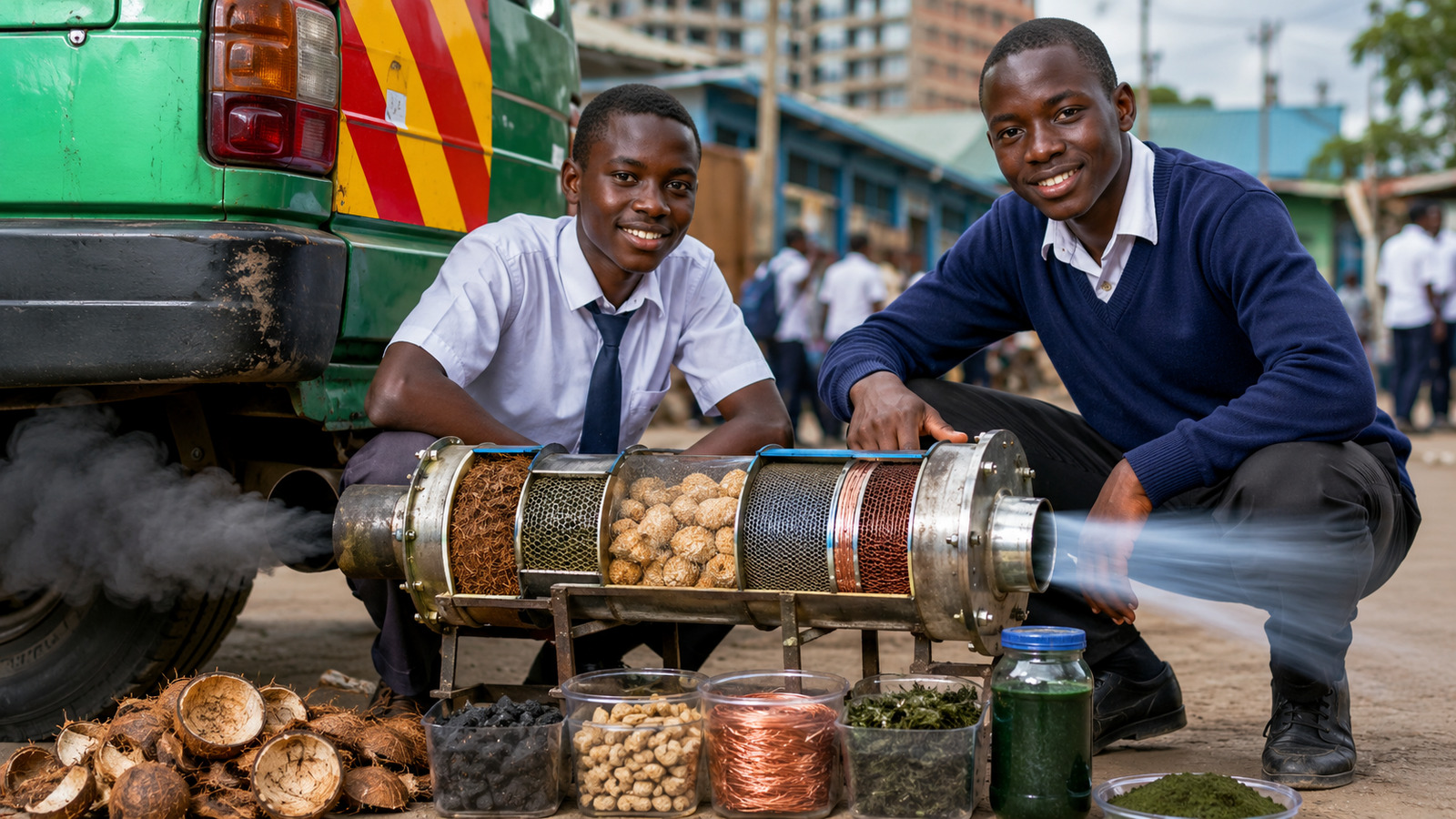


Made with coconut shells, corn cobs, seaweed, and recycled materials, the HewaSafi filter reduced 93.3% of PM2.5 particles in tests with matatus in Kenya and won a regional environmental award
Two students aged 17 from Kiambu County, Kenya, won the Africa region Earth Prize on May 12 with the HewaSafi, a low-cost exhaust filter made with coconut shells, corn cobs, and other local materials. The system reduced 93.3% of PM2.5 particles in tests with matatus in Nairobi.
Exhaust filter was born from a personal experience with pollution
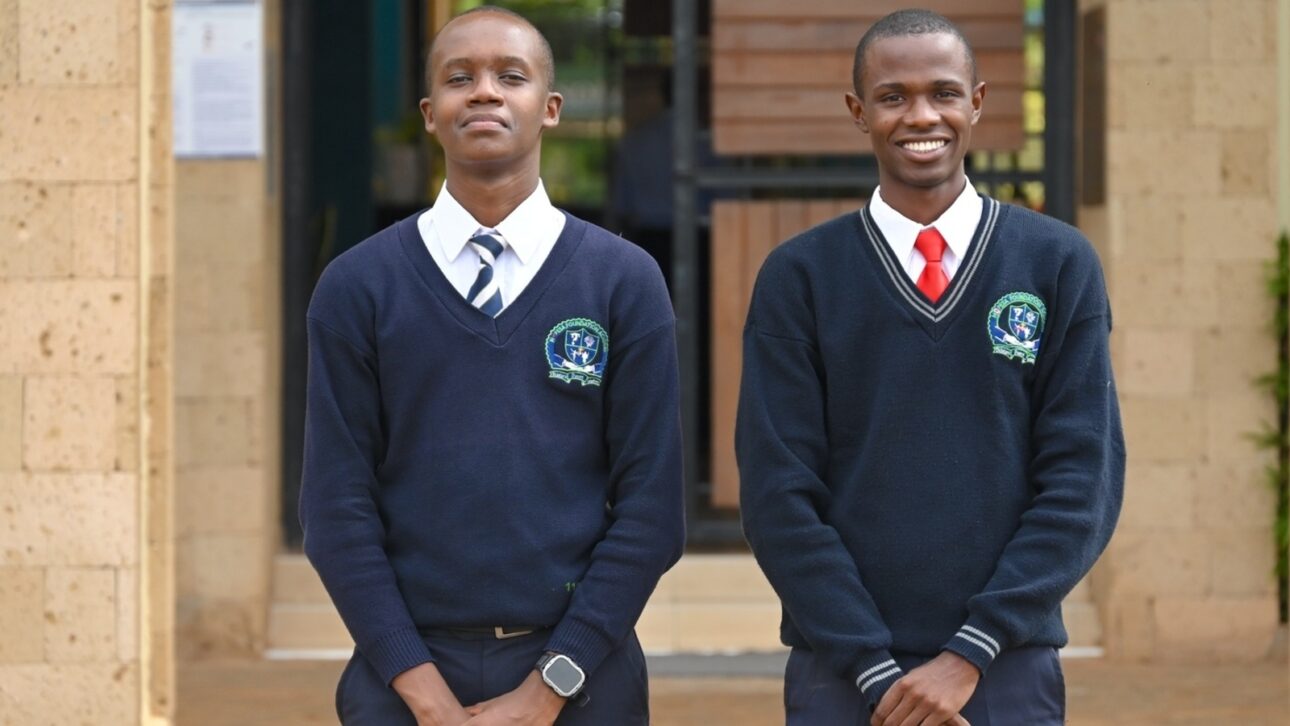
Fredrick Njoroge Kariuki and Miron Onsarigo, students at the M-PESA Foundation Academy, developed the HewaSafi, a name meaning “clean air” in Swahili, after witnessing air pollution-related illnesses among family and friends.
Kariuki grew up in an industrialized area of Nakuru County and developed a chronic lung disease at the age of 10.
-
In the US, researchers attached iPhones to a $25 grabber, turning 22 homes into a database to teach robots to open drawers and handle objects like humans.

-
IBM Breaks 1-Nanometer Barrier with 0.7 nm Chip Featuring Nearly 100 Billion Transistors and 3D Architecture, Promising AI Revolution

-
Apple Raises MacBook and iPad Prices as Memory Costs Surge by Up to 98%, Losing Edge Over Rivals and Highlighting AI Boom’s Impact on Consumers
-
China Establishes State Centers to Train Humanoid Robots, While the West Lags Behind with Makeshift Solutions



The condition still requires weekly medication. Onsarigo, raised in western Kenya, saw deaths and severe cases associated with air pollution.
“The problem of air pollution was something very personal to us, and that’s why we started thinking about finding a solution,” Kariuki told Mongabay. “It was a passion before it became a project.”
According to the World Health Organization, air pollution causes 4.4 million premature deaths per year worldwide.
Vehicle exhaust gases are among the main sources of pollution in urban areas.
System uses agricultural waste, seaweed, and recycled materials
The HewaSafi was created as an exhaust gas filtration system based on locally accessible materials. The structure uses coconut shells, corn cobs, steel mesh, copper, and recycled materials from old batteries.
The project also includes a component made with live spirulina algae, used as a form of bioremediation.
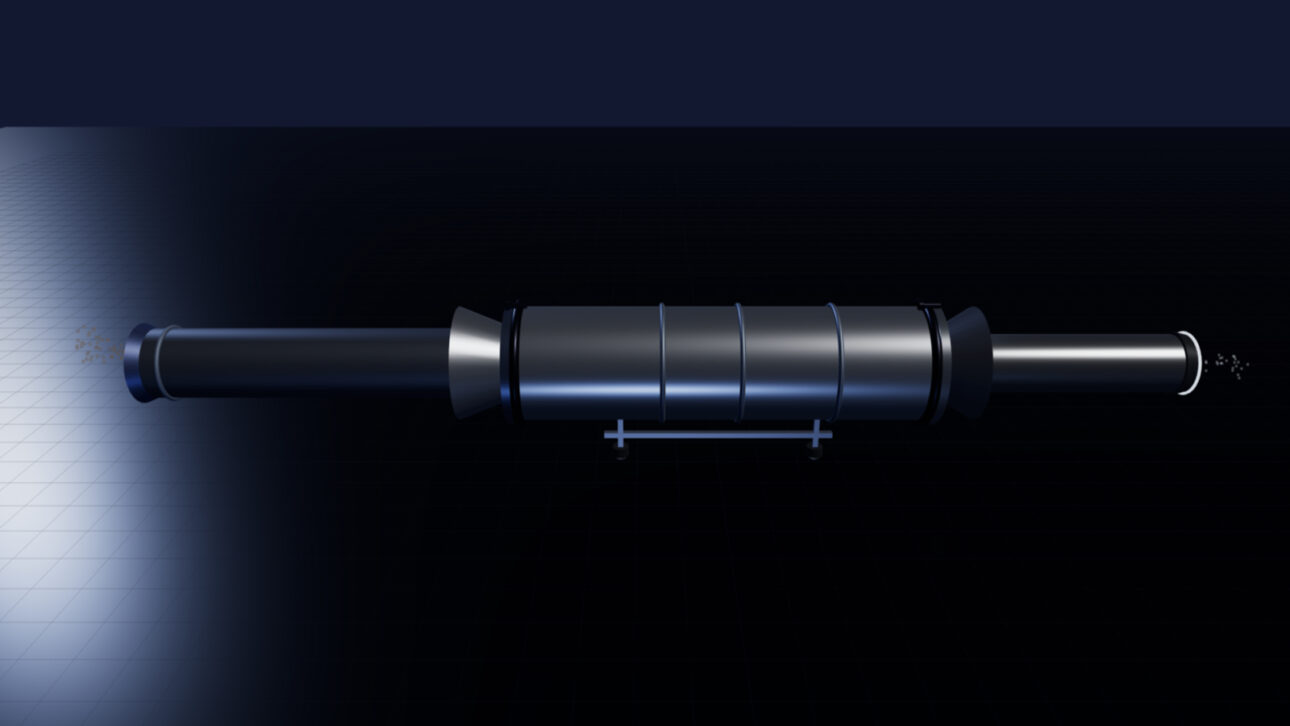
The operation divides the exhaust gas flow into five compartments, each aimed at filtering different pollutants.
The combination of simple materials and phased division was one of the points highlighted by the Terra Award jury.
For Agustín Ocaña Escobar, president of the jury, the strength of the project was in presenting not just an idea, but a tangible technical path.
According to him, the use of accessible materials, agricultural waste, and algae showed realism, experimentation, and potential impact on the community. Escobar also stated he is eager to see the project’s development next year.
Tests with the exhaust filter in matatus recorded a 93.3% reduction in PM2.5 particles
The team conducted pilot tests in partnership with a local matatus association, the private minibuses used as shared taxis in Kenya. The filters were installed in five vehicles operating along the Thika Road corridor in Nairobi.
During the tests, sensors recorded readings every six hours under real usage conditions. The results exceeded the project’s goals, with a 93.3% reduction in PM2.5 particle emissions.
These fine particles can lodge in the lungs and enter the bloodstream, making them harmful to human health. The system also showed a 42% reduction in carbon monoxide and absorption of 21.4% of CO₂.
“We all know that greenhouse gases are one of the main causes of climate change. At the moment we are able to filter carbon dioxide, we will be able to reduce the amount of these gases entering the atmosphere,” said Kariuki.


Lower cost and plan to produce 1,200 units
The price difference is another central point of HewaSafi. According to the team, existing filters cost 50,000 shillings, almost US$ 390. The prototype developed by the students costs 16,288 shillings, about US$ 126.
Despite the recognition, the young people still face difficulties in financing the project. The school supported the team with guidance, raw materials, electronic equipment, internet access, and even a lawyer to help with the patenting process.
The Terra Award, granted by the Terra Foundation, based in Switzerland, recognizes young people aged 13 to 19 who work on solutions for environmental challenges. The current edition is the fifth of the award.
HewaSafi was chosen as the regional winner for Africa and is now competing for the global award. Public voting begins on May 18 and ends on May 27. The international winner will be announced on May 29.
Each regional winner will receive US$ 12,500 to implement their plans, in addition to access to mentorship. The seven regional winners represent North America, Africa, Asia, Central and South America, Oceania and Southeast Asia, Europe, and the Middle East.
The teenagers plan to produce 1,200 exhaust filters in partnership with local artisans from the informal manufacturing sector. They also intend to make an agreement with an association of matatu owners, which represents about 8,000 drivers, to test the filters on 200 vehicles.
“I would not like to see any other child suffering from a chronic lung disease like the one I have,” said Kariuki. “That’s what keeps me going.”
This article was prepared based on information from Mongabay, Terra Foundation, World Health Organization, and statements by Fredrick Njoroge Kariuki and Agustín Ocaña Escobar, with data, numbers, and statements preserved as per the consulted material.





That’s a milestone achievement. May they receive all the support they need. Congratulations to the young men.
Thi is a wonderful innovation, that will shape the world of pollution particularly when applied on industrial scale. Hope to follow and contribute. Kudos to the young men!!
A lot of prospect ahead we could explore.
Great job by WHO and other partners.
Best regards
Need more encouragement from these dynamic caring productive individuals
So focused with intention
Success b wit a formula to provide a solution
Magnificent y
Hi