






 Portuguese
  Spanish


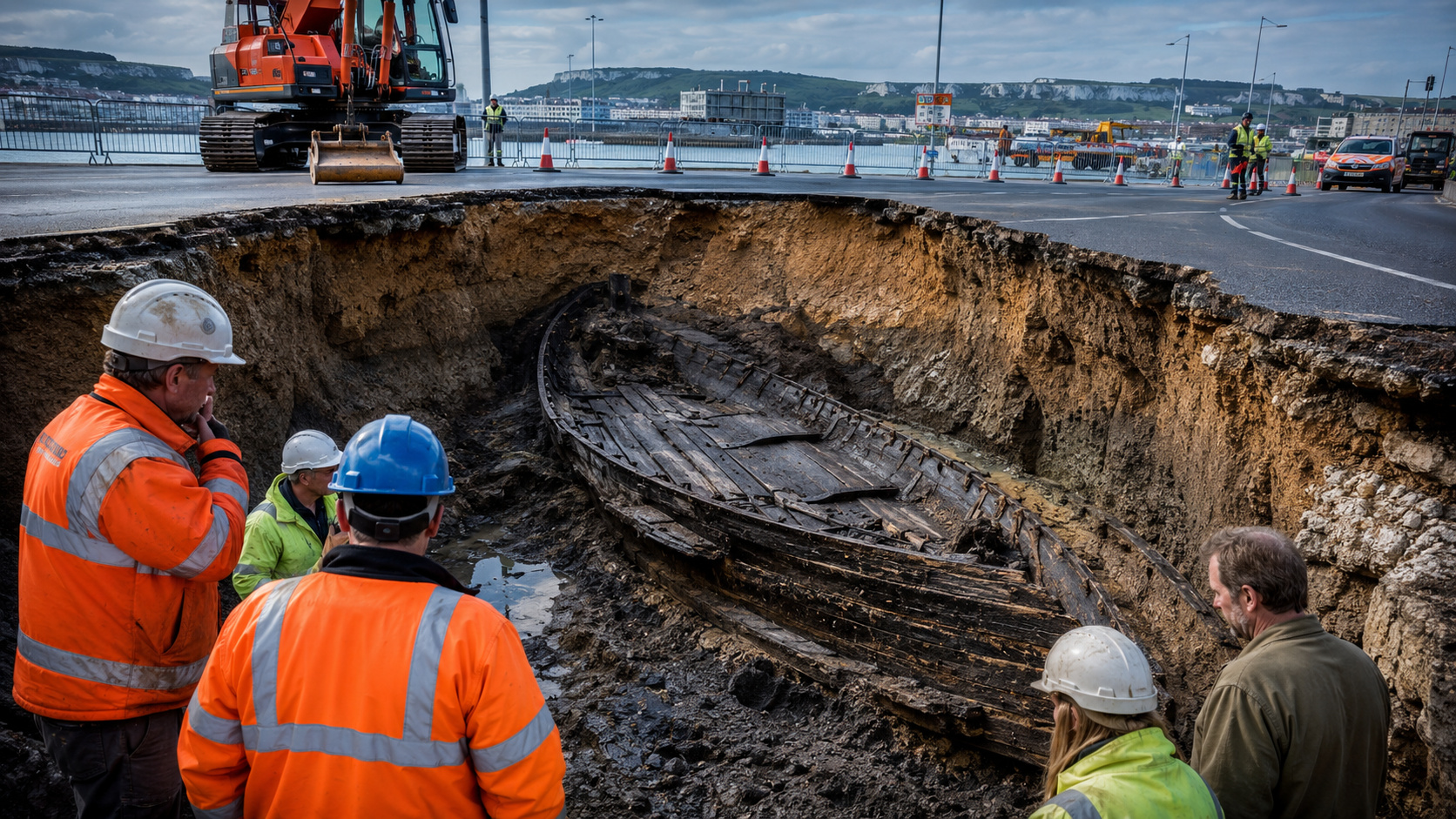


The discovery of the Bronze Age boat in Dover revealed how a project on the A20 road exposed a very rare vessel, made with oak planks joined by plant fibers, preserved for millennia under the soil of a modern city.
Workers were opening a modern road in Dover when they found, 6 meters below the asphalt, a 3,500-year-old boat made with sewn oak and plant fibers.
The discovery occurred on September 28, 1992, during the construction of the A20 road link between Folkestone and Dover. The information was published by Dover Museum, a museum in the English city of Dover.
The case draws attention because it places two eras in the same location. Above, a project made for modern traffic. Below, a Bronze Age vessel that remained preserved for millennia in the soil.
-
Rescue Teams Use Flashlights to Find 47 Dogs in Abandoned, Powerless U.S. Home, Offering Them a Fresh Start Through Responsible Adoption

-
Siblings Discover 1939 Superman Comic in Late Mother’s Attic, Sets Record at $9.12 Million Auction

-
12-Year-Old Discovers 80-Million-Year-Old Marine Tylosaurus Fossil During Kansas Field Trip
-
At 24, Beatriz Becomes First Woman from Mato Grosso to Work on Live Power Lines with Energisa, Starting as a Meter Reader in 2022



How a project on the A20 road found a Bronze Age boat
The A20 project expected to find soil, ancient structures, and common signs of human occupation. What appeared was much rarer: remains of a vessel made about 3,500 years ago.


The workers were opening the road link between Folkestone and Dover when parts of wood appeared at an unusual depth. The find was 6 meters below the street, in an area now marked by road and city.
The discovery showed that the subsoil of Dover held an important piece of ancient navigation. It was not just buried wood. It was part of a boat built before modern assembly techniques.
This contrast helps explain why the case sparks curiosity. A road made for cars ended up revealing a vessel created in a time of simple tools and knowledge passed down through practice.
What it means to say the boat was made with sewn oak
The term stitched oak may sound strange, but the idea is simple. The wooden planks were joined by bindings, as if the pieces were fastened to each other through holes and fibers.
The boat was made with oak planks, a resistant wood. The pieces were connected with plant fibers, that is, materials taken from plants and used as bindings.
This shows an ancient technique of shipbuilding. Instead of relying on machines, metal, or industrial processes, the builders used wood, fibers, and fittings to form a structure capable of navigating.
Dover Museum, the museum of the English city of Dover, detailed the importance of the vessel and the preservation process. The boat is treated as one of the oldest with a large part preserved in the world.
Why a boat was buried far from the current waterline
One of the most curious parts of the find is the location. Today, the vessel appeared under a road area, far from the image many people have of a boat near the water.
This happens because the landscape changes over time. Rivers, banks, wetlands, mud, and sediments can transform into solid ground after many centuries.
Over the millennia, layers of earth covered the vessel. Then, the city grew, infrastructure advanced, and the modern road passed over a much older history.
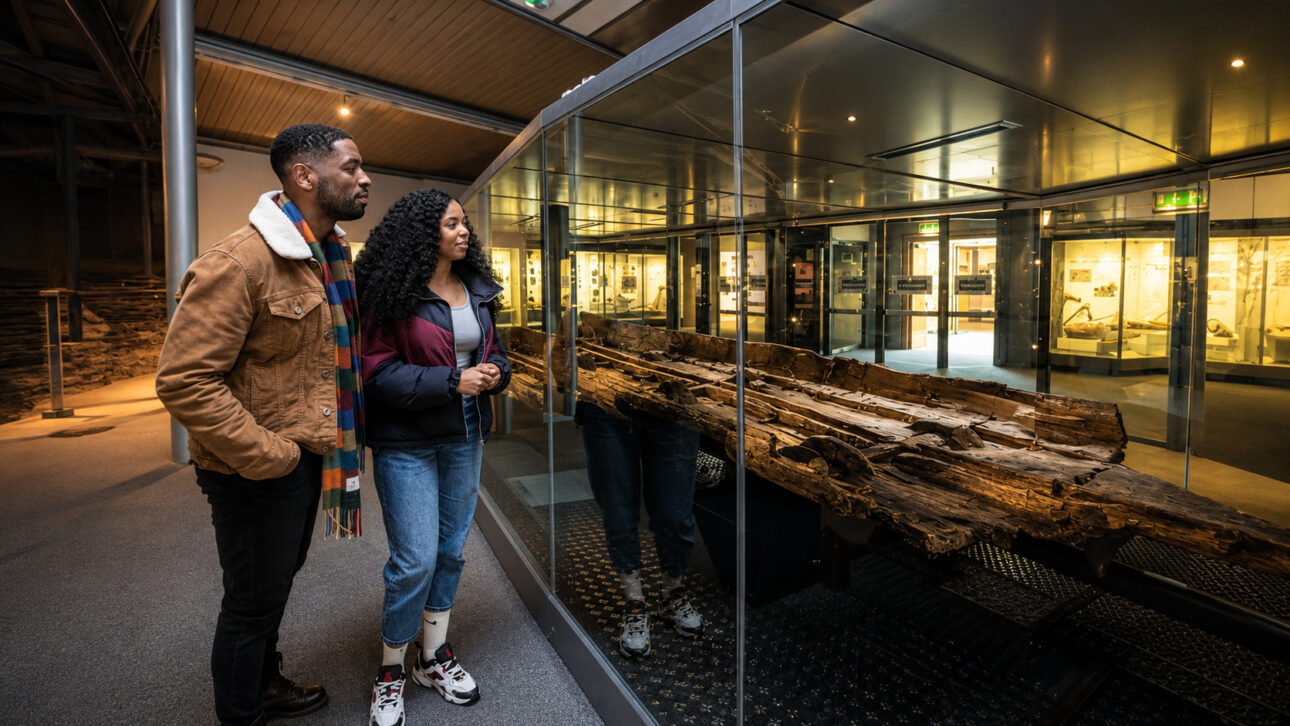
Thus, the boat found in Dover helps to remind us that the ground of a city can hide environments that once had another function. What today seems like just asphalt may have been part of an area linked to navigation.
Why Dover was strategic 3,500 years ago
Dover has always had a strong relationship with water circulation. The position of the region helps to understand why a Bronze Age vessel appeared there.
3,500 years ago, a boat could serve for movement, contact between groups, and transport of objects. In a region connected to water, mastering navigation was an important advantage.
The vessel shows that ancient communities already had the technical knowledge to build complex boats. Each plank, each binding, and each fitting required planning.
Therefore, the find is not just an archaeological curiosity. It shows that Dover was already part of a landscape of movement long before modern roads.
How to Preserve a Boat That Spent Millennia Buried
Removing an ancient boat from the ground is not like removing a common object. The wood that has been buried for millennia can deteriorate quickly when it changes environment.
Therefore, preservation required care. The parts needed to be removed carefully because each piece held information about the construction method.
The conservation also had another goal. Keeping the vessel in study condition helps to understand how people of the Bronze Age mastered wood, plant fibers, and navigation.
This care transformed a construction discovery into historical heritage. Without the correct removal and preservation, the boat could have lost part of its material and scientific value.
The Dover boat shows that a modern construction can reveal much more than a road. On September 28, 1992, workers found beneath the asphalt a vessel that had been hidden in the ground for about 3,500 years.
The discovery is impressive because it combines road, archaeology, and ancient engineering in the same place. A boat made with sewn oak and plant fibers emerged from under the A20 to show how navigation was already important in a very distant past.
Would you imagine that a modern road could hide a 3,500-year-old vessel made with sewn wood? Tell us in the comments what surprises you most about this discovery.




People were very clever then I think and they were good with their hands. Desperate times call for Desperate measures. We lack those skills now because everything you need comes in a box or containers
Problably they treated the wood with some kind of home made solution that keeps it from deterioration all this years.
Is it that there are woods that cannot decay even in a longer time like 3,500 years?