Portuguese
  Spanish


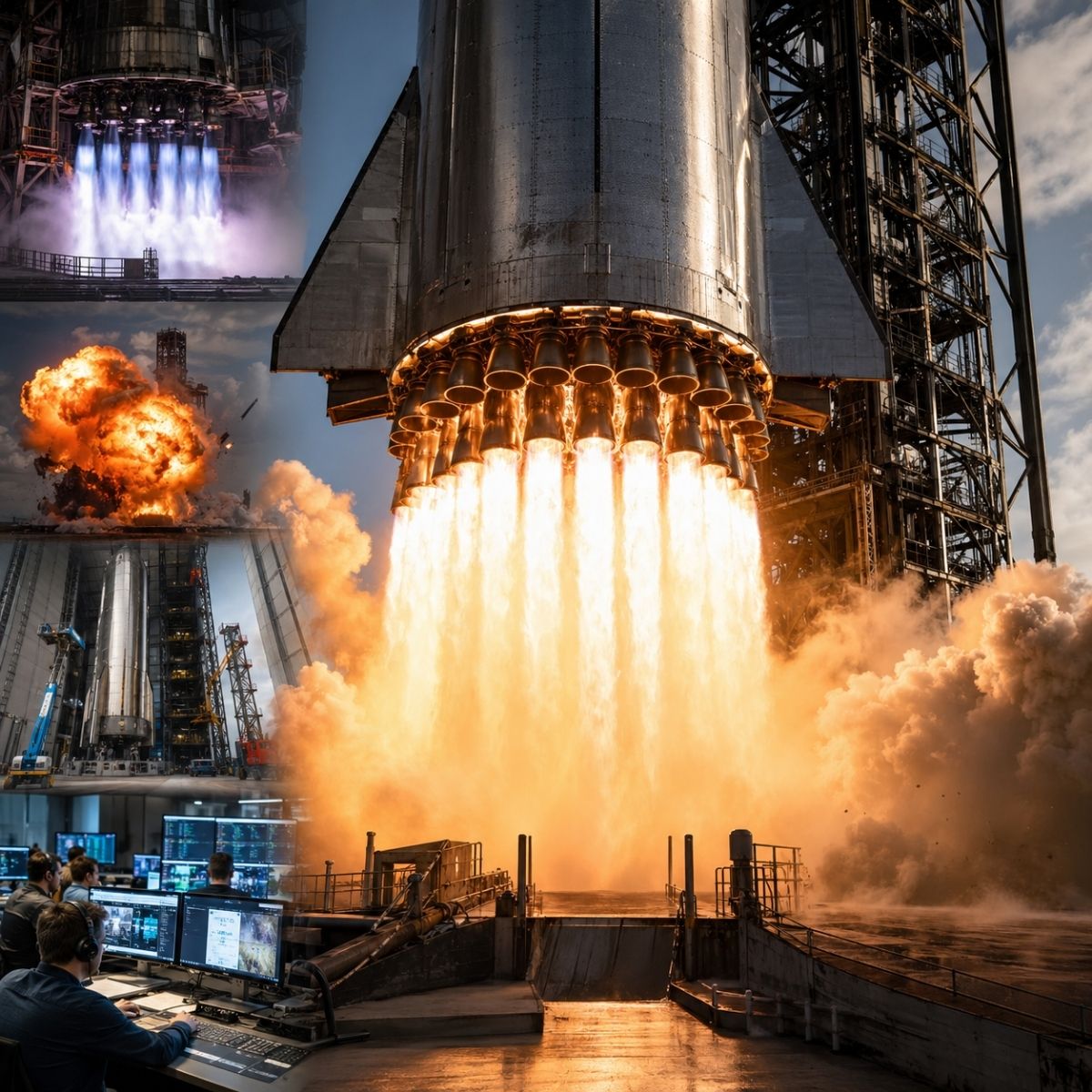

SpaceX ignited all 33 Raptor 3 engines of the Starship V3 rocket, the most powerful ever built, after a test campaign that included the explosion of Booster 18, removal of damaged engines, and two aborts on Booster 19, on the path to take humans to the Moon and Mars.
SpaceX successfully ignited all 33 engines of the Starship V3 rocket simultaneously, an essential milestone on the path to Mars that concludes a test sequence marked by explosions, aborts, and redesigns that almost prevented this moment. Booster 19, the second booster of version three built by the company, performed the full static fire test after a campaign that began with the first trial limited to just 10 engines, as a precaution, since the V3 rocket is such a new project that the team openly acknowledged that “a lot can go wrong” the first time. Pressure in the combustion chambers reached levels never before recorded in any SpaceX vehicle, and engineers describe the moment as the most intense of their careers.
The path to 33 engines ignited simultaneously involved losses that would have discouraged less tenacious teams. Booster 18, the first V3 booster built, exploded during initial tests when an anomaly in the nitrogen system destroyed the entire rocket, although no one was injured and platform damage was minimal because the procedure had been designed to be safe even in the event of catastrophic failure. After this loss, SpaceX shifted its efforts to Booster 19, which faced its own difficulties: the first static fire test with 10 engines was aborted by sensors indicating irregular pressure, and half of the engines showed signs of mechanical damage caused by the rapid shutdown, requiring complete removal and replacement with units from Booster 20.
What the Starship V3 rocket represents for SpaceX and for humanity

Starship is the largest and most powerful rocket ever built. The system is composed of two stages: the booster, equipped with 33 Raptor engines that generate enough thrust to lift the assembly from the launch pad, and the ship, which is the upper stage responsible for entering orbit and transporting crew or payload to the final destination. Version three represents a fundamental redesign compared to previous versions, incorporating lessons learned over five test flights with versions one and two, which culminated in the unprecedented capture of a booster by the mechanical arms of the launch tower on the fifth flight.
-
Brazilian Innovator Transforms 1962 Mercury Comet with Nissan Leaf Electric Motor, Achieving 125 km Range for Under $6,000

-
China Tests Giant 582-Ton Magnets to Contain Plasma Hotter Than the Sun’s Core, Aiming to Cut Superconductor Costs and Generate First Electricity from “Artificial Sun” by 2030
-
Seventh Grader Builds Nuclear Fusion Machine at Home, Aiming for Guinness World Record

-
Ancient Ritual Circle, Hidden for 5,000 Years, Discovered in Scotland’s Machrie Moor Using Sensors, Revealing a “Phantom Stonehenge”



The scale of the rocket is not a whim. Starship needs to be gigantic because the missions it intends to carry out require capabilities that no smaller vehicle can offer: taking humans back to the Moon, establishing the first bases on Mars, and performing in-orbit propellant transfers that would allow refueling ships for interplanetary travel. The V3 ship was designed to remain in orbit for up to 48 hours, rendezvous with other ships, and execute fuel transfers, a capability that SpaceX classifies as the key technology that “unlocks the entire solar system.”
The explosions and failures that almost prevented the 33-engine rocket test

The story of Booster 18 is the most dramatic chapter. The first V3 booster was destroyed by an explosion during the pressurization of the nitrogen system, an accident that eliminated months of construction work in seconds, but which the team absorbed as part of the development process because the test had been configured to minimize consequences: there were no reactive propellants in the rocket, and the site suffered minimal damage. The loss forced SpaceX to accelerate the preparation of Booster 19, which took on the role of the first V3 booster to reach the operational testing phase.
Booster 19 faced its own obstacles. In the first static fire test with 10 engines, the system aborted after detecting a sensor anomaly, and the rapid shutdown caused mechanical damage to about half of the engines, which needed to be removed and replaced. In the second attempt with all 33 engines, another abort occurred after 1.88 seconds of operation when a sensor in the intake manifold indicated lower pressure than expected. Engineers acknowledged that the deflector at the base of the rocket is a difficult component to pre-test because it is not possible to accurately simulate the real environment that forms when 33 extremely powerful engines are ignited simultaneously.
What makes the Raptor 3 engine different from everything that existed before in the rocket


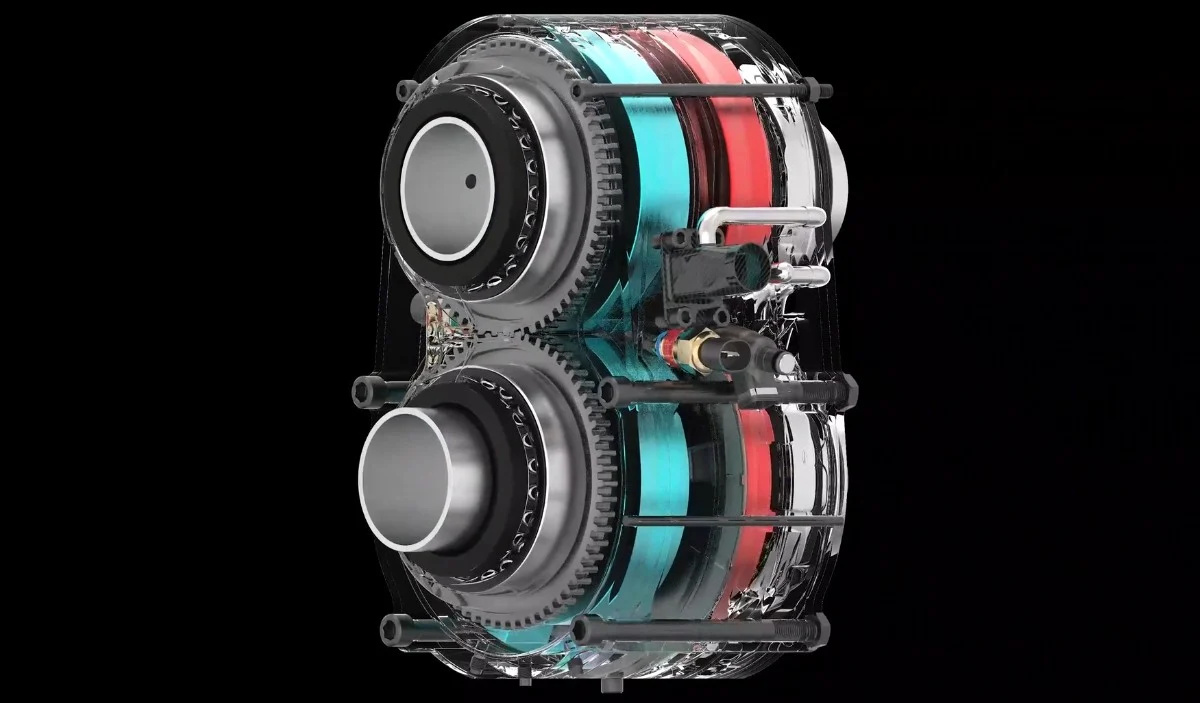
The Raptor 3 is the result of the evolution of about 600 V2 engines produced by SpaceX. The visual difference between the two versions is evident: the V3 underwent a radical simplification that consolidated components, reduced the number of parts, and increased the level of integration to a standard that engineers classify as unique for a rocket engine. Fewer parts mean lower manufacturing cost, faster production, and, crucially, greater reliability, because each eliminated component is a potential source of failure removed from the system.
The ultimate goal with Raptor 3 is to achieve full reusability, something unprecedented in rocket engines. SpaceX wants Raptors to behave similarly to commercial aircraft turbines: fly, return, undergo inspection, and fly again without the need for rebuilding between missions. The Starship rocket only becomes economically viable if each booster can be reused dozens or hundreds of times, and the Raptor 3 was designed from the outset to support this cycle, unlike its predecessors which required extensive interventions between flights.
What comes after the rocket’s static fire test with all 33 engines
The full static fire test is the last major milestone before flight. If the data confirms that all 33 engines, the booster, and ground systems functioned within expected parameters, SpaceX will have the confidence to authorize the next launch of Starship V3, which will be the most ambitious flight in the program’s history and the first with the new rocket design. The V3 ship (Ship 39) also underwent its own tests, including a 60-second static fire test that allowed evaluation of thermal conditions and overall performance before being coupled to the booster.
SpaceX’s philosophy with the Starship rocket is summarized by its engineers in one sentence: “It’s not impossible just because it’s far beyond what has been done before.” In five test flights with previous versions, the company went from the first failed launch to the capture of a booster in flight, a progression that took less time than conventional space programs dedicate to design reviews. Starship V3 carries the ambition to make trips to the Moon routine and trips to Mars possible, and every Raptor 3 engine that ignites on the Boca Chica platform is a concrete step towards a future that most people still consider science fiction.
And you, do you think SpaceX will be able to take humans to Mars with Starship? Leave your opinion in the comments.