Portuguese
  Spanish


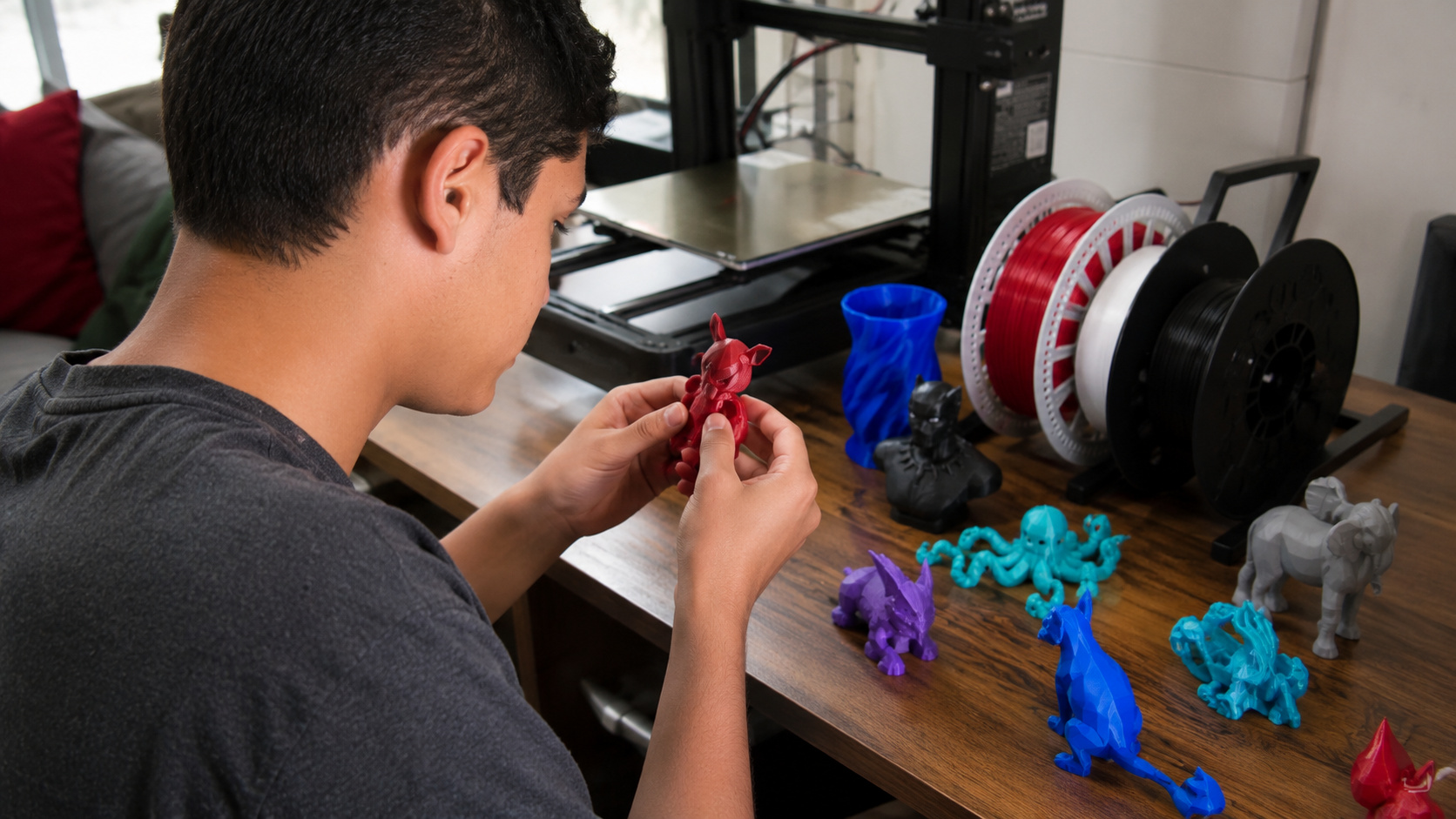

Two students from Manaus combine school routine, 3D printing, and entrepreneurial vision to create custom pieces and expand a project that started within the school
A story of creativity and technology gained prominence in Manaus after two students turned 3D printers into a small business of their own. Heitor Lemos, 13, and Antônio Mauro, 12, began producing characters, keychains, badges, articulated pieces, and personalized objects after discovering the world of robotics and 3D printing. The project, which started as a school curiosity, began to attract orders, clients, and recognition within the educational institution itself. The initiative demonstrates how contact with technological tools can stimulate autonomy, organization, and interest in entrepreneurship from an early age.
Curiosity about 3D printing becomes a business opportunity
The students’ interest in 3D printing began in the school environment, through activities related to robotics and technology. Heitor discovered this universe at the age of 8 when he joined a robotics course and began to observe the possibilities of creation with machines capable of transforming digital files into real objects. Antônio also became interested in the subject when he realized that creativity could leave the computer screen and take physical form.
The production of the pieces requires planning, research, and constant monitoring. The students choose models, make adjustments on the computer, and send the projects to the printers. Each item needs attention during manufacturing, as failures can occur in the process, forcing the duo to reconfigure the piece. The first test was the traditional small boat used in 3D printing to assess machine parameters. The initial piece did not turn out as expected, but it served as a starting point to improve technique, finish, and precision.
-
NASA Plans Telescope That Can Be Repaired by Robots 1.5 Million Kilometers from Earth

-
China Launches First Oceanic Medical Rescue Ship with Advanced Facilities to Serve Remote Regions

-
Midea Unveils Portable PortaSplit Air Conditioner: 12,000 BTUs, Quiet Mode, Heating, Dehumidification, App Control, and AI Efficiency Without Professional Installation
-
Singapore Turns Incinerated Waste Ash into Construction “Sand” in Ambitious Project to Revolutionize Megacity Waste Management


First order shows the commercial strength of the project
The first order received by the duo was an articulated shark keychain. The order marked an important change in how the students viewed the activity. What seemed like just an experiment began to be seen as a possibility for income and business. The sale brought enthusiasm and showed that there was real interest in the printed products.
Characters from movies, games, cartoons, keychains, and original creations became part of the production. The growth in orders also increased responsibilities. Heitor reported that he frequently started thinking about new pieces to sell, while Antônio took on part of the organization of orders and the production routine. The work ceased to be just an occasional activity and became part of their daily lives.
School places order for more than 800 buttons
The students’ talent caught attention within the school itself. The institution hired the duo to produce more than 800 buttons used in an institutional campaign. The large order required organization, task division, and effort to meet the deadline. The order also showed that the project had the capacity to meet larger demands.
The path to this contract began with a small printed brooch given as a gift. The piece sparked interest, reached the teachers, and got to the school management. From this contact, the mass order was made to the students. The production required nights of dedication, machine monitoring, and constant adjustments, but it strengthened the duo’s confidence in their own work.
School routine starts to share space with production
The routine of the young entrepreneurs combines studies, school tasks, model research, production, and deliveries. Heitor wakes up early, goes to school, returns home, does his activities, and then looks for ideas for new products. The printing period also serves as a time to pay attention to the machines, as any error can interrupt the manufacturing.
Antônio studies in another shift and helps organize orders in the morning. The division of schedules allows both to maintain their school routine without abandoning the business. Families also participate in the process, sending ideas, following trends, and encouraging new creations. Support at home helped transform the initial curiosity into a more structured activity.
Entrepreneurship stimulates autonomy and creativity
The students’ experience shows that child entrepreneurship can go beyond selling products. The contact with clients, deadlines, production, and planning develops skills such as communication, responsibility, autonomy, and critical thinking. 3D printing serves as a practical tool to apply technology and robotics knowledge in real situations.
The school also recognizes the value of this process. The use of technology in concrete projects brings students closer to innovation and broadens their perception of what can be created from learning. The duo shows that the school environment can be a starting point for entrepreneurial initiatives when there is encouragement, guidance, and space to experiment.
Expansion plans reinforce the duo’s ambition
Heitor and Antônio’s next steps involve expanding the business structure. The duo intends to buy another printer to increase production and better meet orders. The interest in color printers also appears in the plans, as this type of equipment can make the pieces more attractive to the market.
The students’ dream is to grow, strengthen the company, and open their own 3D printing store in the future. The technology that started as a school discovery has come to represent a concrete possibility for personal and professional development. Among computers, filaments, and a lot of creativity, the boys from Manaus show that good ideas can emerge early and take shape when they find dedication.
The case of Heitor Lemos and Antônio Mauro reinforces how technology can transform curiosity into learning, learning into a product, and a product into an opportunity. In an increasingly connected generation, the duo’s story shows that 3D printers can also open paths to responsibility, innovation, and entrepreneurship.
Do you believe that schools should encourage more robotics and 3D printing projects to bring children and teenagers closer to entrepreneurship from an early age?