






 Portuguese
  Spanish




With 33 Km Offshore and World Record Status, The Wall That Changed The Coast of South Korea Created New Land, Altered Tides, and Sparked An Environmental War Over Wetland Loss
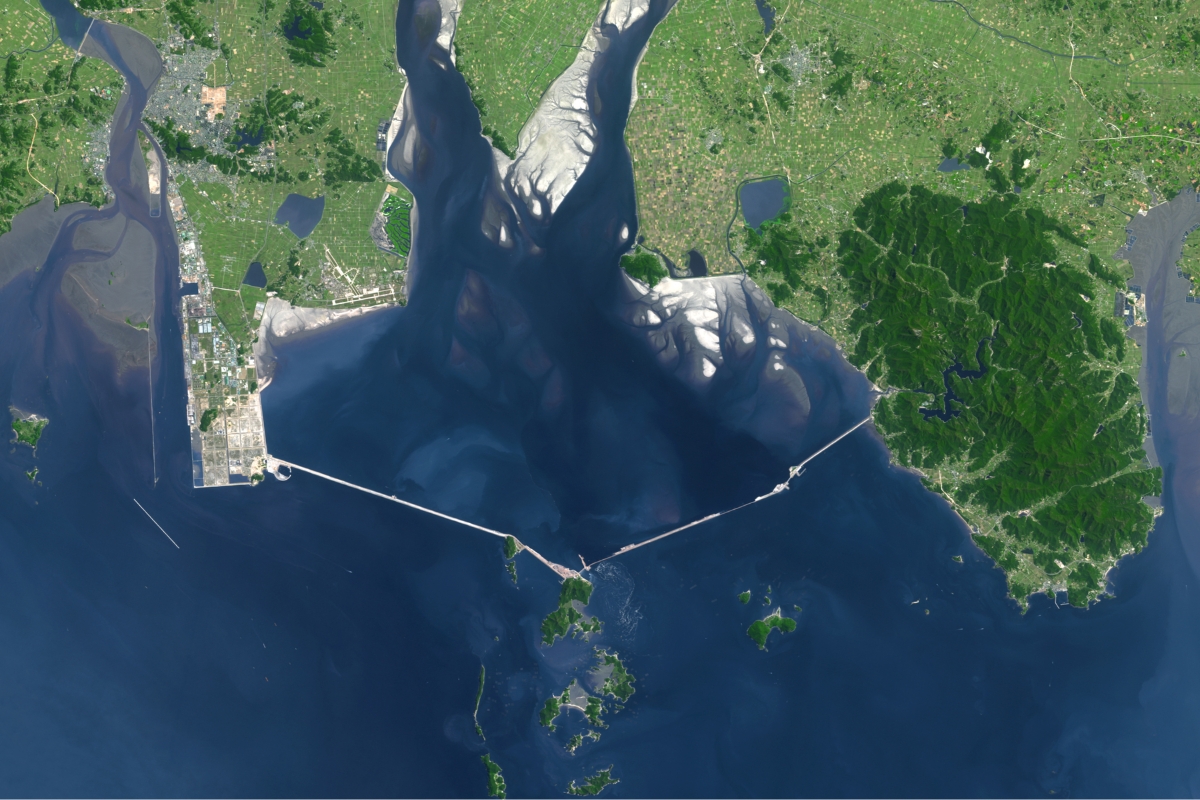
South Korea built a wall in the sea measuring 33.9 km and permanently changed the country’s coastline. The structure was named Saemangeum Seawall and became a global landmark due to its size and the effects it generated.
The barrier was installed on the southwest coast, separating the Yellow Sea from a vast area previously dominated by tides, estuaries, and natural marshes. The change allowed for water control and the creation of new land.
At the same time, the project began to draw environmental criticism. The transformation directly affected wetlands, which are considered essential for coastal biodiversity.
-
Teen Invents Biodegradable Material from Shrimp Shells That Decomposes 1.5 Million Times Faster Than Regular Plastic

-
Scientists Develop Diving Suit for Cyborg Cockroaches to Survive Underwater for 3 Hours, Navigate Flooded Tunnels, and Aid in Disaster Rescue Missions, with Potential for Mars Exploration
-
Xiaomi Unveils Ultra-Slim Washer-Dryer with Over 30 Programs, Hygienic Steam, Smart Drying, 15-Minute Quick Wash, App Control, and Space-Saving Design

-
Brazilian Researchers Develop Ultrasound-Based Breast Scanner Using Warm Water, Currently Undergoing Clinical Validation



What Happened and Why It Gained Attention
The Saemangeum Seawall entered international records as the world’s longest continuous maritime wall, extending 33.9 km. The official opening occurred on April 27, 2010.
The size of the structure is impressive because it surpasses entire urban crossings, but it was built in a marine environment, subject to tides, currents, and sediments.
The project did not merely close off a bay. It redefined the relationship between land and sea across the region, creating a new artificial coastal system.

Where The Structure Is Located and Which Region Was Transformed
The wall is located in the province of Jeollabuk-do, connecting nearby areas of Gunsan, Gimje, and Buan in the southwest of the Korean Peninsula.
Before construction, the site housed extensive marshes and coastal wetlands. These environments served as transition areas between fresh and saltwater, with high ecological productivity.
With the closure of the area, natural circulation was interrupted. The region began to rely on hydraulic control, altering sediments, salinity, and environmental dynamics.
How Long It Took and How Much It Cost to Build
The construction of the Saemangeum Seawall began in the early 1990s and took almost 20 years until the official opening in 2010.
The cost directly associated with the barrier is described as nearly 2 trillion won, which covers the maritime structure itself.
When considering the complete land reclamation and area development project, known as the Saemangeum Project, the total disclosed investment reaches 22.2 trillion won.

The Environmental Impact and the Dispute Over Wetlands
The main environmental consequence was the drastic reduction of wetlands. These environments supported biodiversity, migratory bird routes, and natural water filtration cycles.
The loss of these spaces altered the presence of fauna and the local ecological balance. Environments previously revitalized by tides began to function as more closed systems.
This transformation fueled a continuous dispute between economic development and environmental preservation, making the structure one of the most debated cases in the country.
Why The Saemangeum Seawall Became A Permanent Case Study in Environmental Issues
The Saemangeum Seawall ceased to be merely a record-breaking structure and has become regarded as a long-term experiment. The change in water and sediment circulation continues to generate effects years after the inauguration.
The project has become an international reference for assessing the limits of large coastal works. The case shows how interventions of this magnitude can create territorial gains but also incur environmental losses that are difficult to reverse.
The wall remains a concrete example of how engineering decisions can redesign entire ecosystems and influence future coastal occupation policies.
South Korea built a wall measuring 33.9 km that redefined the coast, enabled a territorial megaproject, and opened a lasting environmental debate. The impact of the Saemangeum Seawall remains visible both in the landscape and in discussions on preservation.


Como vemos la gran mayoría de desastres están provocados por el ser humano y a sabiendas, NO hemos aprendido nada de nada, solo destruimos nuestro planeta poco a poco nosotros iremos desapareciendo como especie, pues con todos los recursos mermados etc, que futuro le espera a nuestra especie.
Y esto pasará más pronto que tarde, el futuro muy próximo ya está aquí como vemos a diario, pronto nos enfrentaremos unos a otros, y se acabó.
The loss of Saemangeum has been one of the greatest environmental disasters in the world. This was one of the world’s key feeding areas for migrating shorebirds/wading birds on the East Asian Australian Flyway due to it’s extensive and very rich mud flats. These birds have very specialised diets and can’t just ‘go somewhere else’. The dramatic fall off in migrating birds on this Flyway since then has largely been due to the loss of Saemangeum. These losses have been felt from Siberia to Australia. The South Korean government knew this at the time but were prepared to put development ahead of conservation.
Why does this map look like it almost came straight out of Pokémon Black and White?