Portuguese
  Spanish


China’s wind components reinforce the role of the Port of Fortaleza as a strategic hub for the wind energy chain in Brazil, in an operation involving hubs, nacelles, drivetrains, and coolers intended for the assembly of wind turbines in Rio Grande do Norte.
Wind components from China arrived at the Port of Fortaleza, in Ceará, in March 2026, in an operation focused on the renewable energy sector and conducted by Termaco, a company accredited at the terminal. The cargo includes 76 pieces intended for the assembly of wind turbines, including hubs, nacelles, drivetrains, and coolers, which will be transported by road to a wind farm in Rio Grande do Norte, with logistics expected to be completed by the end of April.
The arrival draws attention because it goes beyond a common port movement. The operation shows how the Northeast is consolidating itself as a decisive region for wind energy in Brazil, while the Port of Fortaleza gains relevance due to its integration with the road network, a factor highlighted as essential for the flow of large and highly complex technical cargo.
Port of Fortaleza receives 76 wind components from China
The Port of Fortaleza received a robust cargo with 76 components intended for the assembly of wind turbines, essential equipment for wind energy generation. The items came from China and remain at the terminal until the next stage of the logistics operation.
-
Free Upgrade to Professional Driver’s License Categories in Over 130 Locations in Brazil, Including Exams and Courses

-
Bus Drivers in Sorocaba, Brazil, Avoid Strike and Secure 10.53% Pay Raise, Setting Wage Benchmark for Other Regions

-
Swedish Port to Dredge 14 Million Cubic Meters of Seabed to Accommodate Larger Cargo Ships and Expand Operations in Ice-Prone Region
-
Latin America’s Largest Port Invests $400 Million in Rail System with Trains Up to 2.4 Kilometers Long


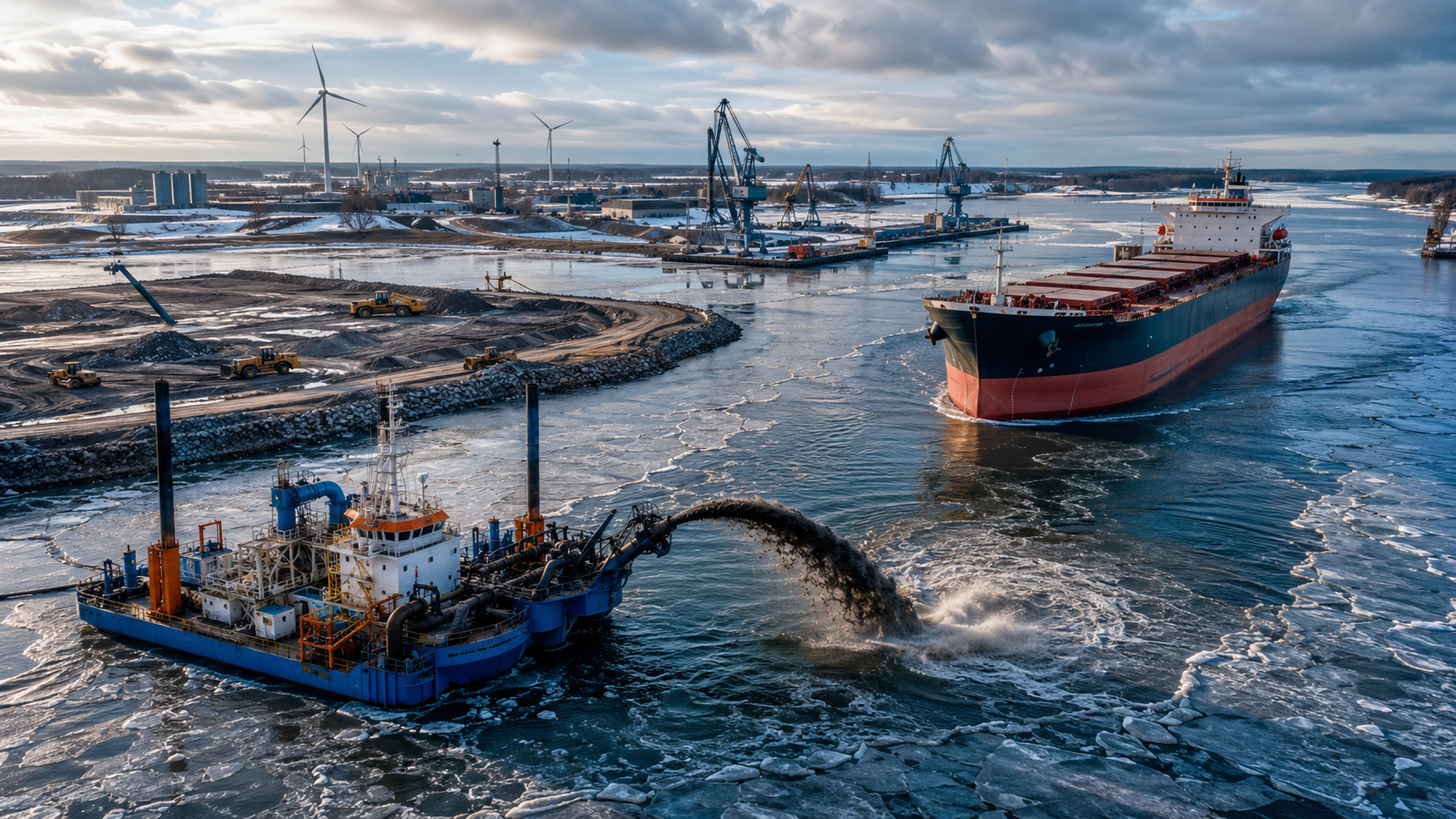
Among the received parts are hubs, nacelles, drivetrains, and coolers, components that integrate essential parts of wind turbines. This is a cargo of high technological complexity, with specific requirements for handling, storage, and transport.
The operation was carried out by Termaco, a company accredited at the Port of Fortaleza and responsible for the handling and storage of the equipment. The work reinforces the capacity of the Ceará terminal to meet demands related to large-scale industrial and energy projects.
Equipment travels by road to wind farm in Rio Grande do Norte
After arriving at the Port of Fortaleza, the equipment will continue by road to a wind farm located in Rio Grande do Norte. The operation is expected to be completed by the end of April.
This displacement requires careful planning, as the components are large, sensitive parts directly related to the assembly of wind turbines. Logistics must consider storage, departure from the terminal, the journey along the roads, and arrival at the final destination in suitable conditions.
The choice of the Port of Fortaleza is related to its integration with the road network. This connection facilitates the flow of large cargo and gives the terminal a strategic position to serve renewable energy projects in different parts of the Northeast.
Hubs, nacelles, drivetrains, and coolers form the operational core of the turbines

The components received at the Ceará terminal have relevant functions within wind turbines. Hubs, nacelles, drivetrains, and coolers are part of the technological structure necessary to transform wind power into electrical energy.
These parts form the so-called operational heart of wind turbines, as they are linked to the mechanical and thermal functioning of the equipment. Therefore, the operation requires extra care from port handling to road transport.
The arrival of this type of cargo also demonstrates the level of specialization required by the wind energy chain. It is not just about receiving imported equipment, but about coordinating port infrastructure, storage, heavy transport, and connection with power generation parks.
Integration with highways weighed in the choice of the Ceará terminal
One of the decisive factors for choosing the Port of Fortaleza was its good connection with the roads. According to Companhia Docas do Ceará, this integration with the road network played an important role in defining the terminal for the operation.
Road connectivity is essential for this type of cargo, as it allows equipment to travel from the port to the wind farm with greater efficiency. In large-scale operations, the terminal’s location and the quality of access can directly influence the cost, time, and safety of transport.
This differential strengthens the Port of Fortaleza as a competitive alternative for the wind energy sector. By combining port infrastructure and road access, the terminal plays a relevant role in connecting equipment imports with project implementation in the interior of the Northeast.
Operation reinforces the Port of Fortaleza as a hub for the wind power chain
The movement of wind components from China reinforces the Port of Fortaleza’s vocation as a strategic hub for the wind power chain in Brazil. The terminal in the capital of Ceará plays a relevant role in an operation directly linked to the advancement of renewable energies.
This positioning is important because wind energy has become one of the pillars of sustainable development in the country. As new parks demand specialized equipment, logistics infrastructure becomes a decisive part of the sector’s expansion.
The Port of Fortaleza appears in this context as an entry point and organization hub for complex cargo. The operation shows that the wind power chain depends not only on favorable winds but also on ports, logistics companies, highways, and technical capacity to move large equipment.
Northeast consolidates its role as a protagonist in clean energy
The Northeast plays a central role in the expansion of Brazilian wind energy. The region brings together favorable conditions for clean energy generation and has become one of the protagonists of this sector in the country.
The operation between Ceará and Rio Grande do Norte reinforces this regional dynamic. Equipment arrives via the Port of Fortaleza and proceeds to a wind farm in Rio Grande do Norte, showing how the Northeastern infrastructure is articulated to serve renewable generation projects.
This movement also highlights the importance of logistics for the advancement of the energy matrix. Without ports capable of receiving special cargo and without highways integrated into installation sites, the expansion of wind farms would face more operational obstacles.
Renewable energy demands precision logistics and prepared infrastructure
The wind power chain depends on high-tech and large-scale equipment. Therefore, operations such as the arrival of the 76 components at the Port of Fortaleza require precision, planning, and prepared infrastructure.
The movement of hubs, nacelles, drivetrains, and coolers involves stages ranging from unloading at the terminal to storage and road transport. Each phase must preserve the integrity of the parts and ensure they arrive at their destination in suitable condition for the assembly of the wind turbines.
This type of operation reinforces a central point of the energy transition: clean energy also depends on an efficient logistics chain. Ports, transport companies, specialized terminals, and road access are part of the structure that allows projects to be transformed into effective generation.
What this operation signals for the Brazilian wind sector
The arrival of wind components from China at the Port of Fortaleza signals an important stage for the renewable energy chain in Brazil. The operation combines technology import, port handling, road transport, and infrastructure implementation at a wind farm.
More than an isolated cargo, the movement shows how the wind sector demands integration between different regions and agents. Ceará acts as a logistical gateway, while Rio Grande do Norte receives the equipment to reinforce its generation structure.
This connection can increase the relevance of the Port of Fortaleza in new operations in the sector, especially at a time when clean energy is gaining weight in the Brazilian economy and energy matrix.
The movement of the 76 pieces from China shows that the advancement of wind energy in Brazil involves a complex mechanism, encompassing international technology, port infrastructure, road transport, and generation parks in the Northeast. The Port of Fortaleza strengthens its position in this scenario by acting as a strategic link between the arrival of equipment and its final installation in Rio Grande do Norte territory.
In the coming months, the completion of transport to the wind farm in Rio Grande do Norte should confirm the importance of this operation for the regional wind power chain. The case also reveals that the expansion of renewable energy increasingly depends on terminals prepared to receive special cargo and connect sustainable projects to the country’s logistical routes.
What do you think this operation could represent for the advancement of wind energy in the Northeast? Leave your opinion in the comments.