






 Portuguese
  Spanish
  5 min of reading
  2 comments


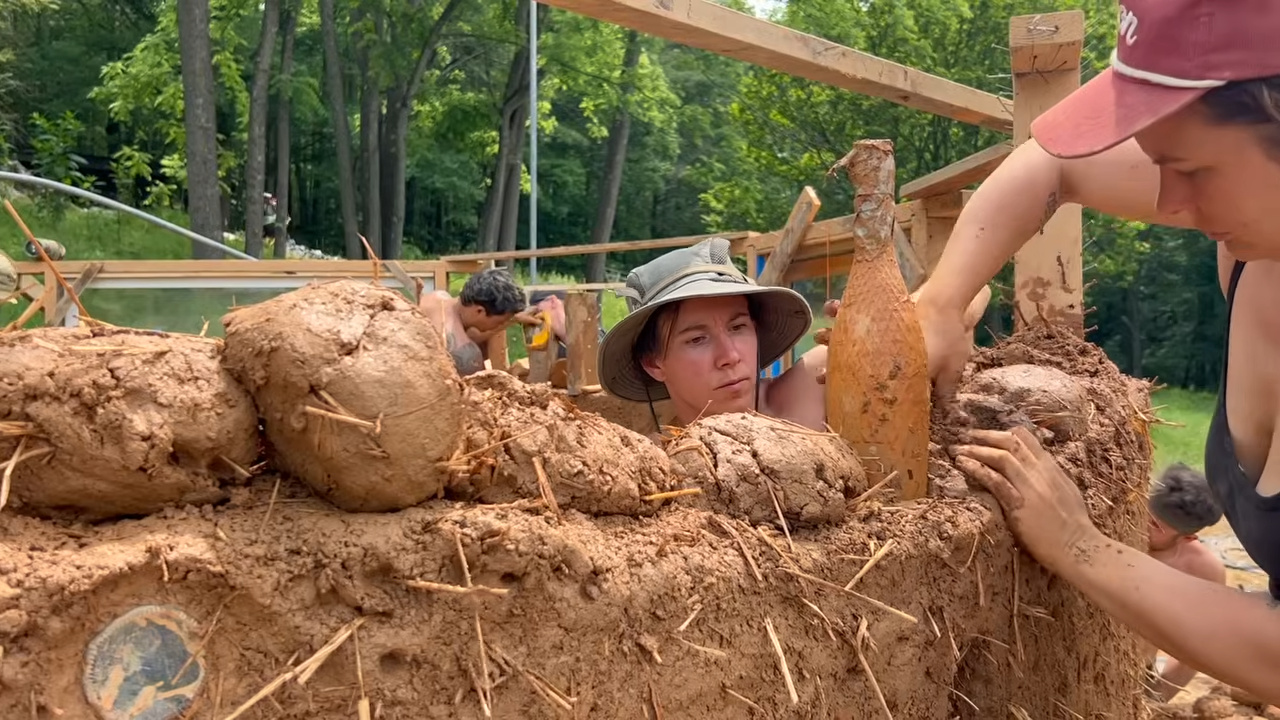


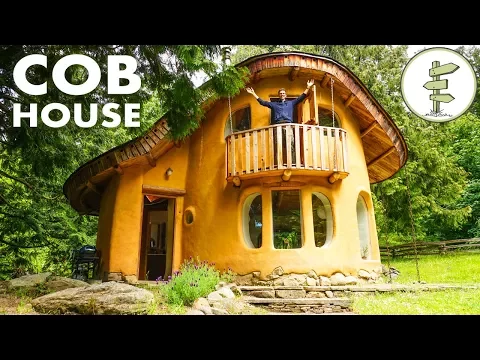
Cob Building Mixes Clay, Sand, and Straw to Create Sculpted Curved Walls; Houses Over 300 Years Old in the United Kingdom Prove Their Durability.
Structures made with clay have existed since the dawn of civilization, but few techniques draw as much attention as cob building, a method in which clay, sand, and plant fibers (usually straw) are mixed by hand and shaped directly on-site, as if they were clay. Unlike bricks, blocks, or concrete walls, cob does not require forms, does not require mold removal, and allows for the creation of curved walls, niches, arches, built-in benches, round windows, and details that resemble sculptures. It’s not a new concept: there are cob houses over 300 years old still inhabited in the United Kingdom, especially in the regions of Devon, Dorset, and Cornwall, where the wet and cold climate has not prevented the survival of the structures.
Today, cob has resurfaced in countries such as the United Kingdom, the United States, and Australia, driven by alternative building schools, ecological certifications, and research on thermal performance. And despite its artisanal and “medieval” appearance, the system surprises with real and little-known technical features.
How Cob Works in Practice
The basis of cob is simple: clay soil, sand, and straw. The clay acts as a binder, the sand provides compressive strength, and the straw serves as mechanical reinforcement for tension and flexural strength, similar to what steel does in reinforced concrete, but on a different scale of use.
-
To halt the advance of the Sahara, the 8,000 km Great Green Wall in the Sahel relies on reforestation to combat desertification, but by 2026 it remains far behind the goal of 100 million hectares.

-
Long before sustainable construction became a trend, China built earthen fortresses with multiple floors, a central courtyard, and the capacity to house up to 800 people living in a community.

-
While in the rest of the world building a hospital takes years from design to inauguration, China erected the Huoshenshan Hospital from scratch in just 10 days, with 1,000 beds, foundation, structure, electrical installations, plumbing, and oxygen system ready to receive patients, mobilizing 7,000 workers.

-
Without mortar, grout, or traditional construction: the ClickBrick system assembles brick facades with ceramic pieces held by metal clips, eliminating the need for glue, speeding up installation, and even allowing everything to be dismantled later without turning the construction into expensive permanent debris.





The mixture is made until it reaches a “plastic” consistency, capable of being stomped, shaped, and joined layer by layer on foundations. Since there are no blocks, there are no mortar joints; the wall is a single monolithic body, which brings surprising advantages:
• does not crack due to weak joints
• dissipates deformations better
• allows for simple repairs (just apply fresh material)
• does not require industrial tools
The drying time varies depending on the climate, but in humid regions, it is common for walls to dry over weeks or months, which contributes to the consolidation of the structure.
Thermal Insulation and Internal Comfort
Although it may not seem so, cob provides high thermal stability due to its high thermal mass. This means that:
- delays heat entry during the day
- slowly releases accumulated heat during the night
- maintains more stable internal temperatures
This behavior has been proven over centuries in the southwest of England, where cob houses maintain warmer interiors in winter and cooler ones in summer, even without modern insulation systems.
In warmer and drier regions, such as parts of California, Australia, and New Zealand, this characteristic makes cob directly compete with adobe and rammed earth, other earthen techniques, with the difference that cob allows for free and organic forms, something that adobe and rammed earth cannot do without forms or bricks.
Durability: What Makes Cob Houses Last Centuries

To survive for centuries, cob needs two basic protections, which builders summarize as:
“Big Shoes and a Wide Hat”
That is:
Big Shoes (Foundation)
Elevated foundation to keep the wall away from moisture in the ground.
Traditionally it was stone; today it can be concrete, masonry, or natural stone.
Wide Hat (Roof)
Roofs with eaves to protect the walls from rain.
When respected, the result is impressive: many English houses over 300 years old have endured storms, mists, snow, and coastal salinity without losing structural integrity. There are records of cob houses from the 17th century still inhabited in Devon and Cornwall.
Uncommon Architectural Freedom
Because the material is shaped while it is plastic, cob allows for the creation of elements that do not exist in conventional constructions:
• curved and organic walls
• built-in cabinets
• structural cob sofas
• internal and external niches
• round windows and arches
• sculptures applied to the wall
This aesthetic has drawn the attention of architects working in the field of bioarchitecture, as the material allows for mixing art and engineering in a single construction process.
Where Cob Continues Active
Currently, there are relevant contemporary projects in:
The United Kingdom – restoration of historic houses and new constructions with ecological certifications
The United States – natural building schools in Oregon, New Mexico, and California
Australia – use in coastal and rural areas focused on thermal mass
New Zealand – integration with rammed earth techniques and wood framing
These regions have institutes, courses, and research that keep the system alive, and in some cases, officially approved within local building codes.
Environmental Performance and Lifecycle
Cob stands out for:
- low carbon impact (almost zero if materials are local)
- minimal industrial processing
- high recyclability (just moisten and reuse)
- low embodied energy
- renewable and abundant materials
At a time when the construction industry accounts for ≈ 40% of global CO₂ emissions, techniques like cob awaken interest precisely to return to a smart use of thermal mass and local materials.
Real Challenges and Limitations
Despite the advantages, cob is not perfect. The main challenges are:
Speed of Construction
The method is slow, requiring layers and gradual drying.
Legal Coding
In many countries, there is no specific building code for earthen materials, which complicates approvals.
High Climatic Demands
Constant rain and the absence of eaves can damage the walls. Still, none of these limitations have invalidated the system — they have only made its use more technical and more planned.
Why This Technique Continues to Attract Attention
Cob combines raw materials, sculptural architecture, thermal comfort, longevity, and low carbon emissions in a single package.
What is surprising is that it is not an innovation, but rather a perfectly functional medieval technology that has survived the English rain for over 300 years and today reappears as a modern alternative.
And it is precisely this contrast — medieval and sustainable, artisanal and technical, slow and ultra-durable — that makes cob such a strong topic within the universe of little-known construction techniques, ecological architecture, and climate-based engineering.







Seems to me you need a mixing machine, a pug mill. Also, some good insulation, like styrocrete.
Eu já morei em casa construída com material da terra. Casa de estuque. Hoje eu gostaria de ter uma assim
Eu lembro quando novinha, cinco anos mais ou menos, todo final de semana, minha mãe passava barro branco no fogão de lenha, chão e parede. Casa era fria que ela colocava brasas na bacia para aquecer. Tenho marcas no braço de que me queimei na bacia. Cai. Tenho 60 anos.