






 Portuguese
  Spanish


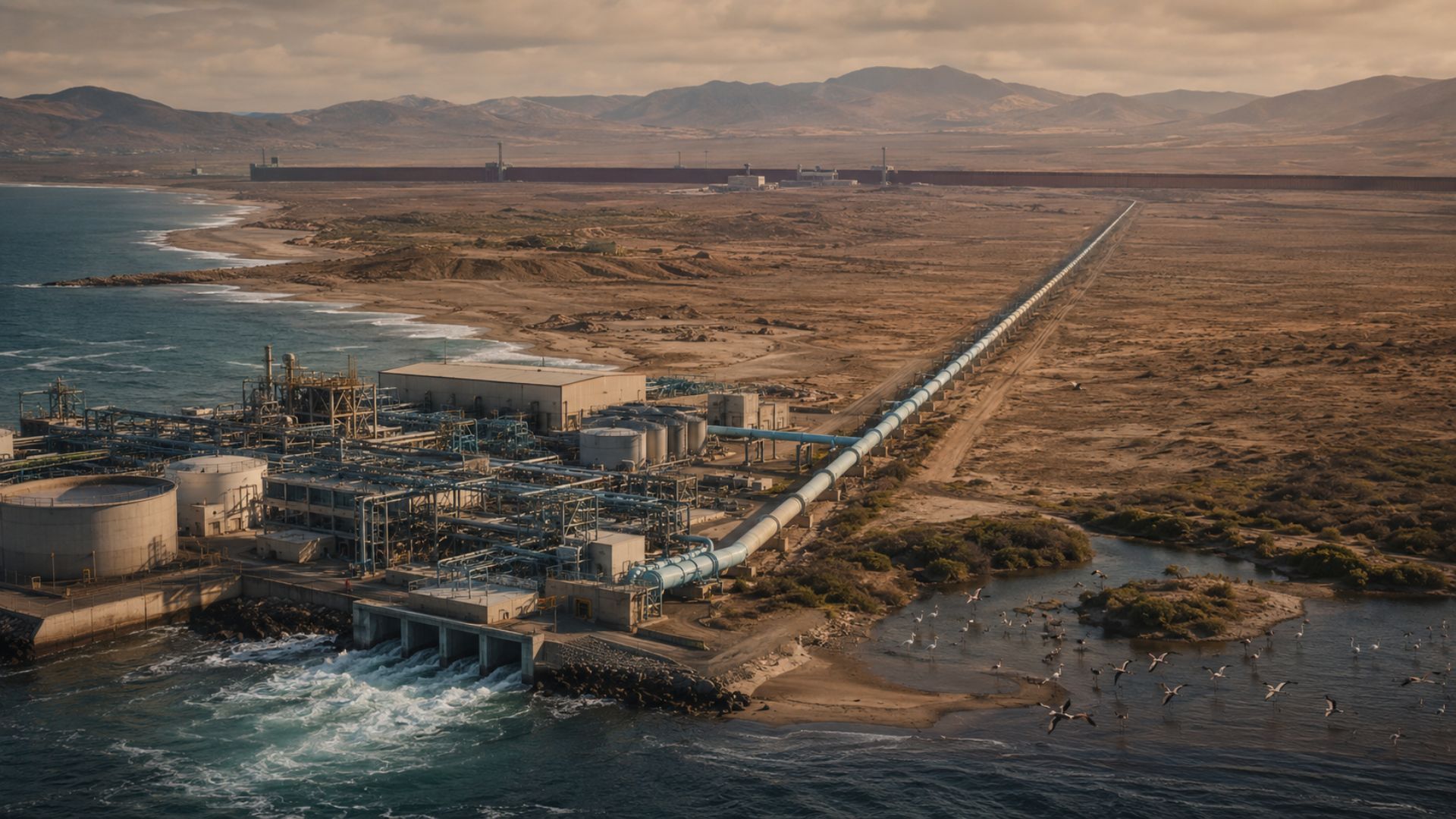


The original idea was once considered a solution, but it stalled: the government of Sonora labeled the plan as absurd and said it would not work with the proposing company. Today, Arizona is studying six different proposals, none with committed funding, and the delivery of water, if any, would only come in the 2030s.
A plan of about $5.5 billion aims to draw water from the sea in Mexico, desalinate it to make it drinkable, and send it through an aqueduct of approximately 320 kilometers to the state of Arizona, in the United States. However, the proposal is far from reality: the project has been stalled for years due to diplomatic tensions between the two countries, an estimated cost up to ten times the current value of water, and serious risks to endangered species.
It is important to clarify from the start that this is not an ongoing project, but an idea in dispute. The original proposal, presented by the Israeli company IDE Technologies around 2022, aimed to build a desalination plant in Puerto Peñasco, in the Mexican state of Sonora, on the shores of the Gulf of California, and pump the treated water hundreds of kilometers to the Phoenix area. Since then, the plan has faced resistance and was essentially shelved in its initial form.
Why Arizona seeks seawater from so far away

Arizona is facing what scientists describe as the worst drought in the southwestern United States in about 1,200 years. The state essentially relies on two sources of water, groundwater and the Colorado River, and both are under enormous pressure, with the river in decline and aquifers being tapped faster than they replenish.
-
Two-Bedroom Home Built in a 40-Foot Shipping Container Delivered and Ready for Same-Day Living in São Paulo Countryside

-
China Constructs Artificial Island 32 km Offshore for Yangshan Port, Connected to Shanghai by 32 km Bridge, Unloading 3,000 Containers in 20 Hours
-
China’s $70 Billion River Diversion Project, the World’s Largest, Moves 44.8 Billion Cubic Meters Annually, Crosses Under the Yellow River, and Displaced 330,000 People
-
Indian Driver Spends 14 Years Digging 10-Meter Tunnel Through Mountain to Connect Isolated Village to the World



The situation became so critical that, in June 2023, authorities acknowledged that there was not enough groundwater to sustain new real estate developments in the Phoenix area, even with projects already approved. At the same time, the population continues to grow: since the beginning of the megadrought in 2000, the state’s population has increased significantly, creating a paradox between urban expansion and water scarcity, leading the government to seek sources increasingly distant, including seawater.
How the desalination project would work

According to the original design, the plant would transform seawater from the Gulf of California into fresh water through reverse osmosis, a process where water is forced under high pressure through membranes that retain the salt. Out of every 100 liters of seawater, about half becomes potable water, and the other half turns into brine, a concentrate with double the salt, which needs to be discarded back into the ocean.
The big challenge, however, is transportation. Arizona is landlocked, and the treated water would need to be pumped through an aqueduct of about 320 kilometers, rising over 600 meters in altitude to reach Phoenix, to then be integrated into the Central Arizona Project Canal, which already distributes water from the Colorado River. Pumping stations would be needed, largely powered by solar energy, and a safety reservoir, making the project an enormous and expensive engineering challenge.
The diplomatic impasse that stalled the plan

The IDE proposal was marked by accusations of lack of transparency, with confidentiality agreements signed before any formal process, which generated distrust among lawmakers and civil society about alleged behind-the-scenes negotiations.
Even more decisive was Mexico’s stance. The government of the state of Sonora harshly criticized the company and even stated that it would not work with it, while Governor Alfonso Durazo called the plans absurd and said the project was not on the state government’s agenda. Without Mexican approval, and faced with an international border and water treaties between the two countries, the initial idea lost momentum and was set aside.
The paradox of Puerto Peñasco
One of the most delicate aspects of the plan is where the plant would be built. Puerto Peñasco, although a known tourist destination, is a city already facing its own water supply problems. A large part of the local population lives with scarcity, a situation that worsens in the summer when the arrival of tourists spikes consumption and pressure on the supply system.
This creates a difficult paradox to justify: installing a factory in a city with a water shortage to produce drinking water destined, in large part, for another country. Although proponents claim that part of the water would remain for Puerto Peñasco and other cities in Sonora, such as Hermosillo and Nogales, the perception of injustice is strong, as the benefits would go to Arizona while much of the impacts would remain in Mexico.
Environmental risks and the vaquita
Environmental concerns are another major obstacle. The northern Gulf of California is home to the vaquita, considered the world’s most endangered marine mammal, with estimates of only about ten individuals remaining in the wild. Because of the narrow and enclosed shape of the gulf, there is fear that the discarded brine will accumulate instead of dispersing, altering the water’s salinity and affecting everything from plankton, the base of the food chain, to all marine life.
The impacts do not stop at sea. The aqueduct and power transmission lines would have to cross extremely fragile desert areas, including federally protected sites, and lands considered sacred by the Tohono O’odham indigenous people, for whom each saguaro cactus has spiritual value. Local fishermen also fear damage to one of Mexico’s most productive fishing areas, adding voices against the project on both sides of the border.
The cost and the current stage
Even if all barriers were overcome, there is the problem of price. Estimates indicate that this desalinated and transported water could cost almost ten times more than Arizona currently pays for Colorado River water, not to mention the high energy and maintenance costs over the decades. Desalination consumes a lot of electricity, which would require even the construction of a large solar plant to power the system.
As for the current stage, the scenario is one of uncertainty. After abandoning IDE’s original proposal, the responsible state agency began analyzing, at the end of 2025, six different proposals for new water sources, several of them desalination, without any resources being effectively committed so far. The phase is one of studies and public consultation, and the most realistic forecast for the arrival of any new water is the beginning or middle of the 2030s, and not something imminent.
The plan to bring seawater from Mexico to Arizona is a portrait of the dilemmas that water scarcity will impose on arid regions in the 21st century, but it is far from being a closed case. Between the billion-dollar cost, diplomatic tensions, environmental risks, and opposition from communities in both countries, the proposal remains more of a debate than a concrete solution. The case shows that when the water runs out, there is no easy way out, and importing the resource from afar encounters barriers that go far beyond engineering.
And you, what do you think of this idea of taking seawater from Mexico to supply the Arizona desert? Do you believe that desalination projects like this are the future for dry regions, or are the costs and environmental risks too great? Leave your comment, share your opinion on the water crisis, and share the article with those interested in the environment, geopolitics, and water resources.







