






 Portuguese
  Spanish


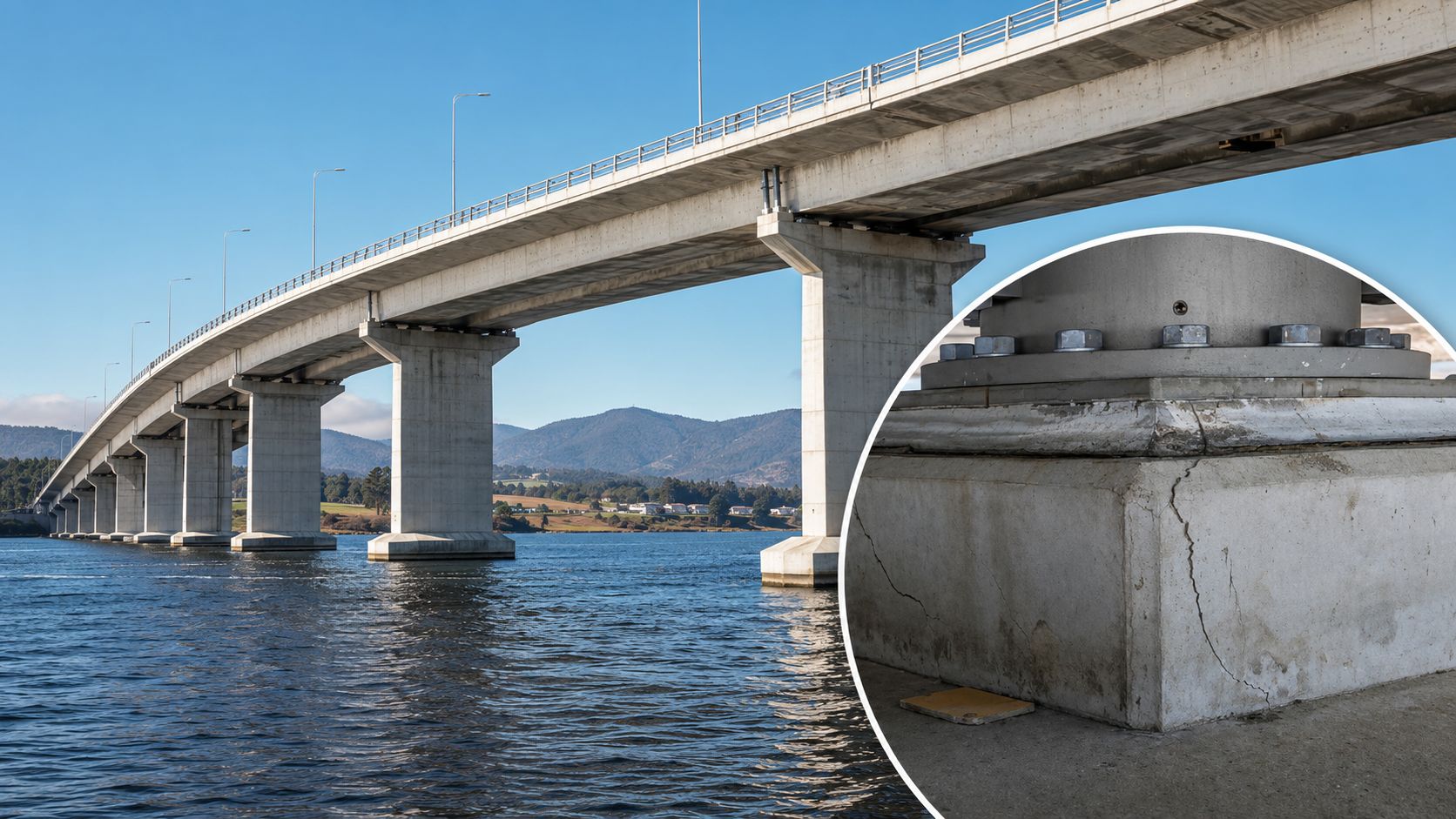

Documents seen by ABC show disagreements between McConnell Dowell and technical consultants about the piles of the Bridgewater Bridge, a US$ 786 million project inaugurated in 2025 in Tasmania, while the state government claims the structure is safe and monitored.
The Bridgewater Bridge, a US$ 786 million project inaugurated in June 2025 in Tasmania, Australia, faces questions about its foundations after documents revealed technical disagreements involving piles, Derwent River soil, and contractual safety standards.
Bridgewater Bridge focuses debate on foundations
The new four-lane crossing replaces the old Bridgewater lift bridge, a structure nearing the end of its lifespan after almost 80 years of operation. Construction began in 2022 and was completed in 2025.
The project is regarded as the largest infrastructure undertaking in Tasmania. Its execution was under the responsibility of McConnell Dowell, a construction company in a technical dispute with consultants hired by the state government.
-
China’s Engineered Bamboo: The “Material of the Future” Stronger Than Steel and a Sustainable Wood Alternative

-
Egypt’s “New Nile”: 170 km Artificial River Aims to Turn Desert into Farmland, but Water Supply Concerns Loom
-
Unable to secure a mortgage as a self-employed single mother, she designed her own floating home from a 20-meter boat and now lives “off-grid” with her two children and solar panels on an English canal.
-
Man Transforms Rusty Shipping Container into Luxury Home with Insulated Walls, Large Windows, and Drywall Finish, Surprising Onlookers



The concerns involve the concrete piles that support the bridge’s pillars. Documents seen by ABC show disagreement between the construction company and the Technical Advisory Team, hired by the Department of State Growth to verify if the project followed the contract.
The central issue was the project’s suitability to the conditions of the Derwent River bed. There was concern that the piles might not provide sufficient support to the pillars, with the possibility of damage after defect correction.

Expert classified risk as intolerable
Geotechnical expert Derek Pennington, who was part of the advisory team, stated that the group considered the risk of the structure not functioning according to the contract as intolerable. He described the terrain as the most complex in his 35-year career.
Pennington reported that the team was dismissed by the Tasmanian government in 2024, amid the stalemate with McConnell Dowell over the piles. In his assessment, the decision was made to avoid delays.
The state government and the Department of State Growth did not comment on why the advisory team was removed. McConnell Dowell did not comment directly and referred questions to the department.
The department stated that the bridge is safe and has not shown unexpected movement. It also said that survey markers were installed on the pillars to monitor displacements.
Project used single vertical piles
The piles are concrete posts driven into the ground to support pillars. On the Bridgewater bridge, the project adopted single vertical piles, drilled between 30 and 88 meters below the river surface.
Pennington stated that bridges in deep estuarine conditions can use multiple piles, including inclined ones, to enhance lateral stability. According to him, the chosen model required great confidence in the terrain reading.
The advisory team assessed that part of the soil at the crossing was too fragile to support the single pile design. According to Pennington, there were sections with 40 to 50 meters of very soft soil, unable to provide significant lateral support.
In the documents, McConnell Dowell maintained that its modeling was accurate and sufficient. The department stated that the structural designs were reviewed by a proof engineer, independent verifier, and technical consultants.
Monitoring may influence future use
Pennington said he does not fear sudden and significant damage to the structure. The concern, according to him, is in possible future load management needs, such as reducing traffic flow or speed limits.
ABC had already reported a large crack in the concrete pedestal of one of the pillars, associated with incorrect modeling. For Pennington, this episode may indicate that broader issues raised by the team were not resolved.
The Department of State Growth stated that monitoring devices were installed to confirm if the piles functioned as expected after construction. It also said that additional checks were obtained on technical issues from the contractor and verifiers.
The controversy keeps the Bridgewater bridge under public attention because it involves a newly inaugurated and strategic work, built on foundations designed in terrain described as highly complex.







