





 Portuguese
  English
  Spanish
  4 min of reading
  1 comment


Reconophalt transforms plastic, glass, toner, and old asphalt into recycled pavement used on streets, highways, and even airports in Australia.
Australia has found an unlikely way to turn urban waste into infrastructure: mixing plastic bags, glass bottles, printer cartridges, and old asphalt to produce recycled pavement used on streets, highways, and even heavy applications. The technology is called Reconophalt and was developed by Downer as a high recycled content alternative for paving.
The first section was applied in 2018, in Craigieburn, in the state of Victoria, in partnership with the Hume City Council and recycling companies. According to the case study by the Municipal Association of Victoria, the project diverted from landfills materials equivalent to 200,000 plastic bags, 63,000 glass bottles, toner from more than 4,500 used cartridges, and 50 tons of recovered asphalt.
Reconophalt replaces part of conventional asphalt with plastic, glass, toner, and recovered pavement
Reconophalt can incorporate flexible plastics from bags and packaging, discarded glass, toner from printer cartridges, recovered asphalt pavement, rubber from old tires, and reused aggregates from urban sweeping and hydro excavation.
-
Only 28% of the ocean floor has been accurately mapped, less than what is already known about the surface of Mars and the Moon, and scientists consider the topic strategic for Brazil, with a global goal to map everything by 2030.

-
Japan wants to bury a 500 km “cargo conveyor” between Tokyo and Osaka to replace up to 25,000 trucks per day, move goods through tunnels and automated driverless corridors, and avoid a logistical collapse in an increasingly aging country.

-
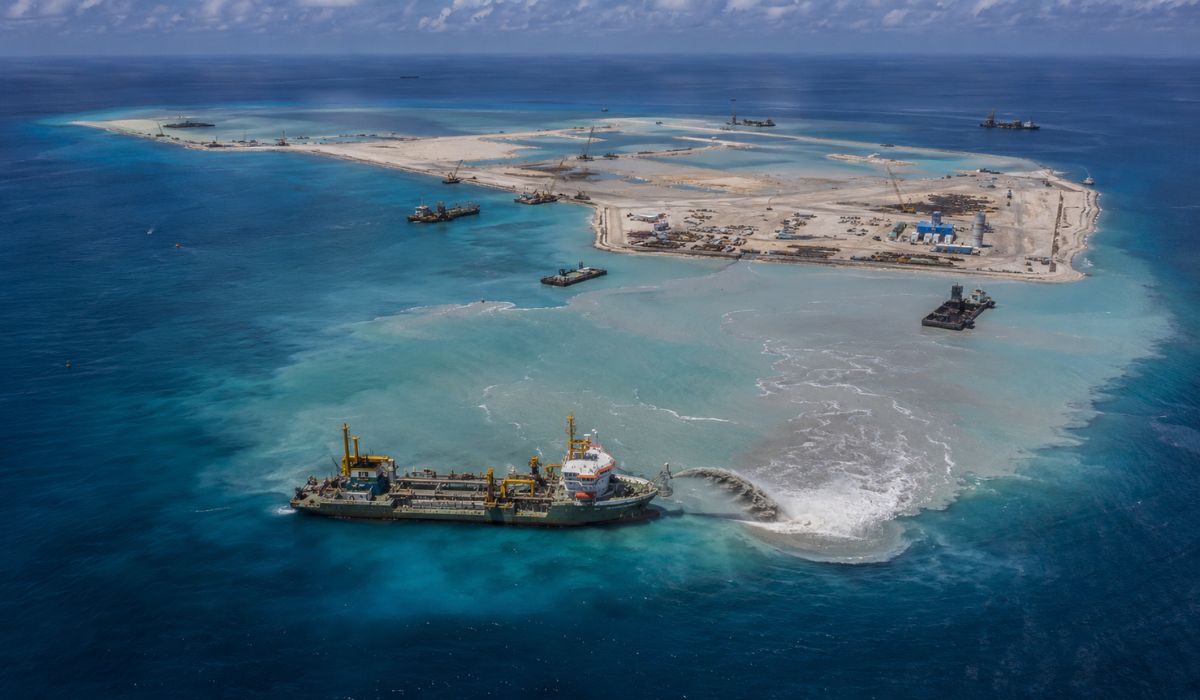
Vietnam dumps sand in the South China Sea and transforms disputed reefs into artificial islands with an area equivalent to more than 1,500 football fields, builds 15 ports in the Spratly Islands, and expands bases in the ocean while challenging Chinese pressure in one of the most tense maritime regions on the planet.

-
Is Rosie from the Jetsons becoming a reality? China tests “robot cleaners” with artificial intelligence inside homes for R$ 114, capable of collecting trash, folding clothes, and mapping apartments, turning domestic cleaning into a living laboratory for companies that want to teach machines to act like humans.



In practice, plastic and toner act as modifiers for the asphalt binder, while glass can replace part of the natural sand in certain formulations. The recovered pavement, known as RAP, reuses material removed from old roads.


The result is a formula that maintains the logic of asphalt but reduces the dependence on virgin materials and gives a higher value destination to hard-to-recycle waste.
First section in Craigieburn became a showcase of a road made with recycled urban waste
The initial milestone occurred on Rayfield Avenue, Craigieburn, in northern Melbourne, in May 2018. The project was presented as a pioneering initiative in Australia for using post-consumer waste in a real urban paving application.

In a single stretch, materials equivalent to 200,000 plastic bags, 63,000 glass bottles, toner from over 4,500 cartridges, and 50 tons of RAP, the asphalt recovered from old pavements, were used.
The material can increase fatigue resistance and reduce deformations in the pavement
According to Downer, the recycled materials combined with the mix design increase the fatigue life of Reconophalt, improving durability and crack resistance.
The company states that performance tests on some products indicated up to 65% improvement in fatigue life and greater deformation resistance under heavy traffic.

The company also claims that the product can increase the pavement’s lifespan by about 15%, raise the supported traffic volume by around 20%, and allow a thickness reduction of approximately 10%, depending on the application and formulation.
Australian government highlights use on sidewalks, recreational areas, highways, and even airports
The Department of Climate Change, Energy, Environment and Water of Australia describes Reconophalt as a product that incorporates recycled asphalt, recycled plastic, recycled glass, and TonerPlas, an additive made with toner and plastic.
In official material, representatives from Downer state that some formulations can be used in light applications, such as sidewalks and recreational areas, and others in heavy applications, such as highways and airports.
The same source reports that the company can adjust the proportions of additives to alter pavement properties, such as load resistance, fuel resistance, and flexibility.
M80 Highway Project diverted 29.3 million plastic bags and 830,000 printer cartridges from landfills
The technology moved from municipal sections to larger projects. In the upgrade of the M80 in northern Melbourne, Downer claims that Reconophalt was used in all layers of the pavement, in the first Australian freeway project with this application.
According to the company, the project diverted from landfills the equivalent of 29.3 million plastic bags, 830,000 printer cartridges, and 13,000 tons of reclaimed asphalt. The company also states that this reduced emissions by more than 339 tons of CO₂, a value compared by them to taking 140 cars off the roads for a year.
This example shows the difference in scale: what started as an experimental street has been applied to road infrastructure with much heavier traffic.
Product underwent environmental tests before being approved in New South Wales
The use of waste in roads raises inevitable questions about microplastics, chemical leaching, and environmental contamination.
Downer claims that Reconophalt underwent 18 months of testing within a program developed with the environmental authority of New South Wales.

According to the company, these tests analyzed risks such as the release of microplastics and BPA leaching, before approval through a resource recovery order and exemption from the NSW EPA.
Recycled asphalt shows how streets can become a noble destination for hard-to-recycle waste
The strongest point of Reconophalt is transforming low-value waste into long-lasting infrastructure. Plastic bags, flexible packaging, printer toner, broken glass, and old asphalt cease to be just a disposal problem and become part of a new road.
The technology also reveals a change in mindset: instead of recycling just to produce small and low-value objects, Australia has started to test urban waste within one of the planet’s largest material consumers, road construction.
Reconophalt is not a “petroleum-free” road nor a complete replacement for traditional asphalt. But it demonstrates something powerful: some of the waste that would go to landfills can now return to the city as pavement.





Its a great idea and environmental friendly