






 Portuguese
  Spanish
  4 min of reading
  0 comments


Technology created in Norway transforms plastic waste into affordable housing and brings together recycling, accessible housing, and urban management in countries pressured by housing deficit, rapid city growth, and irregular waste disposal.
The Norwegian startup Othalo has developed a construction system that transforms recycled plastic into components for affordable housing, initially focusing on African countries marked by a lack of accessible housing and the accumulation of urban waste without proper disposal.
According to UN-Habitat, the United Nations program for cities and human settlements, a 60-square-meter house made with the company’s technology uses about 8 tons of recycled plastic and can integrate structures up to four stories high.
The initiative addresses two challenges present in large urban centers: the difficulty of expanding the supply of safe housing for low-income families and the management of plastic discarded in landfills, streets, rivers, and peripheral areas.
-
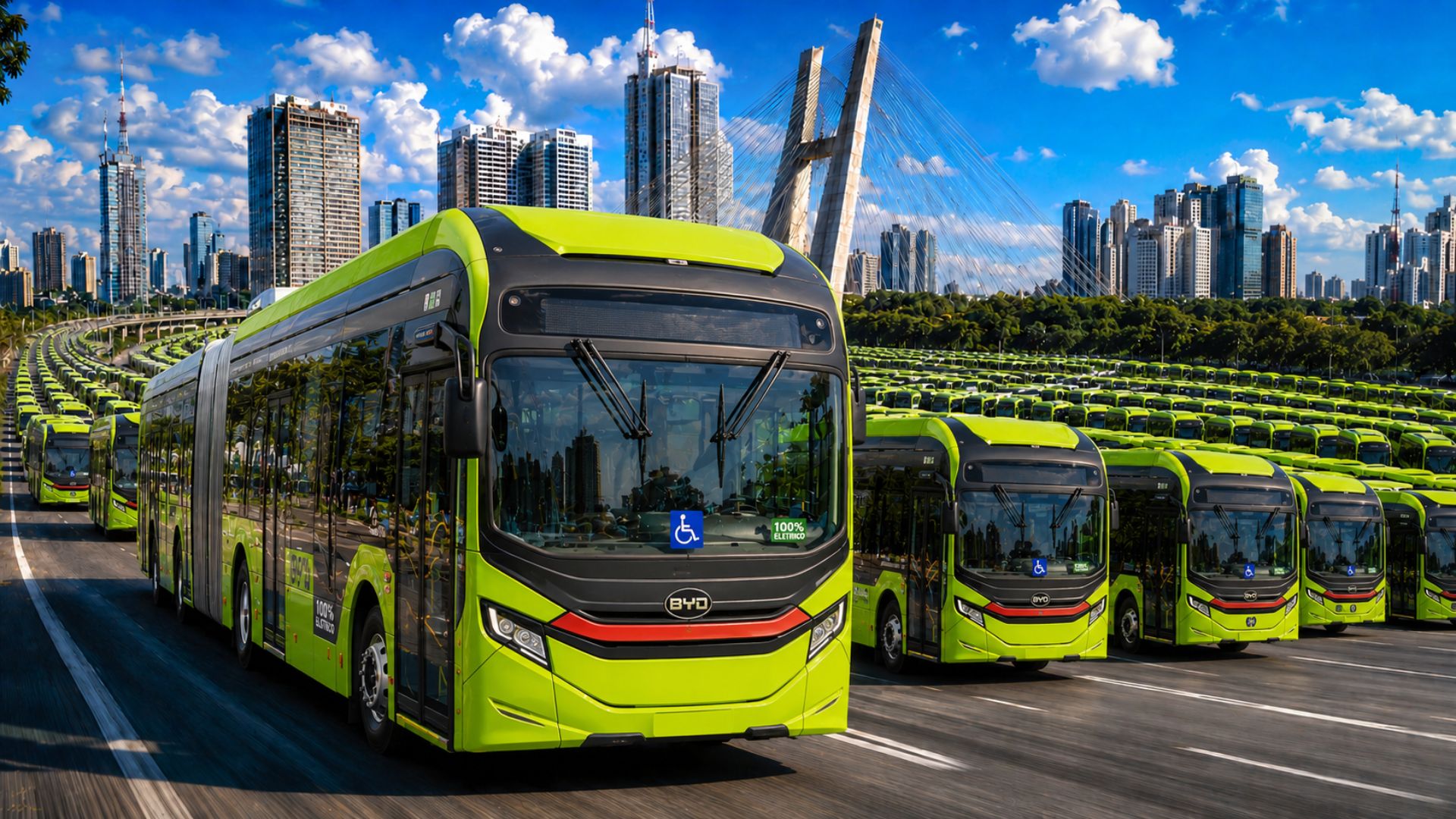
The “Chinese invasion” has arrived: BYD already dominates almost 45% of the electric buses registered in Brazil in May 2026, while 80% of the entire electric fleet in the country is concentrated in São Paulo with 1,300 vehicles.

-
From toy to track machine: Koenigsegg Sadair’s Spear made with over 327,000 Lego pieces reaches 111 km/h and surpasses the former Bugatti Chiron record.

-
Deep-sea marine animal can go more than 5 years without eating, combining physical adaptations and genetic mechanisms to survive in environments with extreme food scarcity; meet the Bathynomus.

-
Science wants to know what football does to you: study gathers smartwatch data to understand the real impact of World Cup emotions on the human body


According to the system described by Othalo, the waste undergoes collection, shredding, and processing before being converted into elements used in walls, floors, and roofs of modular constructions.
The company states that the technology can be applied in houses, schools, shelters, and other structures, always using industrialized components produced with recycled plastic.
Recycled plastic house uses industrialized parts
Instead of relying exclusively on conventional construction materials, the technology uses industrialized parts made from processed plastic waste.
According to the proposal presented by the company, the system aims to reduce costs, accelerate assembly, and reuse material that might otherwise be disposed of improperly.
The standard house presented in the project is 60 square meters, a size associated with affordable housing models and compatible with the accessible housing proposal advocated by Othalo.
With the use of 8 tons of plastic per unit, each construction allows for measuring the amount of waste that can be incorporated into the construction production chain.
Among the technical data disclosed, there is also the possibility of applying the components in buildings up to four stories high.
This feature expands the potential use of the system in dense urban areas, where housing demand usually requires more compact solutions than isolated houses.
Othalo also associates the project with the creation of local jobs in the recycling and construction chain.
For the technology to operate on a large scale, it would be necessary to organize steps such as collection, sorting, transportation, plastic processing, manufacturing of parts, and assembly of units.
Africa concentrates demand for affordable housing
Sub-Saharan Africa appears as one of the project’s priorities because it combines rapid urban growth, housing deficit, and expansion of informal settlements.
At the same time, cities in the region face difficulties in structuring solid waste collection and treatment systems, especially in areas with irregular disposal of plastic materials.
UN-Habitat presented the partnership with Othalo in October 2020, during the World Habitat Day agenda.
In the initiative’s announcement, the United Nations agency associated the project with the search for adequate, sustainable, and low-cost housing.
In the initial phase publicly informed, the production of components anticipated demonstration units in cities like Nairobi, Kenya, Yaoundé, Cameroon, and Dakar, Senegal.
Information available from public sources indicates a demonstration and development character, without secure confirmation of already consolidated mass commercial production.
Urban waste gains a new role in construction
The project’s logic follows the principles of the circular economy, a concept that foresees the return of discarded materials to the production chain in new applications.
In this model, plastic ceases to be directed only to short-duration products and becomes part of permanent structures, such as walls, floors, and coverings.
The change in use alters the function attributed to waste within the urban chain.
Instead of being treated only as a material to be removed from cities, plastic becomes part of a system linked to housing, infrastructure, and local economic activity.
Despite the proposal, large-scale application depends on technical and logistical factors.
Requirements include material quality, structural resistance, fire safety, adaptation to the local climate, and regulatory approval in the countries where the units are built.
Othalo states that its technology was developed with the support of experts linked to research in Norway.
The project also involved architect Julien De Smedt in the design of modular solutions aimed at low-income communities.
Technology depends on structured recycling
The house made with tons of recycled plastic allows for a concrete application for urban waste within civil construction.
However, the system’s viability depends on a structured recycling chain and technical standards capable of meeting housing norms.
The availability of plastic alone does not guarantee the execution of the units.
The material needs to be correctly separated, treated, combined with other elements, and transformed into safe components for residential use, especially when the proposal involves multi-story buildings.
In regions where traditional materials are expensive, scarce, or difficult to transport, the system can represent an alternative, according to the purpose stated by Othalo and UN-Habitat.
Even so, the initiative depends on housing policies, sanitation, waste management, and urban planning to move from the demonstrative field to reaching communities on a larger scale.
The association between affordable housing and large-scale recycling is the central axis of the proposal presented by the Norwegian company.
A 60 square meter unit made with 8 tons of waste shows how urban waste can be incorporated into construction solutions in cities pressured by population growth and housing deficits.


Be the first to react!