





 Portuguese
  English
  Spanish
  4 min of reading
  0 comments


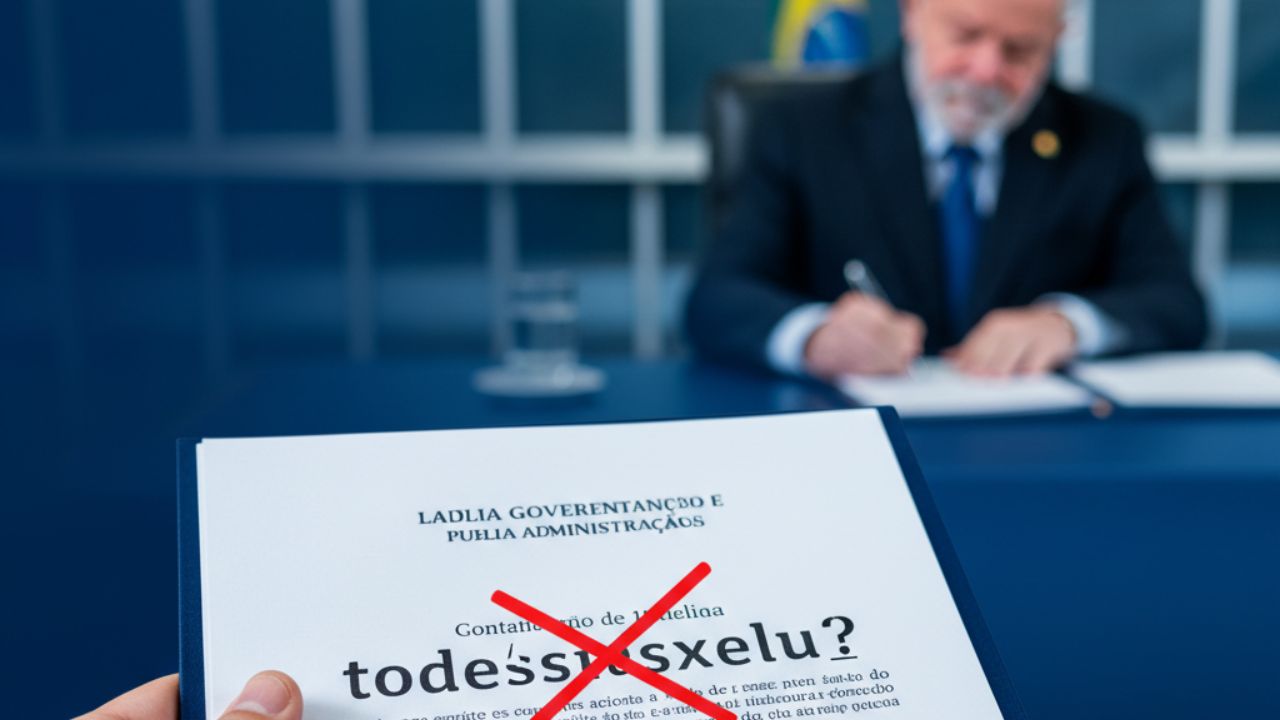
Lula Signs Law Prohibiting Neutral Language in Public Administration. Learn How the New Rule Changes Official Government Communication.
Starting this Monday, November 17, a new federal law, signed by President Lula, establishes the express prohibition of the use of so-called neutral language in all official documents and communications of the public administration at the federal, state, and municipal levels.
The measure, published in the Official Gazette, creates the National Simple Language Policy, with the central goal of ensuring clearer, more accessible, and standardized communication for the entire population, avoiding terms that do not adhere to the rules of standard Portuguese.
This decision, which responds to criticisms from more conservative sectors regarding the use of neutral language in recent events at the Palácio do Planalto, marks a new direction in governmental communication.
-
The STJ decides that a woman who left her career for more than 30 years to take care of the house, children, and family is entitled to lifetime alimony after divorce; the decision by the 3rd Panel recognizes extreme financial vulnerability and values invisible work in marriage.

-
Two global aviation giants are convicted in Paris and will have to pay R$ 1.3 million each for the crash of the Rio-Paris flight that killed 228 people in 2009.

-
Deputies against the government join forces to maintain a 6×1 schedule, workweeks of up to 52 hours, a 10-year transition, halving the FGTS, and special rules for certain sectors.

-
New law prohibits motorcycle passengers, imposes a fine equivalent to R$ 2,100, and was created to try to curb robberies and attacks committed by criminals using motorcycles in Peru, Brazil’s neighboring country.




The Impact of Lula’s Decision on Official Communication
The presidential enactment by President Luiz Inácio Lula da Silva (PT) marks the end of the debate over the inclusion of terms such as “todes”, “elu” or “ume” in official texts.
The veto on neutral language is one of the pillars of the newly created National Simple Language Policy, which now becomes mandatory for agencies and entities of the public administration at all levels of government.
On the other hand, although the use of neutral language has been noted in some ceremonies, such as ministerial inaugurations, President Lula himself does not usually adopt this form of communication.
An example of its use at the high level was Minister Alexandre Padilha, who used the term “todes” during his inaugural speech.
What Is Neutral Language, After All?
It is important to emphasize what exactly is being prohibited. Neutral language is an alternative in communication that seeks to employ terms without grammatical gender inflection (masculine or feminine) to refer to groups or individuals. For example:
Todes instead of todos/todas;
Elu instead of ele/ela;
Ume to replace um/uma.
The idea behind this movement is to make language more inclusive, aiming to avoid discrimination against people based on their gender identity or other characteristics.
However, the text of the new law clearly determines the non-use of gender or number inflections that are outside the established grammatical rules of Portuguese.
New Writing Standards in Public Administration
The main goal of this new law in the public administration is to ensure that any citizen can find the information they need, fully understand it, and use it to address their demands.
Therefore, official communication will now follow strict standards of simplicity and accessibility.
The law establishes specific writing techniques for all communications, forms, guidelines, portals, and any other content directed at the public. These communication techniques include:
Short and Direct Sentences: Prioritize direct order and active voice to facilitate understanding;
Common Vocabulary: Use everyday words, avoiding technical jargon whenever possible. When indispensable, the technical term must be properly explained;
Avoid Foreign Terms: Do not use words of foreign origin that are not yet integrated into the common use of language;
Relevant Information at the Start: Place the most important information in the first paragraphs of the text, following the inverted pyramid principle in journalism;
Visual Aids: Use tables, lists, and other graphical resources to assist in reading and understanding;
Universal Accessibility: Ensure that the language is accessible, especially for people with disabilities.
Implementation and Complementary Guidelines
The new legislation not only prohibits neutral language, but also requires a coordinated implementation effort at all levels of public administration.
The law dictates that each branch (Executive, Legislative, and Judiciary) at each federative level — Union, states, Federal District, and municipalities — will be responsible for establishing complementary guidelines for the application of this measure.
This will involve a broad review of portals and documents, as well as the training of teams of public servants responsible for governmental communication.
Additionally, it is anticipated that manuals will be created, forms will be standardized, and usability tests will be conducted with citizens themselves to ensure the effectiveness of the new law in practice.
An important observation is that when communication is directed to indigenous communities, the measure dictates that, whenever possible, the content should also be made available in the community’s language, reinforcing the focus on accessibility and inclusion.
The decision of President Lula with the signing of this law therefore seeks a balance: to maintain the clarity and standard of the Portuguese Language in the public administration, while also enhancing transparency and the effectiveness of communication with citizens.









-

1 person reacted to this.