






 Portuguese
  Spanish
  5 min of reading
  1 comment





GEIPAN, An Agency of CNES (France), Has Investigated and Published Hundreds of Cases of Unidentified Aerial Phenomena Since 1977, with an Accessible Online Archive.
In Toulouse, France, the Groupe d’Études et d’Informations sur les Phénomènes Aérospatiaux Non-identifiés (GEIPAN) operates as an official unit of the Centre National d’Études Spatiales (CNES), the French space agency responsible for defining and implementing the country’s space policy, operating under the supervision of the Ministries of Defense, Economy, and Education. Originally created in 1977 as GEPAN, the group has undergone reorganizations — becoming SEPRA in 1988 and, in 2005, being officially renamed GEIPAN — with a specific mission: to collect, analyze, investigate, publish, and archive reports of unidentified aerial phenomena (UAP), commonly known as UFOs.
What sets GEIPAN apart from many similar initiatives worldwide is that it is an official governmental archive, maintained by a state agency and with decades of standardized data, scientifically analyzed and in many cases made available to the public.
How France Made Its Archives Public and Why This Is Historic
In March 2007, GEIPAN began to put its official sighting archives online, opening to the public hundreds of reports documented by civilian, police, or authority witnesses — recorded since the 1950s.
-
At 75 years old, Mr. Izidro planted 400,000 trees over decades in Paraná, transformed a 2.42 million m² property into a green refuge in the Guartelá Canyon, and leaves a legacy with over 100,000 endangered araucarias.

-
11-year-old girl sees that the family didn’t have money for her father’s headstone, sets up a lemonade stand and raises almost $3,000 with the help of the community.
-
Archaeologists excavating a train project in France have found, under meters of mud from the Seine River, a Mesolithic camp from 10,000 years ago that seemed to have disappeared from human history.

-
Son finds father’s forgotten notebooks and helps scientists solve the mystery of a 55-million-year-old marine fossil that remained unanswered for almost three decades.



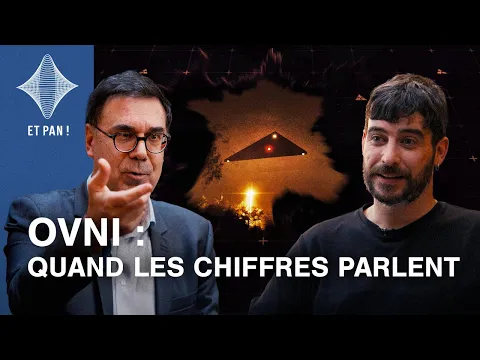

In the initial publication, approximately 400 cases were made available out of a total of more than 1,600 documented reports, including accounts, testimonies, diagrams, and detailed classifications. The aim was to transform the study of these phenomena into something open and accessible to science and the general public, not just a collection restricted to military or isolated researchers.
This transparency was considered unprecedented in the world: France was the first country to make official UFO reports available on the internet, with a search mechanism by location, date, and type of phenomenon.
What GEIPAN Does and What It Does Not Do
According to CNES, GEIPAN’s work is strictly technical and investigative:
- It collects accounts from witnesses who observe unidentified phenomena in the sky or near space.
- It analyzes these accounts with a multidisciplinary team of specialists.
- It classifies cases into categories ranging from explained to those that remain unexplained.
- It stores and makes these records available to the public.
Important: GEIPAN’s mission is not to look for extraterrestrial life, but rather to document and analyze phenomena that cannot be explained by the scientific tools and methods available at the moment.
Classification of Cases and What the Data Reveals
The published reports, which continue to be updated on the official site, show that not all cases remain “mysterious”:
A significant portion is explained by natural or artificial phenomena. Other reports are classified as probably identified. However, there are still cases, a small percentage, that still lack a clear explanation even after rigorous investigation.
This distinction shows that GEIPAN does not automatically dismiss accounts as “strange things,” and that many sightings possess sufficient data to generate technical studies and discussions.
The Role of Public Institutions in Recording
GEIPAN does not act in isolation. Its collection and analysis involve collaboration with:
- French police forces, which forward civilian reports.
- Civil aviation authorities, which document cases reported at airports or by pilots.
- Meteorologists and scientists who contribute to detailed classifications whenever possible.

Moreover, the very structure of CNES ensures that the reports are treated with scientific rigor and undergo reviews before they are published, something uncommon in other initiatives worldwide.
Cases Without Explanation: What Remains Intriguing
Within GEIPAN’s database, a portion of the records remains without a precise explanation — cases for which no conclusive cause has been attributed even after detailed analysis.
These cases are not necessarily extracorporeal or of foreign origin; the public description emphasizes that they are simply observed phenomena that have not yet been explained with current technology and analysis methods.
For some, this type of record is a historic opportunity to open the study of these phenomena to a scientific approach, rather than relegating it to speculation or popular culture.
Institutional Transparency and Citizen Science
The opening of the archives and public access has allowed independent researchers, amateur scientists, and the general public to examine reports and structured data, paving the way for comparative analyses and even academic studies on patterns or regions with a higher concentration of reports.
This posture of transparency, according to experts consulted at the time of the initial publication, transformed the topic from a marginal curiosity into a documentary field of study accessible, albeit surrounded by nuances and methodological limitations.
What the Public Archive Means for the Global Debate
The fact that a governmental agency like GEIPAN has existed for decades and maintains a public archive of sightings breaks the taboo surrounding the topic in many parts of the world. It demonstrates that governments can:
- Gather civilian and official data.
- Analyze using scientific methods.
- Open reports to the public without stigmatizing the phenomenon.
This approach has influenced other nations to rethink how to record and make their own data on unidentified aerial sightings and phenomena accessible, at least in terms of documentary transparency and methodological rigor.
The Archive Today and the Continuity of Work
The official GEIPAN website continues to be updated with recent reports, combining testimonies with technical data, detailed classifications, and links to complete files, allowing anyone interested to explore cases by categories, dates, or French departments.
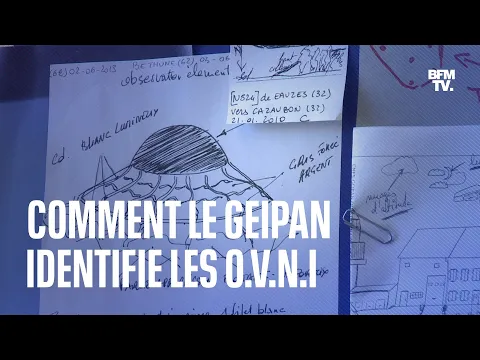
In an era of heated debates about unidentified aerial phenomena, the French experience highlights a real, institutional, and public documentary path, an archive that began forming in 1977 and which, nearly half a century later, remains open for both scientific and curious analysis.





👏👏👏