






 Portuguese
  Spanish


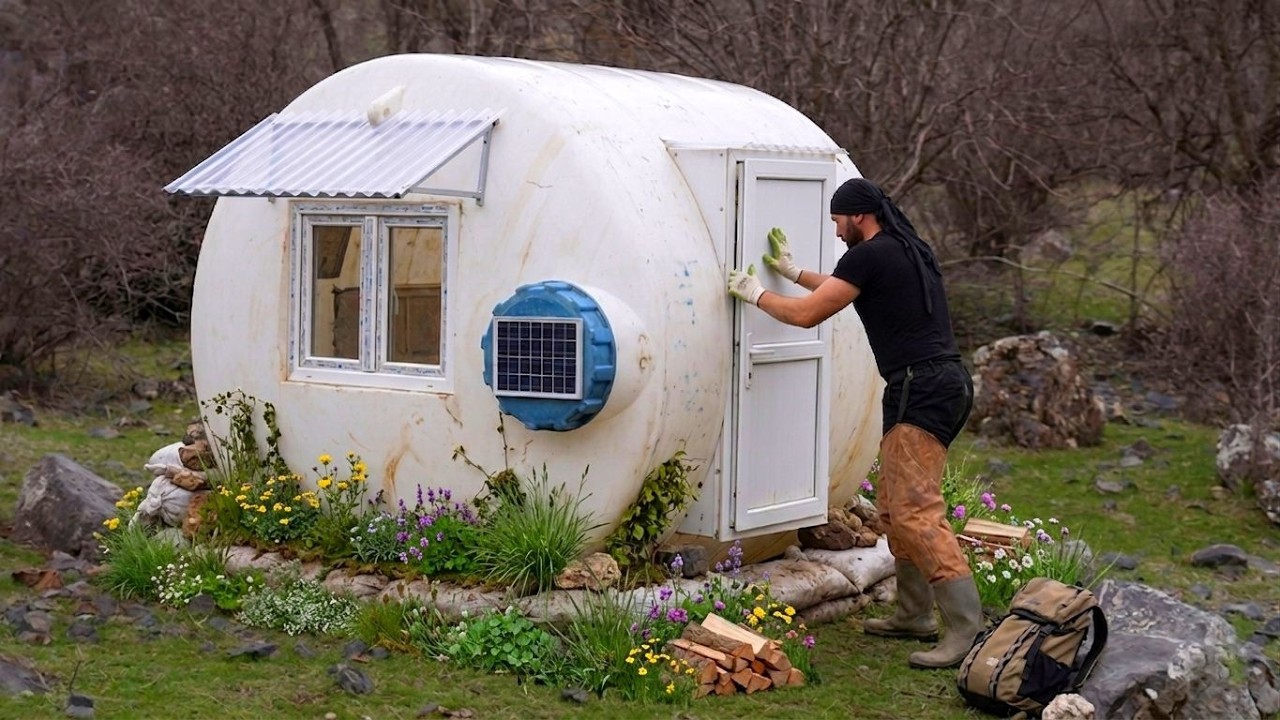


Reused water tank becomes hobbit-style house with pallets, semi-buried structure, and curved facade in a project that combines recycling, low cost, and thermal insulation.
According to the video published by the channel RAMPE GLOBAL on May 22, 2026, the project starts with a large white plastic water reservoir reused as the main structure of the construction. Instead of serving as rubble or waste, the piece is rolled onto the land and transformed into the body of a small house, utilizing at once walls, roof, and part of the base of the future dwelling.
The logic that makes this type of construction so appealing is simple: in a conventional building, the structure is usually one of the most expensive parts. Here, it already exists ready-made.
The tank functions as a cylindrical volume that is waterproof, resistant, and durable, capable of serving as a basic shelter even before the finishes. In the video, the transformation of the reservoir into a house occurs with manual excavation, fitting into the land, front wood cladding, and a visual finish reminiscent of a hobbit hole.
-
21-Year-Old Moves Back to Parents’ Home in Arizona, Finds New Private Apartment in Converted Garage as Families Tackle U.S. Housing Pressures

-
Innovative Container Studio in Brazilian Beach Town Thrives with High Demand and Plans for Expansion
-
30-Square-Meter Container Home with 2 Bedrooms, Living Room, Kitchen, and Bathroom Sold for $12,000 in Brazil, Tour Reveals Project Details

-
Brazilian Couple Builds Eco-Friendly Brick House, Saves 41%, and Shares Simple Test to Check Soil Suitability


Semi-buried house takes advantage of the soil to improve thermal comfort
According to the United States Department of Energy, earth-sheltered houses, that is, totally or partially protected by the earth, take advantage of an important characteristic of the soil: a few meters below the surface, the temperature tends to remain more stable throughout the year than the external air temperature. This stability helps reduce extremes of heat in the summer and cold in the winter.
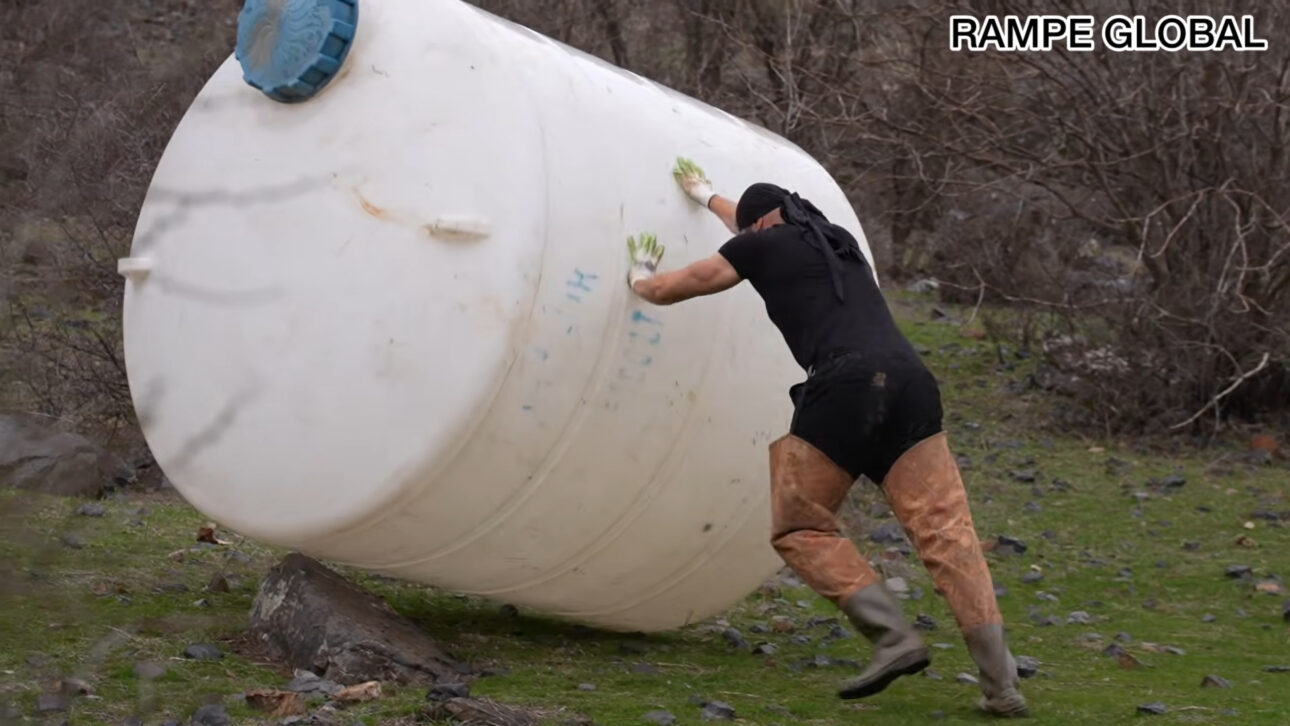
This is precisely the logic that appears in the project shown by RAMPE GLOBAL. The builder digs a large gap in a slope to fit the reservoir lying down, creating a semi-buried structure.
With this, the house gains not only a visual effect more integrated into the landscape but also a passive comfort solution that matches principles used in underground and semi-buried constructions.
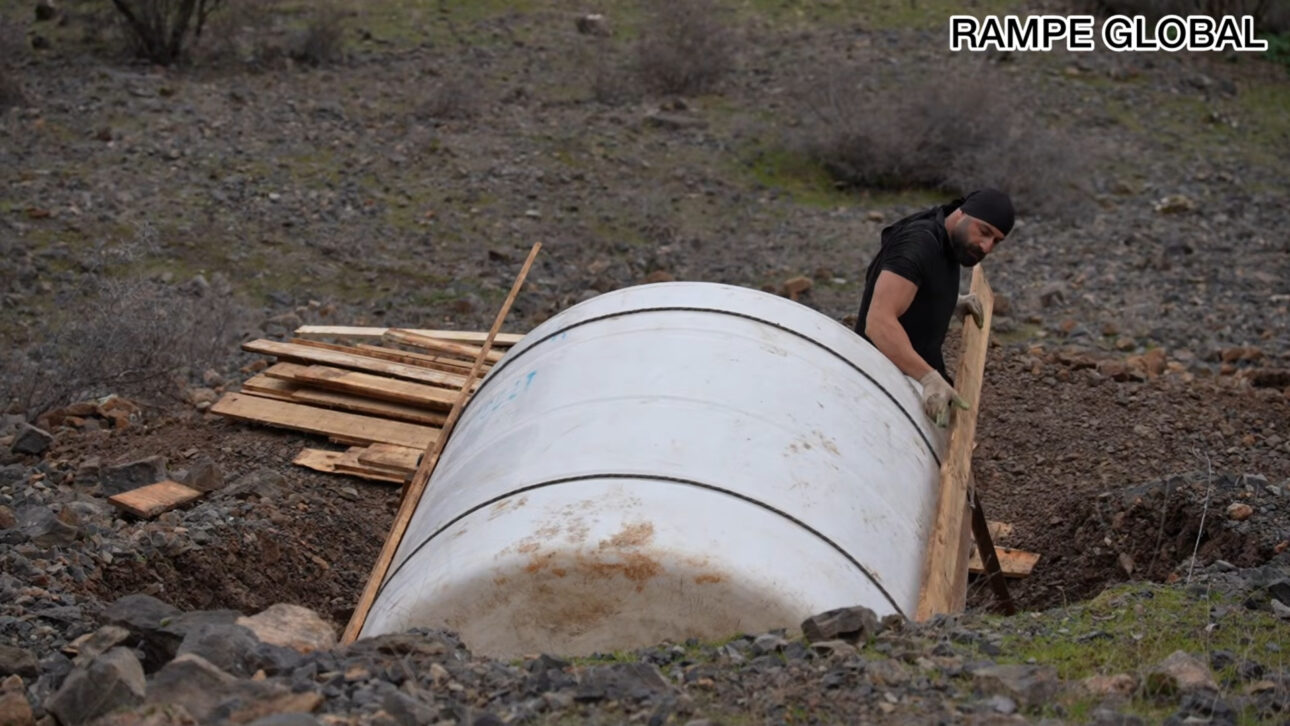
Besides the thermal effect, fitting into the terrain helps stabilize the piece and reduces the direct exposure of part of the structure to the external environment. This reinforces the idea of a compact, protected, and visually discreet refuge, which is one of the hallmarks of the project.
Wooden pallets transform the mouth of the tank into a hobbit house facade
According to the RAMPE GLOBAL video, one of the most striking stages of construction is the use of reused wood to form the front facade of the shelter. Board by board, the reservoir gains a curved wooden frame that follows the cylindrical shape of the tank and completely changes the appearance of the industrial piece.
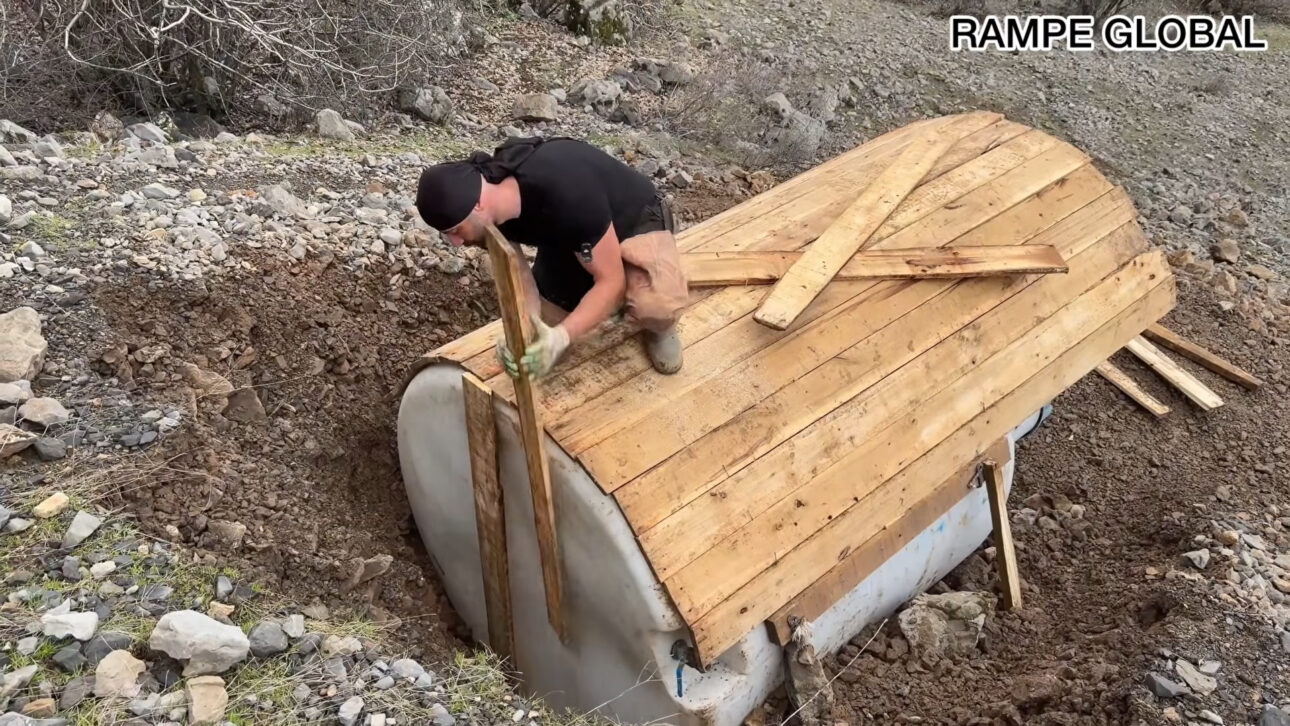
This front covering is what gives the project its strongest visual identity. The entrance no longer looks like the opening of a reservoir and starts to resemble the facade of a hobbit-style house, with a rounded arch, rustic finish, and cozy appearance. The contrast between the wood and the white body of the tank helps create this visual transformation.
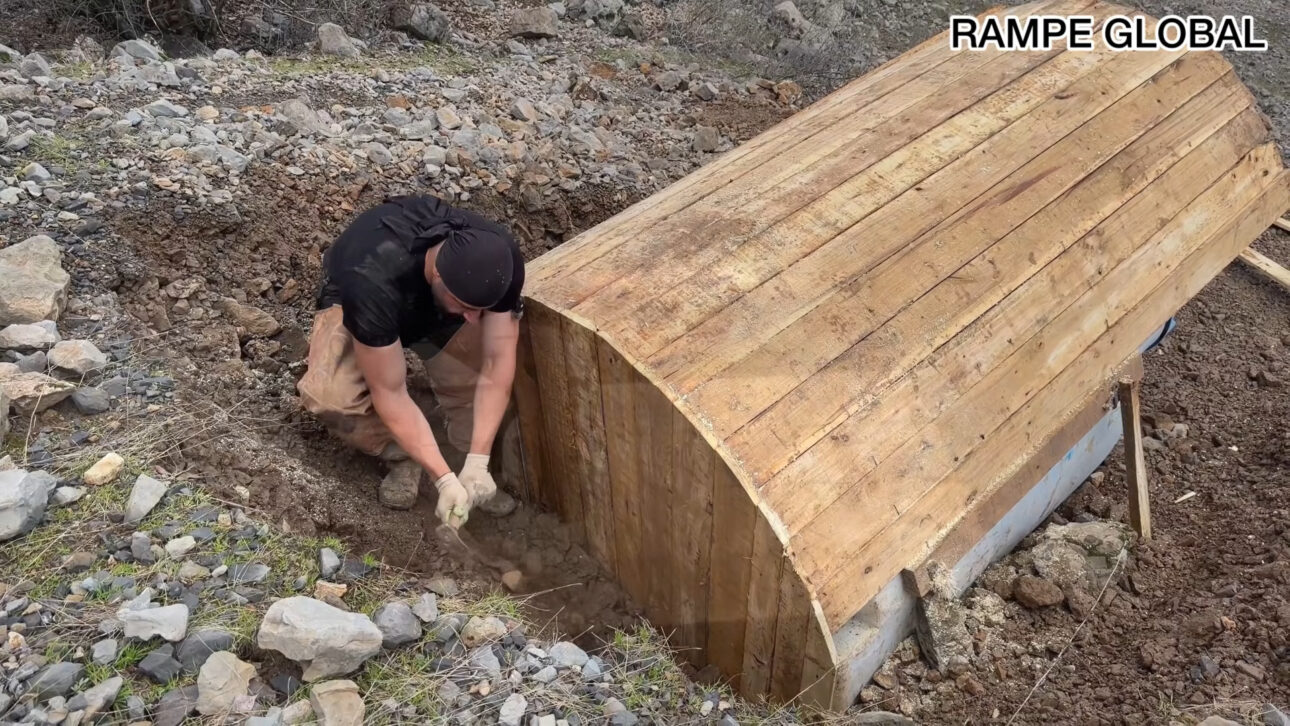
By using reused wood, the project also reinforces the appeal of low cost and material reuse, two characteristics that often drive this type of alternative construction on social networks and video platforms.
Round door and circular window complete the underground burrow look
According to RAMPE GLOBAL, the finishing stage includes the installation of a dark round door and a circular window with dividers, elements that complete the house’s aesthetic. These components help transform the reservoir structure into a visually coherent dwelling with its own identity and language inspired by fantasy underground shelters.
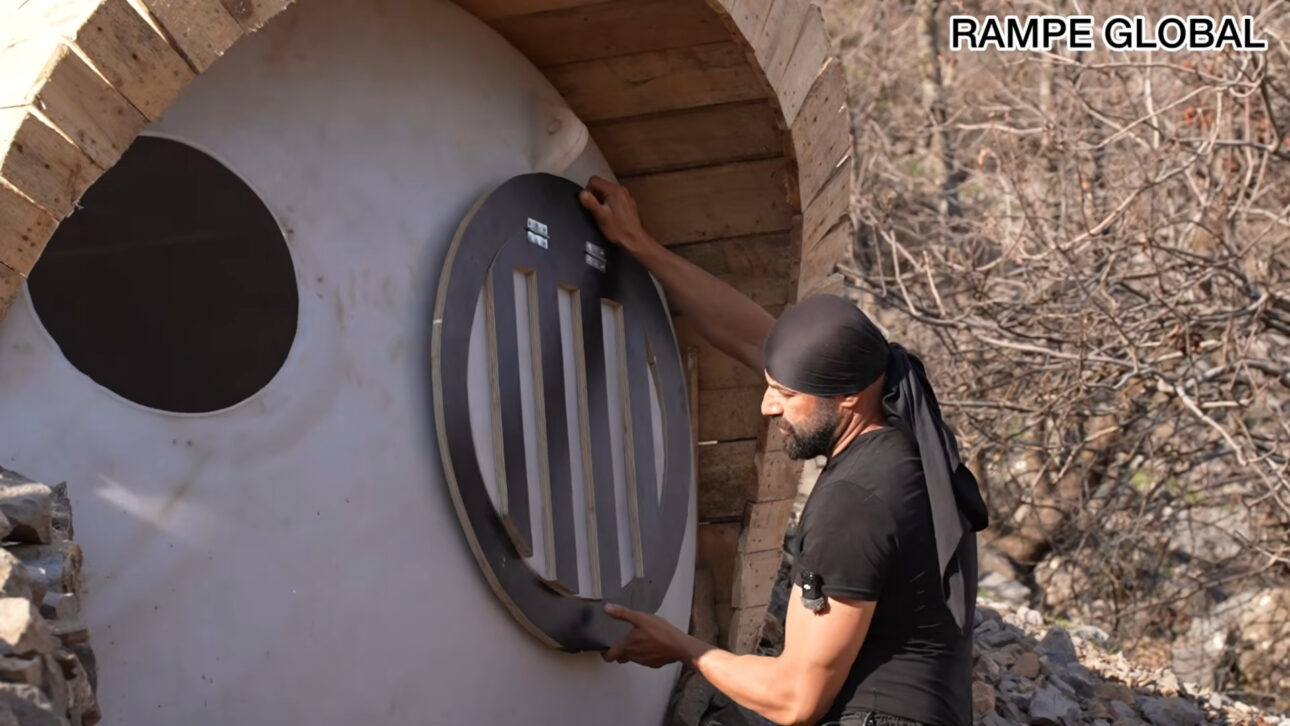
The visual effect is important because it separates the idea of a simple makeshift shelter from the notion of a functional and charming micro-house. The combination of curved openings, rustic wood, and circular shapes creates a recognizable design, easy to share and highly attractive.
In the showcased project, these elements also help solve practical issues, such as light entry, ventilation, and structure closure, but the main highlight remains the way they give the reused tank a finished house appearance.
Green roof reinforces visual integration with the terrain
According to the video by RAMPE GLOBAL, the upper part of the facade receives a green roof that reinforces the effect of a house embedded in the landscape. The final result makes the construction appear as part of the slope, almost as if the terrain hides a small underground dwelling.
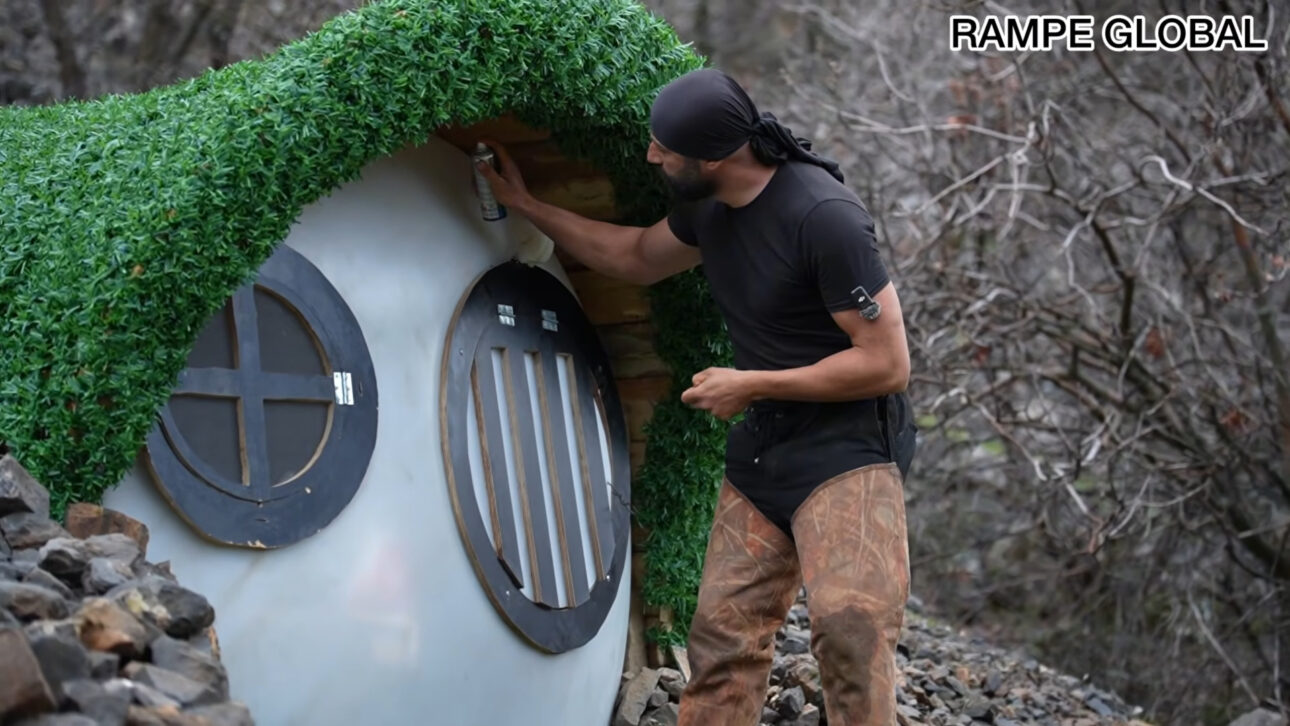
This visual choice directly aligns with the principle of semi-buried constructions described by the United States Department of Energy, where the relationship between soil, external protection, and thermal stability plays a central role. Even when the upper finish does not use natural vegetation, the concept still refers to a house protected by the earth and less exposed to external variations.
In the project, the green roof functions mainly as a visual finish, but it also helps consolidate the proposal of a discreet, compact shelter integrated into the natural environment.
Interior lining shows that the tank has ceased to be a reservoir and has become a functional shelter
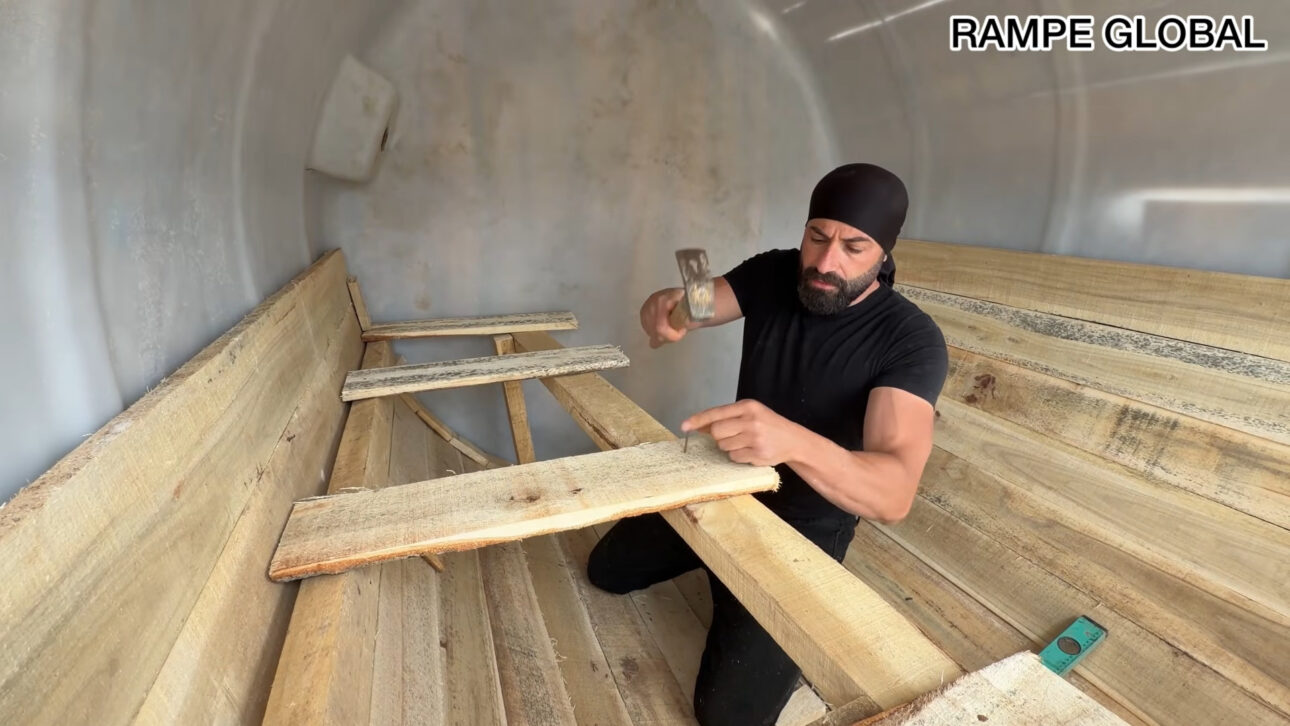
The final images of RAMPE GLOBAL show the interior already lined, with wood finishing and leveled flooring, which completely changes the perception of the space. Inside, the reservoir no longer seems like a repurposed industrial object and starts to function as a compact, protected, and usable environment.


The internal lining solves one of the most obvious challenges of this type of structure: the curved shape of the tank. By creating a flat floor and a cozier interior, the project improves the functionality of the house and reinforces the feeling of a refuge.
In the end, the project draws attention because it combines three ideas that usually perform very well in alternative housing content: reuse of discarded material, low-cost construction, and strong visual appeal. And it does so using a water tank as the base of a house that, in the end, seems much more planned than improvised.





Where is the washroom and kitchen?