






 Portuguese
  Spanish
  5 min of reading
  0 comments


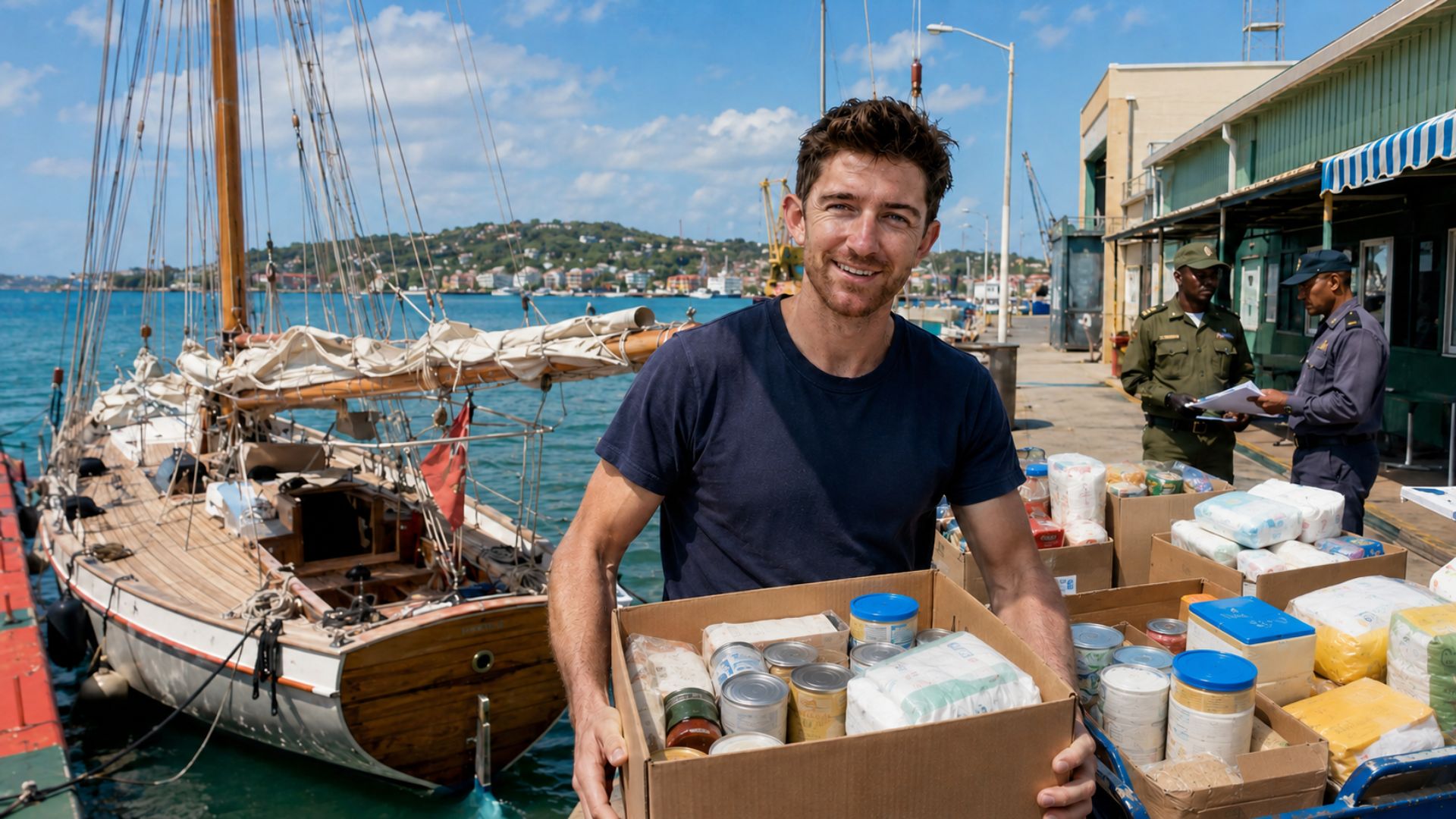
According to the sailor’s own account, he spent hours at customs, had the boat and drones inspected, and worked with the organizations Give to Cuba and Cuban Adventure. The cargo, equivalent to about half a ton, includes beans, canned tuna, basic medicines, and powdered milk for babies.
A sailor sailed alone from Panama to Cuba carrying just over $7,000 in food, medicine, and powdered milk, spent hours at customs in Santiago de Cuba, and delivered everything to Cáritas, the charity arm of the Catholic Church, to distribute to the population. The story is narrated by the channel
Sampson Boat Co, released on June 16, which documented the crossing and delivery of humanitarian supplies in the east of the island.
The operation involved more than one organization until the aid reached the right hands. According to the sailor’s account, he coordinated with the charity Give to Cuba, based in the United States, and the Australian tourism company Cuban Adventure, but the supplies were physically destined for Cáritas, linked to the Catholic Church in Cuba and recognized as an independent organization by both American and Cuban authorities. The cargo, equivalent to about half a ton, was described by him as a drop in the ocean, capable of making a small difference for a small group of people.
The crossing from Panama to Cuba with half a ton of supplies
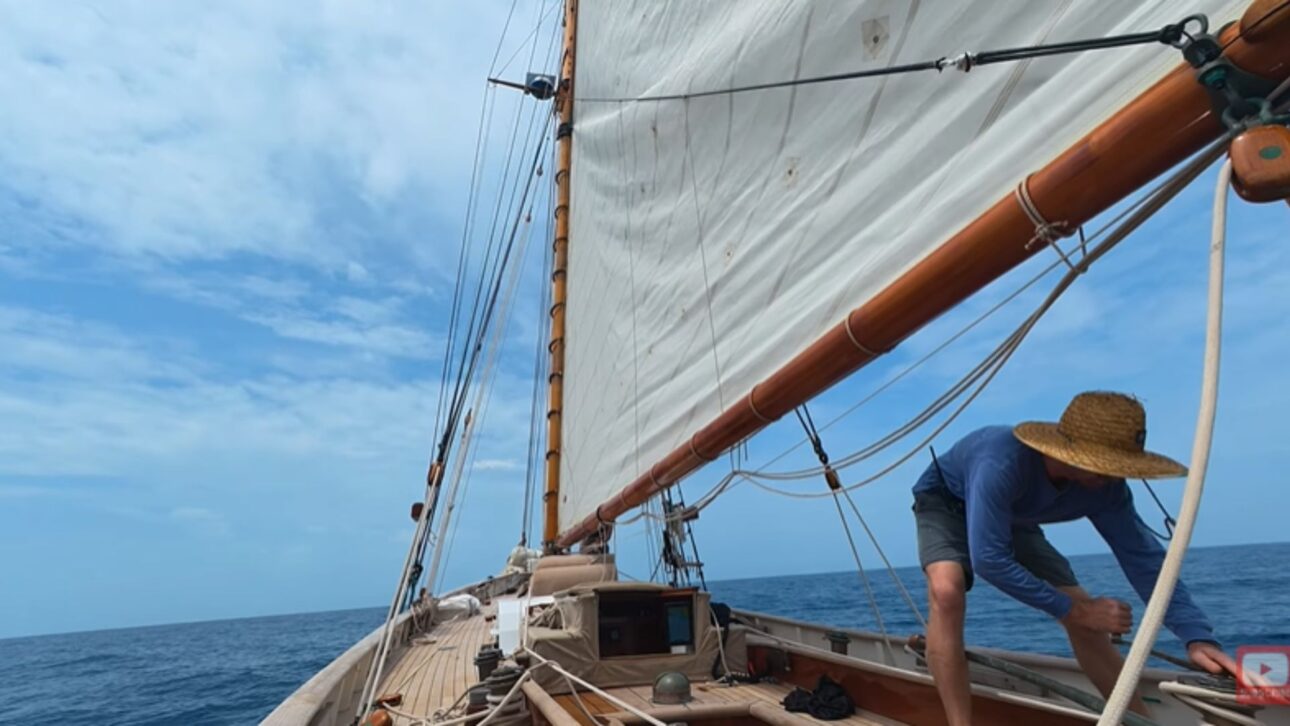
The starting point of the journey was Panama, from where the sailor crossed the sea to the entrance of Santiago de Cuba. According to his account, the boat carried about half a ton of supplies, valued at just over $7,000, in basic food and health items.
-
In the middle of a forest in the USA, a couple transforms over 1,500 recycled tires, bottles, cans, and clay into an ecological mansion, builds 90% of the house with their own hands, and puts the nearly 7-acre self-sustaining refuge up for sale for $1.3 million.

-
Cutting board created in the Netherlands uses material made by microorganisms, measures 30 x 20 cm, and aims to eliminate microplastics that can end up in food during daily preparation.

-
New Zealand aligns nearly 7,000 X-shaped concrete blocks like puzzle pieces to protect railway, highway, and cycle path against waves, erosion, and earthquakes on one of Wellington’s most sensitive coasts.

-
Man buys an old Cold War nuclear missile complex online, faces water, methane, and 10 years of underground renovation, invests $800,000 and transforms the launch control center into a luxury Airbnb with bedrooms, kitchen, cinema room, and underground party space.



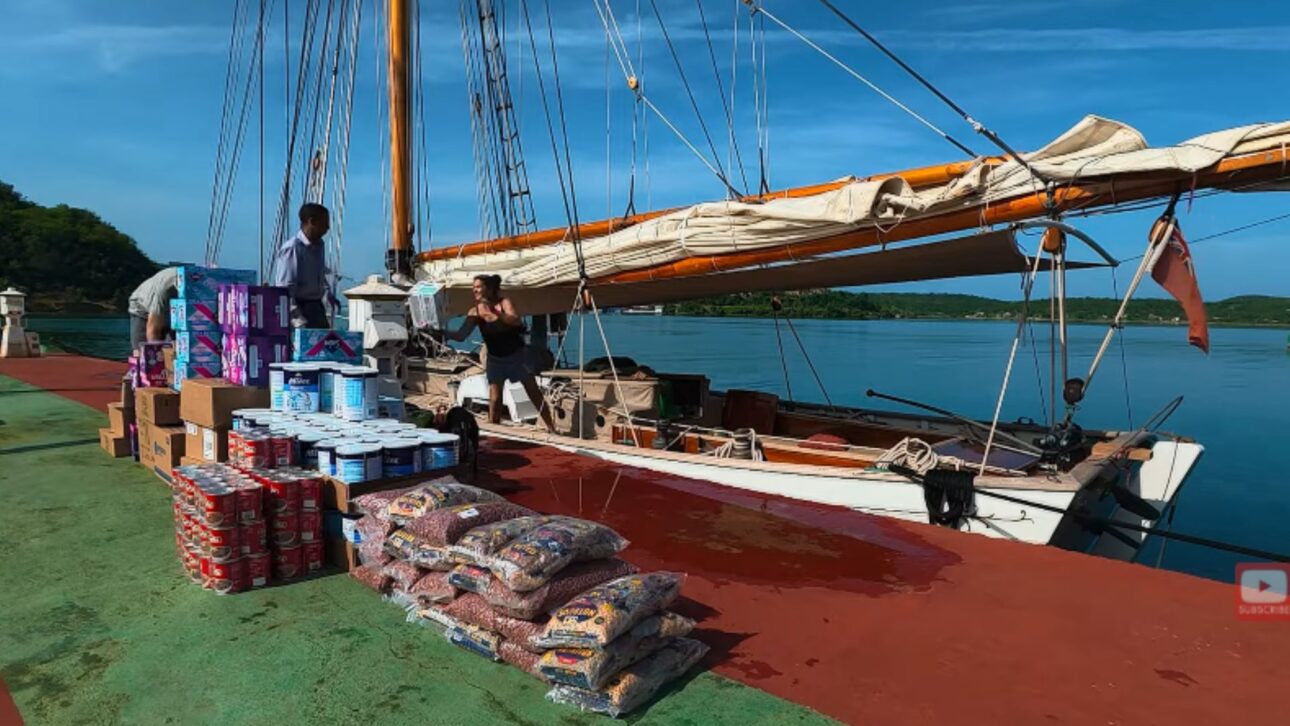
The donation list included essential products. According to the sailor, the cargo included plenty of dried beans and chickpeas, canned tuna and chicken, toothbrushes and toothpaste, wet wipes, sanitary pads, basic medicines such as children’s multivitamins, paracetamol and cough syrup, bandages, and baby formula. He emphasizes that this is a small contribution given the size of the problem.
The hours at Cuban customs
Arriving in Cuba was far from quick. The sailor recounts spending hours in customs and immigration, answering many questions about who they were and what they were doing, while agents inspected the boat and all the aid supplies.
The inspection was thorough but ended without hindrance. According to his account, the authorities also examined the communication equipment and drones without finding any issues, and he spent the night at the location before working the entire next day to obtain permission to unload. The navigator notes that he was not authorized to film the agents and that customs checked every item placed in the vans, comparing everything with the list he had presented.
The delivery to Cáritas and the Catholic Church
The logistics of the donation involved coordination between different groups. To organize the delivery, the sailor claims to have worked with the American institution Give to Cuba and the Australian tourism company Cuban Adventure, which has people spread across the country to help distribute the aid.
The final destination of the supplies, however, was the structure of the Catholic Church. The items were physically destined for Cáritas, described by the navigator as a grassroots organization present among the Cuban people and recognized as independent by American and Cuban authorities. According to his account, representatives of the entity accompanied the loading and promised to send photos and videos when the aid is distributed to those most in need.
The legal concerns and US guidelines
The mission also raised questions about the legality of the operation. The sailor acknowledges that some people feared the initiative might contradict US guidelines, but he maintains that this is not the case and that, in his understanding, US rules are clear in allowing the donation of aid to the Cuban people.
He says he shared these same concerns before setting sail. Therefore, he recounts doing a lot of planning and research and talking to experienced people before starting, defining the trip as an effort to keep everything within the law. It is worth noting that this is the sailor’s own assessment of the rules, not an official decision on the matter.
The portrait of Cuba: low wages and energy crisis


Besides the delivery, the sailor shares the impressions he had when talking to residents, noting that most preferred not to be recorded. According to him, a common monthly salary on the island is between $6 and $10, possibly reaching $20 for a highly qualified professional, such as a doctor.
The scenario he describes is one of scarcity and lack of energy. The navigator reports that prices have skyrocketed, with food costing today about the same as in the United States or Europe, and gasoline available almost only on the black market, at about $20 per liter. As a result, according to his account, many people cook with charcoal, electricity lasts only one or two hours a day, and the situation is very difficult, although residents continue to manage.
The sailor’s crossing, which he undertook alone from Panama with about half a ton of supplies and delivered them to Caritas in Santiago de Cuba, is, in his words, a drop in the ocean, but a symbolic drop, bringing help by sea to a place where most support arrives from outside, via Havana.
The navigator’s account also paints a picture of the difficulties in Cuba, from monthly salaries of a few dollars to a fuel crisis that pushes families to cook with charcoal and live with one or two hours of electricity per day. With the delivery completed, he stated that he intended to continue his journey, with the Bahamas as the likely next stop.
And you, what did you think of the sailor’s mission to bring aid to Cuba by boat? Do you believe that individual initiatives like this make a difference in the face of humanitarian crises? Share your opinion and exchange ideas with other readers, respecting different views.




Be the first to react!