






 Portuguese
  Spanish


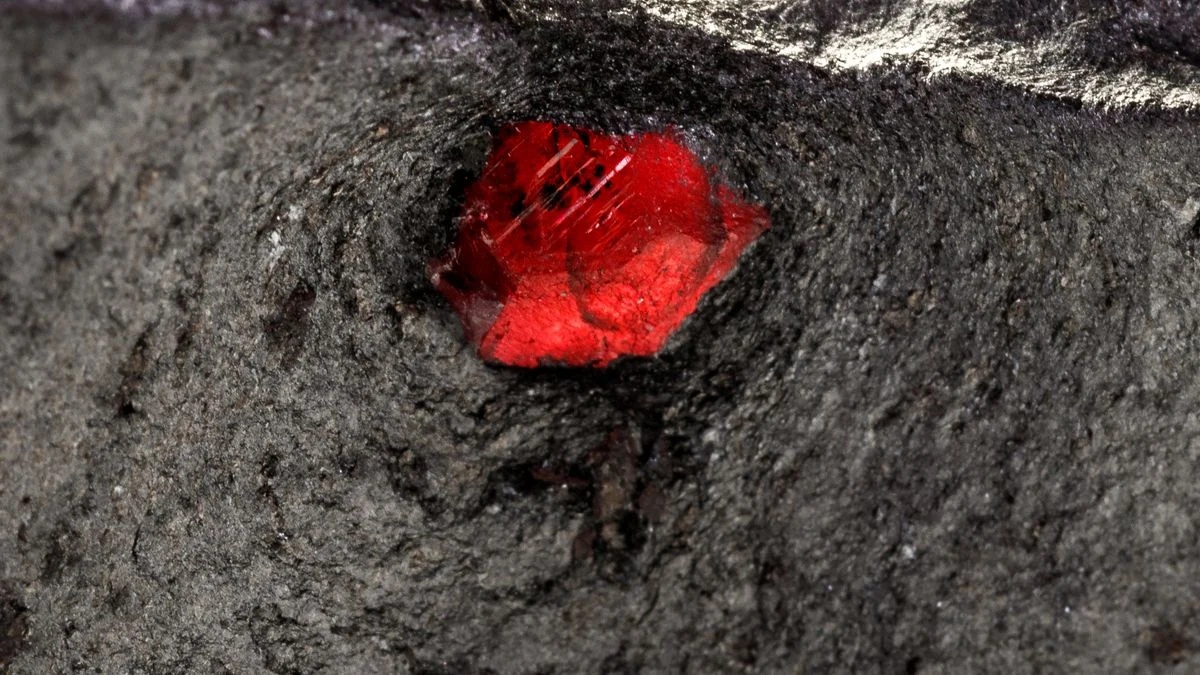


A Martian meteorite kept in the collection of the Royal Ontario Museum in Canada revealed an unprecedented discovery about the geology of Mars. By analyzing a small fragment of the rock NWA 8171, an international team identified garnet grains, a mineral that had never been confirmed before in a sample from the red planet. The discovery was published in the scientific journal Geochemical Perspectives Letters and reported by ScienceAlert on June 18, 2026.
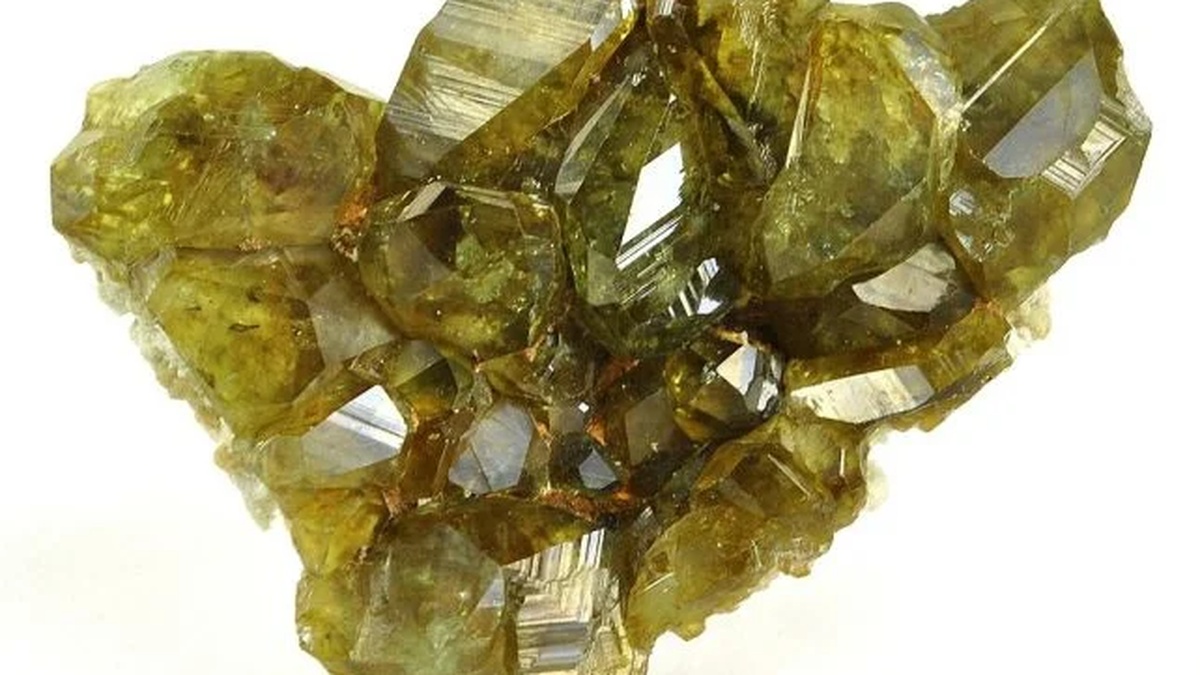
Additionally, the analysis showed that the mineral found is andradite, a specific type of garnet. On Earth, this mineral usually forms under conditions of intense heat, high pressure, or chemical alterations. Therefore, its presence in a Martian meteorite raises new questions about the geological processes that occurred on Mars in the past.
Meteorite NWA 8171 was already attracting science’s attention
The meteorite NWA 8171 belongs to the group of Martian rocks found on Earth. These meteorites break away from Mars after large impacts and subsequently travel through space until they fall on our planet.
Moreover, samples of this type are rare. According to a survey cited by Phys.org in 2024, only a few hundred known meteorites have confirmed Martian origin among tens of thousands of cataloged meteorites.
-
Electric Vehicle Repairs Cost 23% More, But the Battery Isn’t to Blame

-
China’s Solar Panel Installation in Desert Unintentionally Alters Soil, Moisture, and Vegetation Dynamics

-
China’s Plan to Prevent Giant Asteroids from Hitting Earth Involves Deep Nuclear Blasts and 20 Years of Preparation
-
Google Invests Billions in Italian Island’s Innovative Energy Storage Using Liquid CO2 Technology





Therefore, each new study helps scientists reconstruct parts of Mars’ history without relying solely on probes and robots sent to the planet.
)
Garnet appeared in a fragment smaller than a seed
The surprise emerged in an extremely small fragment of the meteorite. The analyzed piece measures about 0.8 by 0.5 millimeters, smaller than a poppy seed.
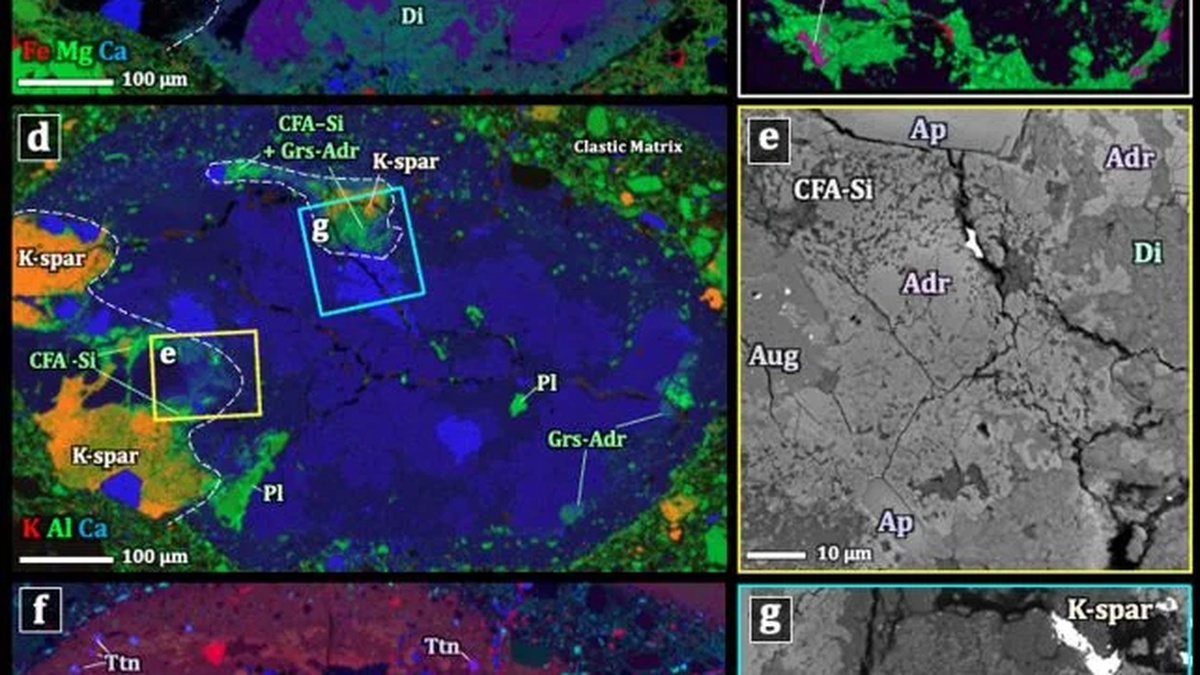
Initially, the team believed they had found pyroxene, a common mineral in Martian rocks. However, new chemical analyses revealed a different composition. Thus, the researchers confirmed that the small grains belonged to the garnet group, more specifically to andradite.
As a result, the meteorite came to represent a unique case among the known samples from Mars.
Discovery indicates new type of Martian rock
The identification of garnet was not the only important point of the study. The team also concluded that the meteorite may represent a type of Martian rock not previously recognized.
According to Phys.org, the work identified a new category of material from the red planet. Furthermore, the discovery offers a new way to investigate the geological evolution of Mars over its 4.5 billion years of history.
In this way, the finding expands the set of available information about the interior, crust, and mineral processes of the planet.
Why did the garnet surprise scientists?
Garnet is relatively common on Earth, but its formation requires specific conditions. It can arise when rocks undergo intense heat, high pressure, or complex chemical reactions.
However, these conditions had not yet been clearly identified on Mars to explain the formation of this mineral. Therefore, the presence of andradite in the NWA 8171 meteorite creates a new challenge for planetary geology.
Moreover, the discovery may indicate that certain regions of Mars have undergone more complex processes than current models suggest.
Study opens new window on ancient Mars
Planetary scientist James Darling, from the University of Portsmouth in the United Kingdom, stated to ScienceAlert that the results add a new dimension to the understanding of Martian geology. The statement reinforces the importance of the meteorite for studying the evolution of the red planet.
Furthermore, the presence of garnet may help researchers investigate ancient episodes of heating, pressure, or chemical alteration in the Martian crust.
Consequently, the finding offers a new clue about how Mars has transformed over time.
Meteorites remain essential for studying Mars
Space missions continue to provide valuable data about Mars. However, Martian meteorites allow for much more detailed analyses in Earth laboratories.
Furthermore, scientists can use advanced equipment to examine the chemical and mineral composition of these rocks. This type of study helps to complement information obtained by rovers, orbiters, and probes.
Therefore, samples like NWA 8171 continue to be important pieces for understanding the past of the red planet.
Small rock, big scientific impact
The discovery of garnet in a Martian meteorite shows that Mars still holds many surprises.
Although the grains found are microscopic, they can change the way scientists interpret part of the planet’s geological history. Moreover, the finding indicates that some Martian rocks have undergone conditions that are still not well understood.
Finally, the study reinforces that small fragments from space can reveal essential information about distant worlds. In this case, a tiny piece of meteorite opened a new window to understand how Mars evolved over billions of years.





this is crazy