






 Portuguese
  Spanish


A conservation operation in Galápagos brought together technology, wildlife management, and environmental restoration to tackle a problem created by invasive species and protect giant tortoises in sensitive areas of the archipelago.
The conservation of the Galápagos giant tortoises led researchers and teams from the Galápagos National Park to undertake a large-scale operation against feral goats, animals introduced to the archipelago and associated with the degradation of native vegetation.
The action, known as the Isabela Project, used helicopters, trained shooters, maps, telemetry, and tracking goats to locate remaining herds in hard-to-reach areas.
The project was initiated in 1997 and completed in 2006, according to the Galápagos Conservancy.
-
Danger of Technological Hyperstimulation: USP specialists warn that intense use of multiple screens and digital stimuli can gradually reduce essential cognitive abilities, while scientists analyze how technological overload affects memory, concentration, and intellectual performance over the years.

-
After three years living in a van, a couple bought an abandoned historic house and had to deal with mold, damaged plumbing, raccoons, and heavy cleaning before moving in.
-
In the city that the market called “road cockroach,” between Balneário Camboriú and Florianópolis, he launched a planned neighborhood worth R$ 1 billion with a marina for 90 boats and sold 80% of the lots in the first phase in 1 week.

-
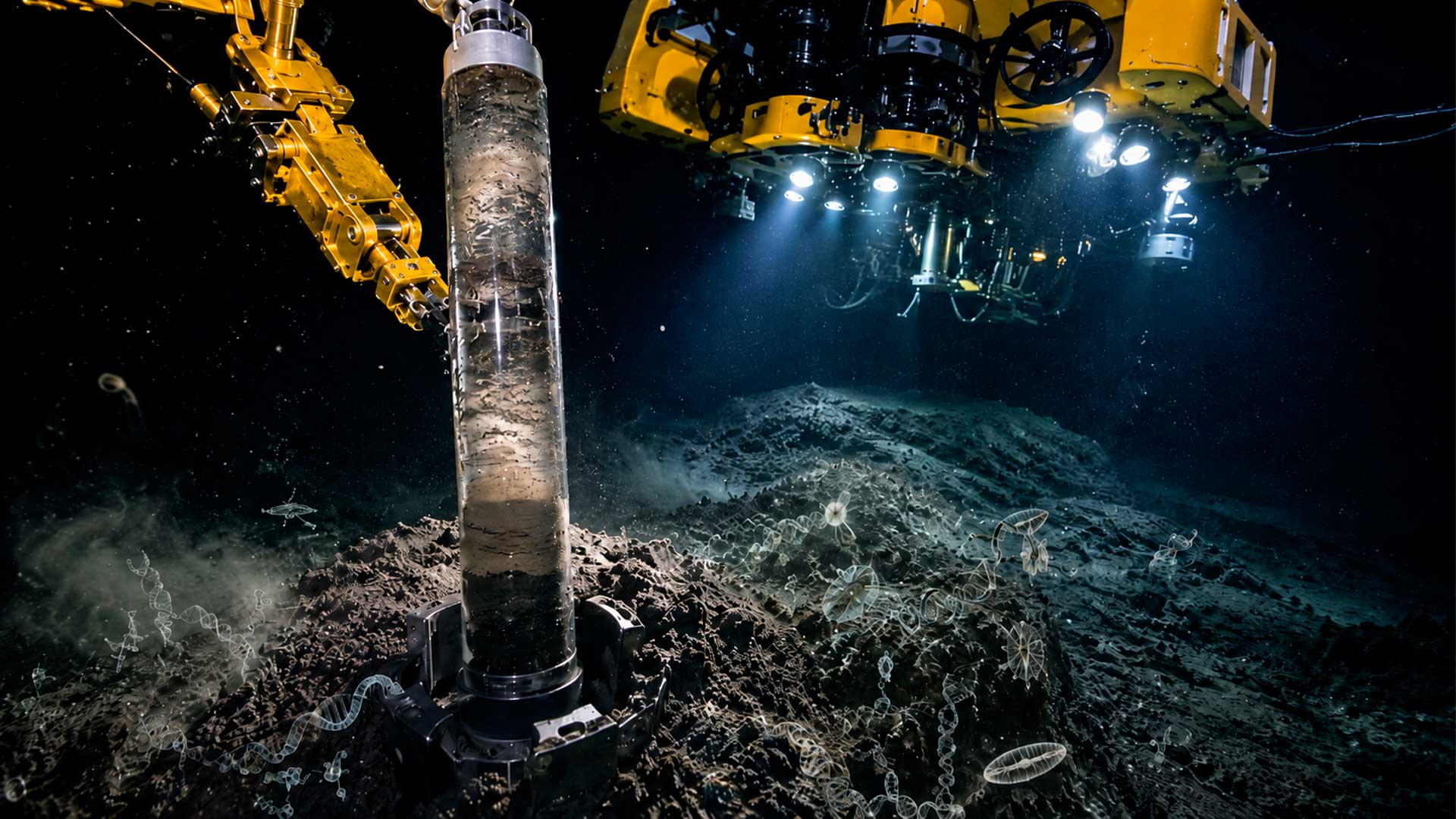
At a depth of 5,000 meters, where there is no sunlight, researchers found ancient DNA preserved in the mud of the South Atlantic and discovered signs of organisms that did not match known records.




The goal was to eliminate large introduced mammals from the north of Isabela Island, Santiago, and Pinta, regions affected by goats, pigs, and donkeys brought to the archipelago during human occupation.
The measure was not solely focused on removing an animal from the environment.
The objective was to reduce pressure on native plants, recover areas used by giant tortoises, and prevent degradation from advancing in island ecosystems, considered more vulnerable to the presence of outside species.
How goats threatened the Galápagos giant tortoises
Goats are not part of the native fauna of Galápagos.
On islands where many plants evolved without large herbivores, the presence of these animals caused intense vegetation consumption, opening areas previously covered by plants and loss of natural structures important for other species.
On Alcedo volcano, in the north of Isabela Island, the impact became one of the main focus points of the project.
The Galápagos Conservancy reports that, in the early 1990s, goats had already damaged forests that helped retain moisture and provided shade in areas used by giant tortoises.
The vegetation in these regions plays an important role during the garúa season, a period when the mist helps maintain moisture amidst the volcanic soil.
With the reduction of vegetation cover, tortoises began to find less shade, less food, and less availability of water in circulation areas.
The effect also spread to other parts of the ecosystem.
When native plants stop regenerating, the soil becomes more exposed, species associated with the vegetation lose habitat, and natural recovery becomes slower.
Therefore, the removal of invasive animals has become part of a broader environmental restoration strategy.
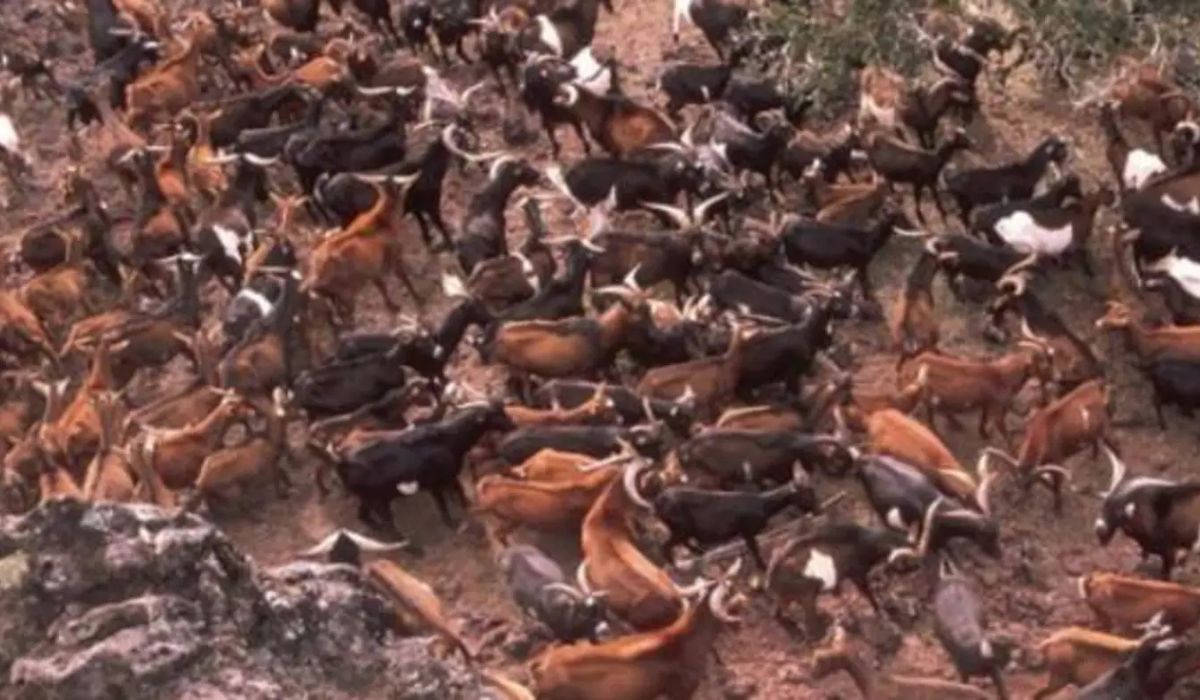
Project Isabela removed invasive goats from protected areas
Project Isabela was structured by the Galápagos National Park Directorate and the Charles Darwin Foundation after an international workshop held in 1997.
The initiative primarily targeted the northern part of Isabela Island, covering about 250,000 hectares, as well as Santiago and Pinta.
A study published in 2011 in the scientific journal PLOS ONE describes the operation as the largest island restoration effort recorded up to that time.
According to the article, more than 140,000 goats were removed from an area exceeding 500,000 hectares, at an estimated cost of US$ 10.5 million.
The scale of the work required different methods depending on the phase of the operation.
In more accessible areas, ground teams acted directly in controlling the animals.
In volcanic terrains, extensive and with little possibility of moving on foot, helicopters were used to expand the search coverage.
The strategy also included training park rangers, using maps, and monitoring by telemetry.
These resources allowed tracking the distribution of the animals and reducing the chance of surviving groups recolonizing areas where eradication had already been completed.
Helicopters expanded the reach of the operation in Galápagos
The aerial operation increased the removal capacity in isolated areas of Isabela Island.
According to the PLOS ONE study, between April 2004 and May 2005, teams operating with helicopters removed 55,657 goats in northern Isabela.
In the same period, ground teams removed 2,637 animals.
The difference in numbers indicates why the use of aircraft was incorporated into the project.
In extensive terrains, with lava, craters, and irregular vegetation, ground movement limited the speed of searches.
From the air, teams could reach areas that would take much longer to cover on foot.
This stage quickly reduced the larger herds.
However, the final phase required a different approach because the last animals tended to be scattered and avoid high-traffic areas.
In eradication programs, this stage usually concentrates a significant part of the cost and monitoring effort.
Judas Goats helped locate hidden herds
To locate the remaining animals, the project used the so-called Judas Goats.
They were sterilized, fitted with radio collars, and released into the environment.
As goats are social animals, they sought out other individuals and ended up leading teams to hidden herds.
Galápagos Conservancy reports that about 770 Judas Goats were used on Isabela.
In Santiago, more than 200 animals served the same purpose.
After the main phase, some of them remained as a monitoring tool to indicate any presence of surviving or reintroduced goats.


The method used the social behavior of the invasive species itself as a search tool.
Instead of relying solely on visual patrols, teams began to follow signals emitted by the collars, which increased the accuracy in locating the last groups.
Some females also received hormonal treatment to prolong the search period for other animals, according to project records.
This adaptation became known in studies and technical reports as the “Mata Hari” strategy, used to enhance the efficiency of tracking goats in the final eradication phase.
Native vegetation regained space after eradication
After the removal of the goats, areas previously pressured by grazing began to show recovery of native plants.
Galápagos Conservancy points out that the removal of goats and other introduced mammals on the archipelago’s islands was an important step for the restoration of habitats used by giant tortoises.
In Pinta, for example, the removal of goats was followed by the recovery of native vegetation, according to the organization.
The island also became part of initiatives aimed at ecological restoration, with the reintroduction of sterilized hybrid tortoises to aid in environmental recovery.
The giant tortoises have a significant ecological role on the islands.
As they move, feed, and disperse seeds, they help shape the vegetation and maintain natural processes.
For this reason, conservation programs in Galápagos combine invasive species control, habitat recovery, assisted reproduction, and release of animals in selected areas.
Conservation on islands requires control of invasive species
Galápagos belongs to Ecuador and hosts species that evolved in isolation.
This characteristic increases the archipelago’s sensitivity to the introduction of foreign animals and plants.
When invasive species establish themselves, they can compete for food, prey on eggs and hatchlings, or modify entire habitats.
The case of the goats shows how the conservation of giant tortoises depends on measures that go beyond the direct protection of the animals.
Restoration involves vegetation management, continuous control of invaders, prevention of new introductions, and long-term monitoring.
According to the Galápagos Conservancy, the goal of current programs is to recover giant tortoise populations and restore lost ecological functions on different islands.
This work includes captive breeding, genetic studies, release of juveniles, and monitoring of restored areas.
The presence of shooters, helicopters, and tracking goats in the same conservation plan reveals the technical complexity of projects aimed at island ecosystems.
In Galápagos, the removal of introduced species has been used as a tool to restore environments affected by human activities and enhance the survival conditions of giant tortoises.






No mention of What was done to those thousands of goats.Were they removed live and transfered or killed?