





 Portuguese
  English
  Spanish
  3 min of reading
  1 comment


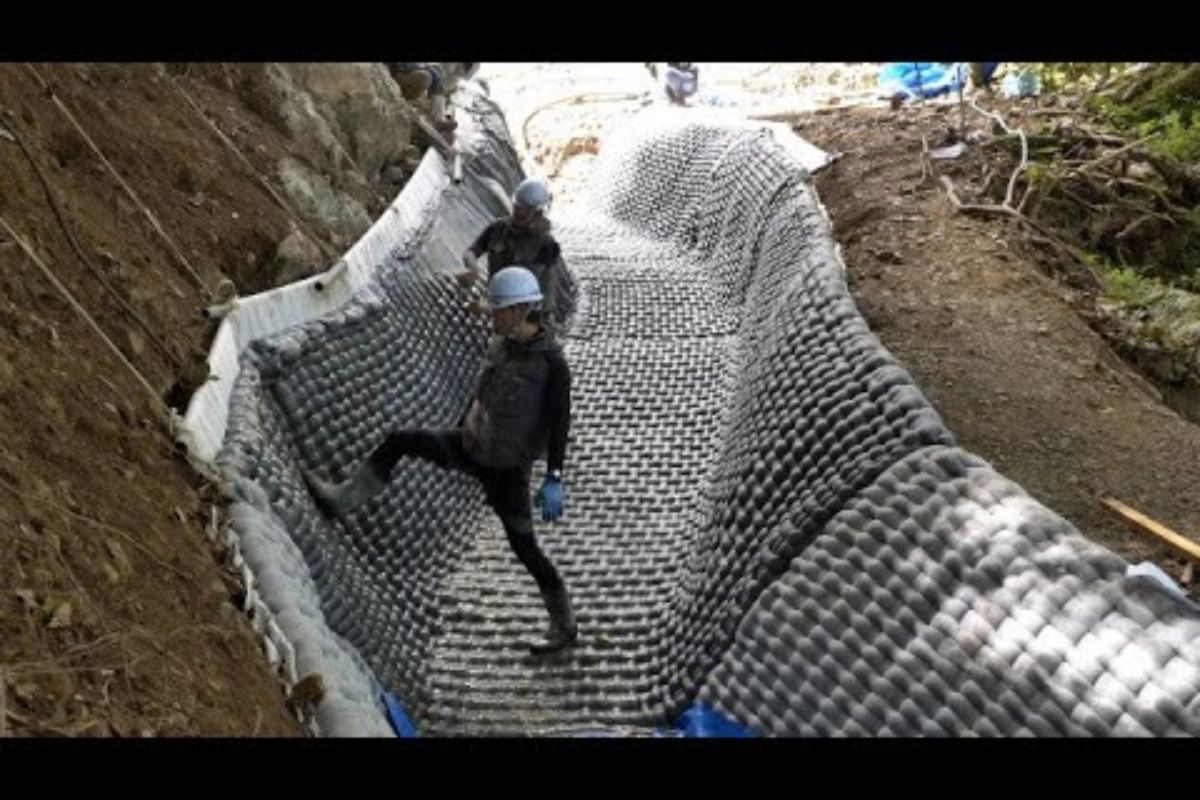


In a disaster containment project, Japanese engineers applied fabric formwork technology to shape concrete and mortar in just 48 hours, replacing weeks of manual labor and creating robust channels with high structural precision.
A technique that seemed experimental has become a concrete and immediate solution to one of the biggest challenges in civil engineering: building resilient structures in short deadlines and with limited human resources. In Japan, the use of fabric formwork transformed a process that would normally take a month into an operation completed in just two days, maintaining the same level of strength and safety.
The system works with permeable textile molds that receive mortar under pressure, inflating like balloons until they reach their final shape. By allowing excess water to escape naturally, the technique produces denser and more uniform concrete, speeding up the hardening process and significantly reducing execution time. The result is an efficient alternative for containment and drainage works in areas at high risk of landslides and floods.
How Fabric Formwork Changed the Construction Process
In traditional works, the formation of channels and retaining walls requires excavation, assembly of wooden forms, and concrete pouring in stages.
-
The end of Japan? Population is disappearing, country loses more than 3 million inhabitants in just five years and birth rate falls for the tenth consecutive year, raising alarm about demographic collapse and lack of workers.

-
China surprises the world by inaugurating a new era: the country will create a “digital ID” for 28,000 humanoid robots from 100 manufacturers, while machines capable of cooking, doing laundry, and caring for the elderly begin free domestic testing in 2027.
-
The world’s smartest ring is now 40% smaller, measures blood pressure signals during sleep, monitors over 50 health metrics, has a battery life of up to 9 days, and features enhanced sensors for more accurate readings on any skin tone.
-
Endless Brazilian: Blumenau resident turns 107 with a lucid memory, autonomy, and more than 100 direct descendants; the secret to longevity involves homemade food, a peaceful routine in the countryside, and simple habits maintained for decades.




Each phase consumes time, workforce, and constant adjustments. With the Japanese method, fabric formwork replaces this segmented process with a continuous and integrated execution.
The fabric is installed directly on the ground and secured with stakes and support blocks, shaping the path of the channel.
Then, the mortar is injected under pressure until it fills the entire volume.
The fabric maintains the exact shape of the structure and releases excess water, allowing the concrete to compact and harden uniformly.
The result is a solid and stable surface ready in less than 48 hours.
Efficiency, Precision, and Less Dependence on Labor
The advancement is not only technical but also logistical.
Japan faces a shortage of skilled professionals in the construction industry, which increases the need for automated and low-labor-cost solutions.
Fabric formwork directly addresses this challenge by requiring fewer workers, eliminating the intensive use of wood, and reducing manual stages that often delay the schedule.
Another benefit is hydraulic control.
The irregular texture created by the fabric helps slow down the flow of water within the channels, preventing erosion and ensuring greater stability.
In a single operation, it is possible to erect walls, form bases, and mold complex curves without the need for disassemblies or structural adjustments.
A Strategic Advance in Disaster Prevention


Projects like this demonstrate how innovation can redefine the concept of emergency works.
Japan, a country constantly exposed to heavy rains and geological risks, transforms technology and design into instruments of civil protection.
The experience of fabric formwork in this channel is a technical landmark that combines speed, efficiency, and sustainability.
It is a model that can inspire similar solutions in drainage and containment works in risk areas in Brazil and other countries with similar climatic challenges.
Do you believe that technologies like this could transform Brazilian civil engineering? Leave your opinion in the comments.





Sim! Acredito que seria uma opção excelente desde que o cuodado com a qualidade de construção e dos tecidos utilizados respeitem o padrão dos utizizados nesse exemplo, ou seja, padrao japonês. Senão pode ser um fiasco…