





 Portuguese
  English
  Spanish
  4 min of reading
  0 comments


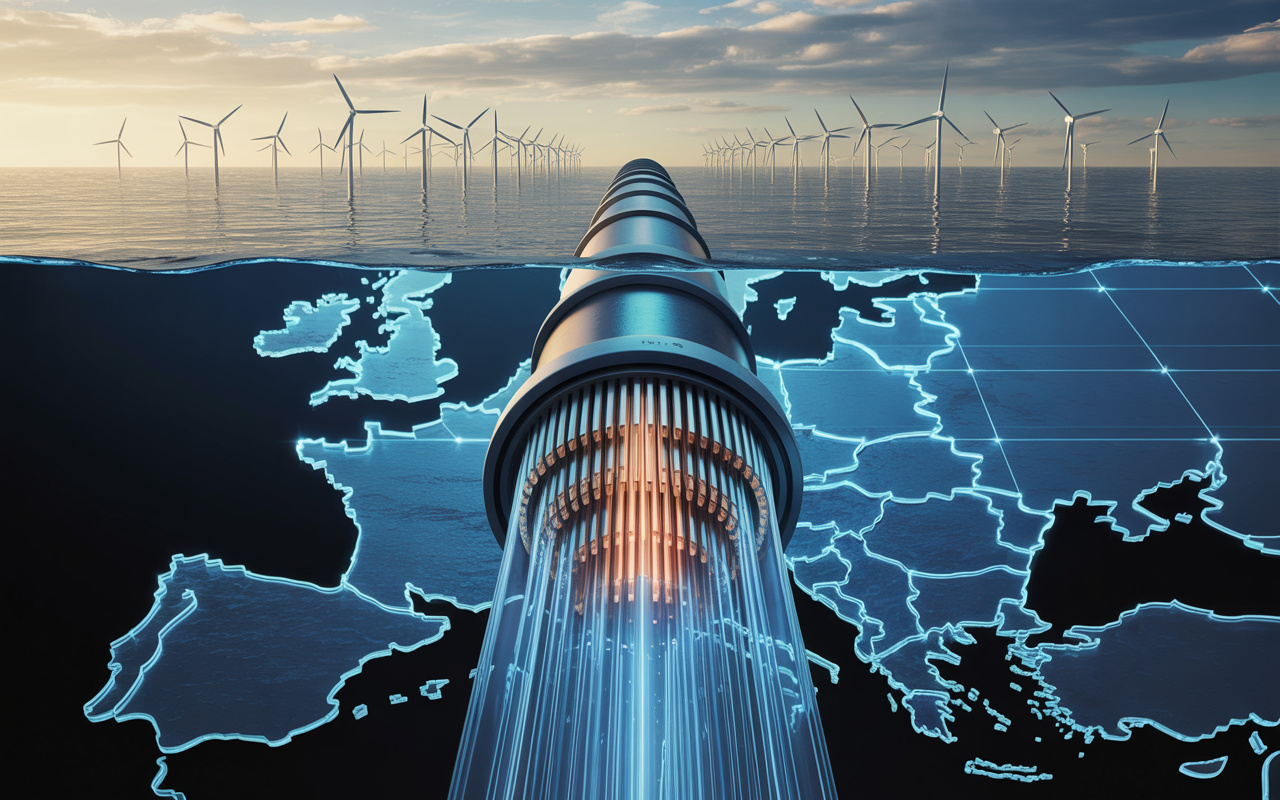
HVDC Submarine Cable Over 700 Km Integrates Offshore Wind Energy from the North Sea to Europe, Connecting Countries, Reducing Emissions and Strengthening Electric Security.
Two decades ago, offshore wind energy was seen as an expensive and experimental bet. Today, giant wind farms in the North Sea, the Baltic, and the Atlantic supply millions of people. What few remember is that none of this would work without a silent protagonist: submerged high-voltage direct current (HVDC) cables, capable of transporting clean energy for hundreds of kilometers with low losses and connecting countries that have never shared terrestrial electrical lines.
700 Km Under the Sea to Transport Wind
The most emblematic case is the North Sea Link, inaugurated between Norway and the United Kingdom, with 720 km in length on the seabed. It is the longest HVDC submarine cable in the world today, connecting:
- Norway (Southern Hydroelectric Plants)
- United Kingdom (Offshore Wind Farms in the North Sea)
This electric corridor allows for energy transfer according to supply and demand: when it is very windy in Great Britain, the excess supplies Norway; when the winds cease, Norwegian lakes return hydropower. It is a kind of “natural transnational battery,” using hydropower reservoirs.
-
Brazil aims to become a military power with more than 2,100 armored vehicles by 2040, 120 mm cannons capable of hitting targets at 5 km, amphibious vehicles at 110 km/h, and a new billion-dollar fleet for the Brazilian Army ready to modernize ground combat.

-
Plastic destined for landfills is turned into gasoline, diesel, and kerosene in Mexico, but Petgas technology sparks debate: real recycling or a cleaner way to burn waste while plastic pollution grows worldwide at an urgent global scale.
-
Sony launches “neck air conditioner” that cools the entire body, has 10 hours of autonomy, and intelligent cooling algorithm

-
NASA satellite image shows a giant mark left by fires in Georgia, where extreme drought, winds, and remnants of Hurricane Helene helped the fire advance over more than 22,000 hectares in an area visible from space.

Gigawatts of Wind, Ice, and Hydroelectric Plants
It’s not just distance: it’s power. Today, the main European HVDC cables carry hundreds to thousands of megawatts, equivalent to entire nuclear turbines. Some real examples:
- North Sea Link (UK–Norway): 1,400 MW
- Viking Link (Denmark–United Kingdom): 765 km + 1,400 MW
- NordLink (Norway–Germany): 623 km + 1,400 MW
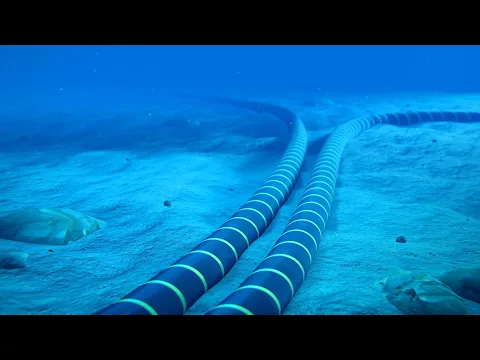

These numbers explain why this system has become a continental priority: 1,400 MW is enough energy to power over 1.4 million homes, depending on the region.
Why Submarine Cables and Not Aerial Lines?
The logic is technical and geopolitical:
Lower losses over long distances
HVDC technology has lower losses than traditional AC, especially over stretches longer than 500 km.
Ability to interconnect countries with different frequencies
Norway, the United Kingdom, France, Denmark, and Germany operate on different dynamics. HVDC serves as a technological bridge.
Avoids territorial conflicts
Aerial lines require expropriations, environmental agreements, and social negotiations. Submarine cables bypass political and land barriers.
Allows energy to be transported from where it exists to where it is needed
There are places with a lot of wind (North Sea) and urban centers far away (Paris, London, Berlin). The cable is the middle ground.
The Engineering Behind: Converting, Rectifying, Transmitting
The “wind cable” exists only because of HVDC converters. At each end, large stations perform:
- Rectification (AC → DC)
- Transmission
- Conversion (DC → AC)
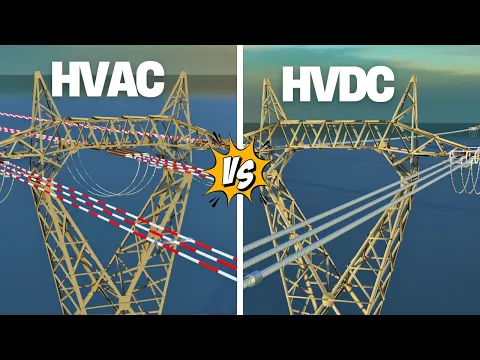
These stations contain entire buildings with valves, transformers, filters, and cooling systems. Without them, it would be impossible to connect floating wind farms to entire continents.
Continental Integration: When One Country Becomes Another’s Battery
This model has brought a new electrical order in Europe:
- Norway functions as Europe’s battery (hydropower)
- Denmark and the United Kingdom export wind
- France exports nuclear energy
- Germany imports and balances peaks
The EU’s goal is clear: to create a “European supergrid” capable of operating as a single electrical system.
Geopolitical Effect: Less Coal, Less Gas, Less Dependence
These cables began purely technical. Today they are geopolitical:
- Reduce dependence on Russian natural gas
- Stabilize electricity prices
- Accelerate decarbonization targets
- Create redundancy against blackouts
Experts estimate that Europe could have over 50 GW of HVDC interconnections by 2040, just in the North Sea, enough to power tens of millions.
The Future: Continental Cables, Solar Deserts, and Ocean Batteries
As Europe advances at sea, other regions are observing:
- China already operates HVDC lines over 3,000 km on land
- Australia–Singapore is studying a solar cable over >4,000 km
- Morocco–United Kingdom plans 3,800 km of solar HVDC
The logic is always the same: where there is wind, sun, or water, there will be a cable.
A New Silent Era of Energy
On the surface, nothing changes. Ships cross. Fishers work. Tourists ignore. But beneath the sea, thick veins of copper and aluminum carry clean energy between nations as if they were arteries of the same continental organism.
They are not towers, they are not turbines, and they are not batteries, but without them, none of these technologies would function at the scale the world demands.
And that is why HVDC submarine cables are becoming the most strategic invisible infrastructure of the 21st century.





-

-

-

-

6 people reacted to this.