





 Portuguese
  English
  Spanish
  5 min of reading
  4 comments


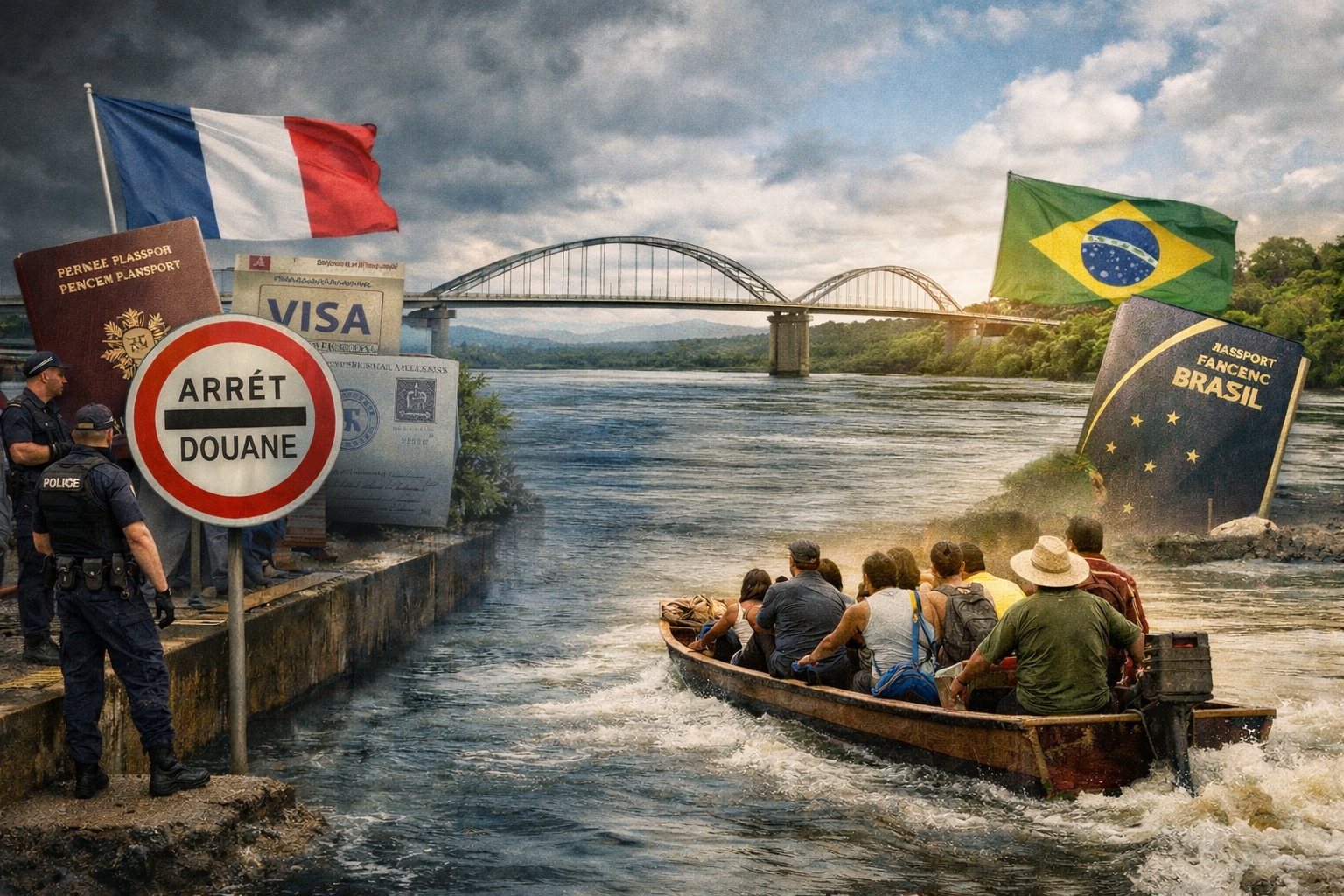


Brazilians Pay €60 Visa And Fee Starting At €95 To Cross Into French Guiana, While The Reverse Route Is Much Simpler In Oiapoque
At the border of Amapá with France, there is a striking contrast: crossing to the French side requires rules and costs that do not weigh the same way in the opposite direction. The €60 visa and the vehicle fee change the routine, commerce, and even the way to cross the river.
This influences trade, tourism, and the way of moving between the two sides, with Guianese cars circulating more frequently in Brazil and many people preferring canoes for trips across the river.
The region also brings together history, nature, and local economy, with the presence of the euro, the use of French in daily life, and activities related to cocoa, ecotourism, and the Oiapoque River itself.
-
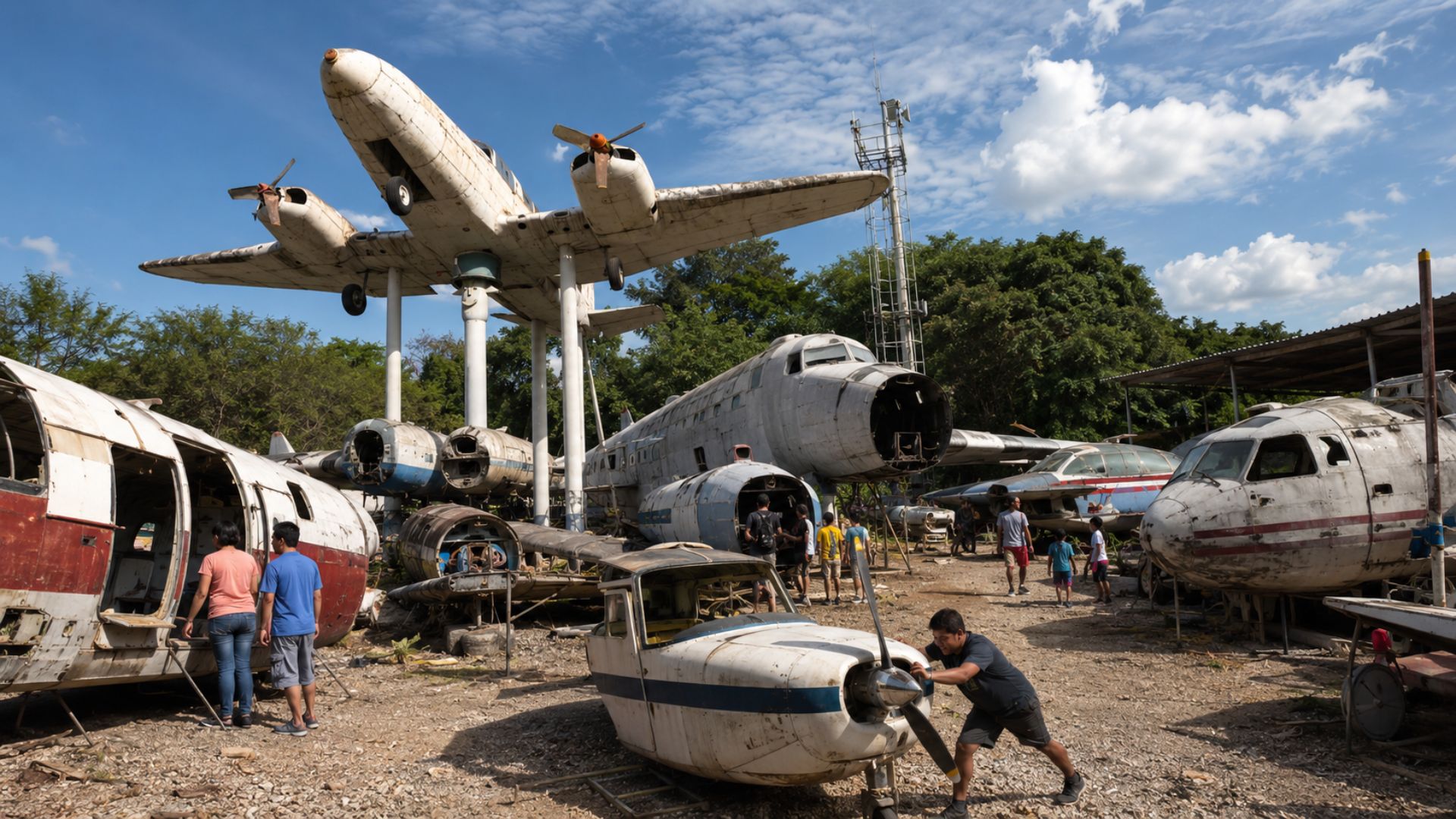
A junkyard has turned into an open-air airplane museum, made from retired fuselages and even doing business with Embraer, where you can enter the aircraft, pretend to start the engines, and take an entire plane home for around 100,000 reais.

-
Using high-resolution satellite images, archaeologists rediscovered the Egyptian city of Imet, buried for centuries in the Nile Delta, revealing rare multi-story houses, granaries, and a sacred road linked to the cobra goddess Wadjet, from about 2,400 years ago.
-
China launches a destination-less cruise with a giant domestically-made ship, departing from Shanghai for 3 days without stops, turning the ship itself into an attraction, offering a new way to travel without rushing between ports along the Chinese coast.

-
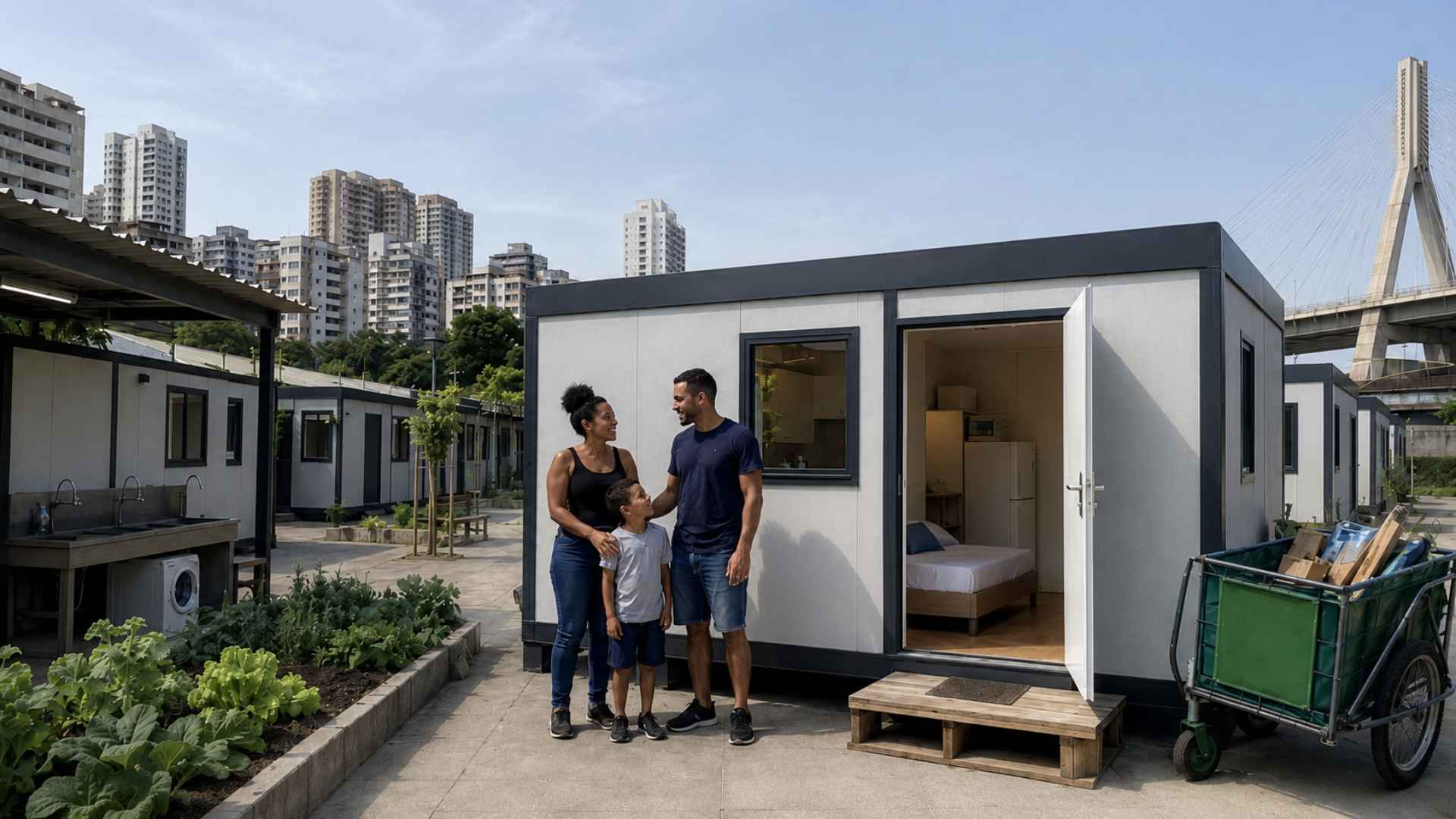
Dissatisfied with families sleeping on the streets of São Paulo, the city hall created villages with modular houses of 18 m², bathroom, sink, beds, refrigerator, stove, laundry, garden, and even parking for carts to help people rebuild their lives away from the crowded shelters.


Oiapoque Turned Into A Trade Route With French Guiana, While Brazilians Face Visa And Fees To Cross
The largest land border of France is with Brazil, linking the Amazon to the European Union through French Guiana, an overseas territory where the laws and currency of France apply.
In Oiapoque, Portuguese and French appear together on signs, walls, and in daily life. The euro circulates strongly, especially during periods of higher shopping traffic.
The city is located 578 km from Macapá. The journey is marked by BR 156, started in 1932 and still incomplete, with stretches alternating between asphalt, mud, and holes, as well as points that become impassable during the Amazonian winter.
What Changes In Practice For Those Who Cross The Border
The Brazilian side receives many visitors who cross to buy and consume, since the cost in euros changes the price perception of items such as food and services.
An example mentioned in daily life is the all-you-can-eat meat, which tends to be more affordable for those paying in the European currency. Even products related to the river itself may appear cheaper in Brazil.
The crossing also supports local activities. Part of the city’s economy revolves around visitors from the French side and consumption in Oiapoque, with a direct impact on those working in tourism and services.
What Are The Rules, Deadlines, And Conditions

Entering French Guiana requires a visa, and there is a fee for vehicle circulation. The visa costs €60, and there is a fee starting at €95 to enter with the car.
In the opposite direction, Guianese enter Brazil with fewer barriers, without requiring the same set of costs and requirements. This helps explain why it is more common to see vehicles from French Guiana driving on the Brazilian side.
The result appears in daily life: even with the bridge, canoes remain essential, maintaining the flow of people between the two banks.
How The Crossing Works And Why Canoes Continue To Dominate

The binational bridge connects the two countries, but its effective use remains unequal. The project was announced in 1997, construction began in 2008, and the structure was completed in 2011.
Despite this, no cars crossed it until 2017, when inspection controls were finalized. The bridge is an important symbol but has not eliminated the dependence on water transport.
In practice, the crossing by canoe remains strong, with an average cost of €4 in a transaction commonly cited. There are also mentions of prices of €2.50 to go and €2.50 to return, totaling around R$ 30.
Oiapoque, Commerce In Euro And Numbers That Show The Weight Of The Border
Oiapoque had just over 27,000 people, with a territorial area of over 22,600 km², larger than the entire state of Sergipe.
The influence of the border is evident even in details such as vehicles with foreign plates and the consumption of those who cross to shop. Gasoline was registered at R$ 7.41 per liter in November 2024.
There is also a historical and territorial snapshot of Amapá, described as a state with over 142,000 km² and just over 800,000 inhabitants, with a large part covered by forest, rivers, and protected areas.
Why The Crossing Remains Unequal Even With The Bridge Ready
The relationship between the sides is still marked by entry restrictions into French Guiana and a daily exchange that does not solely depend on the bridge. In Vila Vitória, a district of Oiapoque, there is a reference to a crossing area near 500 m from the city of São Jorge.
São Jorge is cited as a town with approximately 3,000 inhabitants, located 189 km from Caena. French Guiana is identified with a territory of 83,000 km², a population of 301,000 people, and an official currency in euros.
The territory is also pointed out as strategic due to the Currô space base and the presence of natural resources such as gold and balchite, in addition to its geopolitical importance in maintaining European presence in South America.
Nature, Energy And Cocoa As A Local Force

The Oiapoque River is about 400 km long, originating in the Tumucumak mountains and flowing into the Atlantic Ocean. Besides being a border, it supports transportation, fishing, and supply for riverside communities.
Ecotourism appears as a vocation, with mention of the Cabo Orange National Park and the Tumucumac Park. The Grã Rochê waterfall, also known as Maripá, is one of the most sought-after visiting points, especially by the French.
Next to the waterfall, there is mention of the construction of the small hydropower plant Salto Cafezoca, aimed at contributing to the energy supply of the municipality of Oiapoque and providing an additional source beyond thermal energy.
Cocoa also plays a central role in the local economy. There is reference to cultivation in the Amazon for over 3,000 years, highlighting Amazonian cocoa and an initiative to produce chocolates linked to local bioeconomy, along with a landmark mentioned in 2015 to make this cocoa more widely known.
Oiapoque lives on a border where the presence of France is visible in language, currency, and commerce, but access to the French side weighs more for Brazilians due to the €60 visa and the fee starting at €95 for the vehicle.
Even with the bridge and cultural integration, daily life remains guided by rules, by the flow of the Oiapoque River, and by an economy that mixes purchases in euros, nature tourism, and local products such as cocoa.
Tell us in the comments: do you think it is fair for Brazilians to pay a €60 visa and fee starting at €95 to enter French Guiana, while crossing into Brazil is much simpler? Your opinion helps broaden the debate.





Se adotar a reciprocidade, quem perde é o comércio de Oiapoque
Isso e uma colônia , !!
Um ultraje está diferença, até parece que são melhores do que nos. Vai te catar, França