Portuguese
  Spanish



There are 1,527 km of railway between Bahia and Tocantins — and the government plans R$ 530 billion in 15 railways to transform Brazil’s logistics
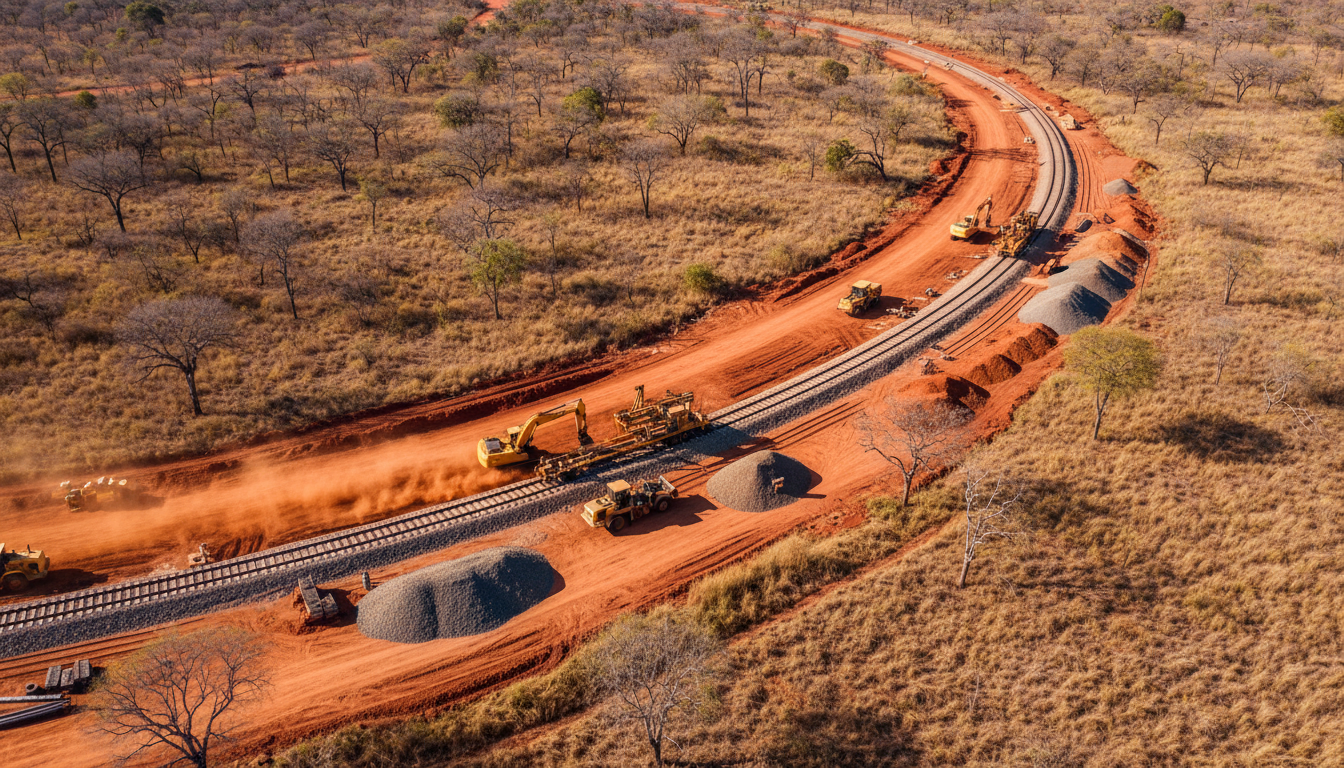
The West-East Integration Railway, known as FIOL, is one of Brazil’s most ambitious railway projects: 1,527 kilometers of broad-gauge tracks connecting Porto Sul, in Ilhéus (BA), to the North-South Railway, in Figueirópolis (TO).
According to Infra S.A., the state company responsible for planning, the railway aims to transport grains from western Bahia and minerals from southern Bahia to the coast, reducing logistics costs and relieving highways.
However, the project is divided into three sections — and each progresses at a different pace, with distinct challenges.
-
Brazil to Convert 80 Public Properties into 11,000 Affordable Homes Across 44 Cities to Address Housing Shortage

-
Brazilian Company Develops Wall Panels from Recycled Refrigerator Foam with Comparable Thermal and Acoustic Performance

-
Brazil’s São Paulo Region Unveils Latin America’s Largest Timber Shopping Mall, Built in 7 Months, Capturing Carbon and Preventing 900 Tons of Emissions
-
Danish Island Uses Seaweed for Durable, Centuries-Old Roofing Solution


Additionally, FIOL is part of a much broader federal plan: the National Railway Plan, which foresees investments of R$ 530 billion in 15 railway assets.
Thus, the fate of FIOL could define the future of the entire Brazilian railway network.

The railway is divided into 3 sections — and none have been fully completed
The Section 1 of FIOL connects Caetité to Ilhéus, in Bahia, with 537 km in length passing through 19 municipalities.
According to the federal government, the responsibility for executing this section was entrusted to the company Bahia Mineração (Bamin).
On the other hand, Section 2 (FIOL II) connects Caetité to Barreiras, in western Bahia, and is under construction following the launch of a new tender in September 2025.
Similarly, Section 3 (FIOL III) goes from Barreiras to Figueirópolis (TO), but is still awaiting installation license — meaning construction hasn’t even started.
Consequently, the complete FIOL will only exist when all three sections are ready and connected — something that may take years.
Lula requested the railway be delivered before December 2026 — but the official deadline is 2027
In July 2023, President Lula visited the FIOL construction in Ilhéus and made a direct request to entrepreneurs: deliver the railway before December 31, 2026.
However, the official contractual deadline for the completion of Section 1 is 2027 — and even this deadline is considered optimistic by industry experts.
Likewise, FIOL was announced as the first project of the New PAC in 2023, indicating the priority the government gave to the project.
Still, the history of Brazilian railways does not inspire confidence: the Transnordestina took almost 20 years without completion, and the Rio–São Paulo bullet train accumulates 19 years of delay.
Therefore, the big question is whether FIOL will be different — or if it will follow the Brazilian pattern of railway promises that never materialize.

The R$ 530 billion railway plan: ambitious on paper, uncertain in execution
As reported by NeoFeed, the federal government structured a plan of R$ 530 billion for 15 railway assets, with R$ 138.6 billion already confirmed.
In this sense, the project portfolio includes not only FIOL but also Ferrogrão, Fico, new concessions, and expansions of the existing network.
Furthermore, the expansion of FIOL 2 advanced with a new tender launched in September 2025, indicating some progress.
However, Brazil invests only 2.24% of GDP in infrastructure — half of what is needed — raising doubts about the ability to execute so many projects simultaneously.
Above all, the private sector already accounts for 72% of infrastructure investments in the country, indicating that the government does not have enough resources to fund the plan alone.
What FIOL can change: from the Bahian hinterland to international trade
The railway promises to transform the logistics of a region that today relies almost exclusively on trucks to transport production.
In fact, the section between Caetité and Ilhéus will pass through 19 Bahian municipalities, many of them with economies based on mining and agriculture that suffer from the high cost of road freight.
As a result, the arrival of the railway at Porto Sul in Ilhéus would open a direct export corridor to international markets — reducing costs and increasing the competitiveness of Brazilian products.
Consequently, the region could benefit from job creation, increased revenue, and the development of production chains that are currently unviable due to logistical costs.
Despite this, the lack of adequate port infrastructure in Ilhéus is another bottleneck that will need to be resolved in parallel.

The North-South Railway took 36 years — will FIOL repeat the pattern?
The biggest precedent for FIOL is the North-South Railway, which took 36 years to be completed — from the start of construction in 1987 to the delivery of the last section in 2023.
During this period, the project went through governments of all political spectrums, multiple halts, and billions in additional costs.
However, the North-South also proves that it is possible to complete large railways in Brazil — provided there is political continuity and long-term commitment.
The difference is that China builds 2,400 km of high-speed rail PER YEAR. Brazil took 36 years to complete a single freight railway.
FIOL will be the definitive test: if the government manages to deliver the 537 km of Section 1 by 2026 or 2027, there will be hope for the rest of the R$ 530 billion plan. If not, the cycle of railway promises will continue — and Brazil will keep moving its wealth by trucks.
In fact, the North-South proves that railways in Brazil take an entire generation to materialize — and FIOL, if it follows the same pace, will only be complete when the children of those who planned the project have already retired.
Despite this, the railway concession market is heated: ANTT received requests for authorization for more than 20 private railway projects in the last two years, indicating that the private sector sees opportunity where the government sees bureaucracy.
Above all, the Brazilian logistics cost — estimated at 12% of GDP compared to 8% in the United States — is a burden that the entire economy carries, from the rural producer to the final consumer.