






 Portuguese
  Spanish


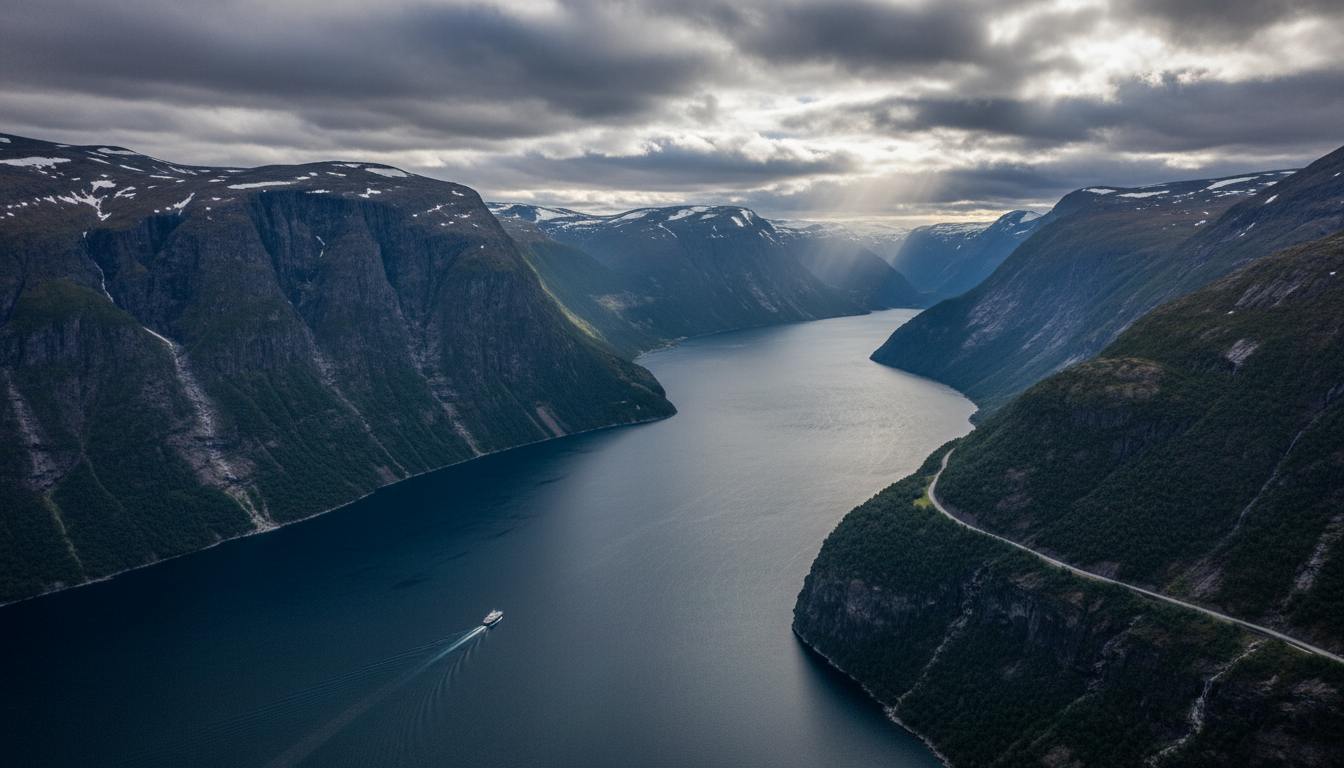


With 27 kilometers in length and a deepest point of 392 meters below sea level, Rogfast will replace seven ferry crossings on the west coast of Norway and cut a 21-hour journey in half
On the west coast of Norway, the E39 highway winds between deep fjords for 1,090 kilometers.
To travel this stretch from Trondheim to Kristiansand, drivers need 21 hours — and rely on seven ferry crossings that stop in bad weather.
The Rogfast project aims to change that by drilling through the rock beneath the fjords.
-
Newly Completed Brazilian Highway in the Serra da Rocinha Becomes a 16.5 km Cycling Challenge and Boost for Local Tourism

-
Innovative Mortar Technique Enhances Porcelain Tile Stability, Reduces Buckling and Detachment Risks, and Provides Durable Finish Under Heavy Use

-
Giant Robots Build Entire Neighborhood of 100 3D-Printed Homes in the U.S., Showcasing Technology’s Impact on Construction Industry
-
Helsinki Residents Receive Water That Travels 120 Kilometers Through a Hidden Rock Tunnel from a Lake Before Treatment
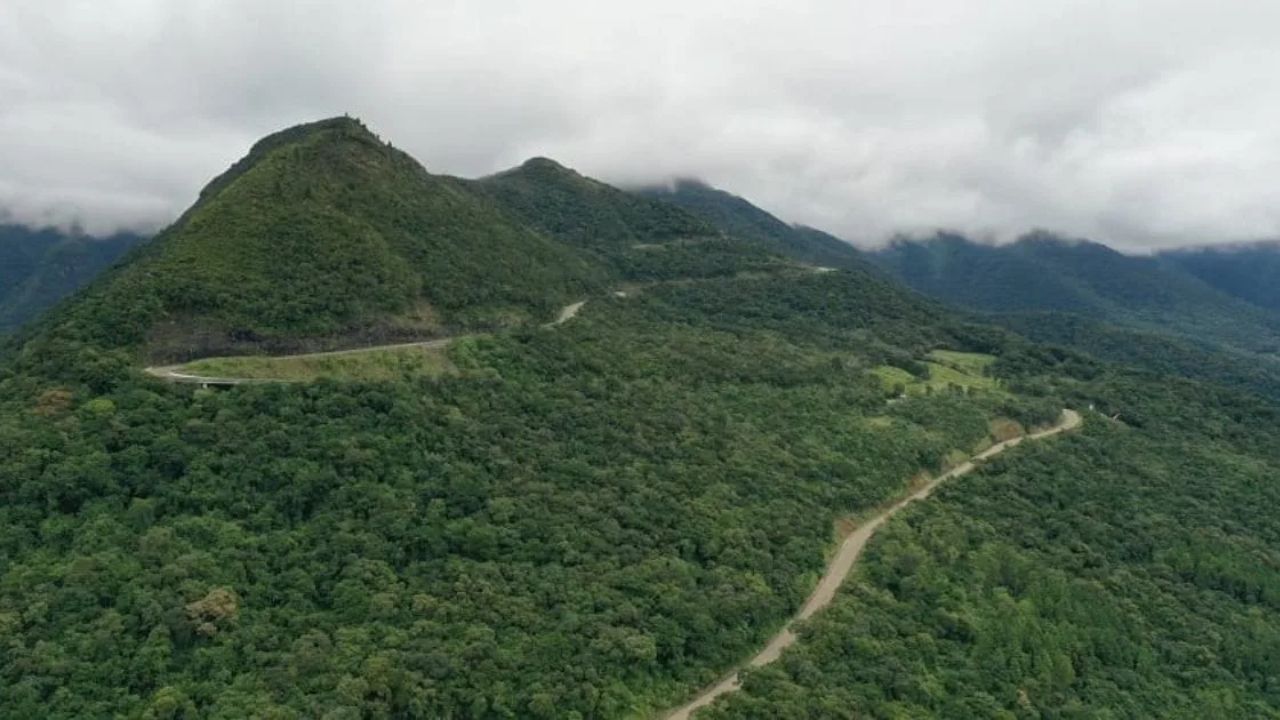



When completed in 2033, the tunnel will have 27 kilometers in length and reach 392 meters below sea level — the deepest in the world for vehicles.
The crossing that currently depends on ferries will take only 35 minutes by car inside the tunnel.
The estimated cost is US$ 2.4 billion (about 20 billion Norwegian kroner).

392 meters of rock and water above: how it works
The Rogfast tunnel will pass under the bed of the Boknafjorden fjord, in the Rogaland region.
There will be four lanes — two in each direction.
At the deepest point, the road will be 392 meters below sea level.
In the middle of the tunnel, there is an unprecedented feature: an exit to the island of Kvitsøy, with an underground roundabout at 250 meters depth.
It will be the deepest road roundabout on the planet.
Construction began in 2018, with the first main contract in the fall of 2021.
The project faced a pause in 2019 due to rising costs but has resumed.
Why Norway needs this tunnel
The Norwegian west coast is cut by fjords that act as natural barriers.
Each fjord forces cars and trucks to stop, board ferries, and wait — sometimes for hours on stormy days.
The E39 has seven ferry crossings, making transportation unpredictable and slow.
Rogfast eliminates one of these barriers, connecting Stavanger, Haugesund, and Bergen by continuous land.
The total time for the E39, from 21 hours, will drop to about 10 hours when all projects are completed.

Norway is the country of tunnels: Rogfast will be the king
Norway already has the longest road tunnels in the world.
The Laerdal Tunnel, at 24.5 kilometers, is the current world record holder.
The Ryfast, at 14.4 kilometers, holds the record for road depth at 292 meters.
Rogfast will surpass both: it will be 2.5 km longer than the Laerdal and 100 meters deeper than the Ryfast.
The country has more than 1,100 road tunnels — drilling through mountains is part of the Norwegian DNA.
The economic impact: tourism, trade, and jobs
The continuous road connection will accelerate trade and tourism on the west coast.
Businesses that depended on ferry schedules will have logistical predictability.
Tourists will be able to travel the coast without maritime interruptions.
Funding combines tolls and support from the Norwegian government.
For a country that already relies on oil from the North Sea, investing US$ 2.4 billion in transportation infrastructure is a bet on economic diversification.

The challenges of drilling rock 392 meters under water
The engineering of Rogfast faces extreme hydrostatic pressure.
The rock at this depth may have fractures and water seepage from the fjord.
Ventilation for a 27 km road tunnel is complex — vehicle gases need to be continuously extracted.
The underground roundabout for Kvitsøy adds an unprecedented layer of complexity.
The Norwegians have experience: Laerdal, Ryfast, and dozens of other tunnels have proven that the local geology is viable.
But 392 meters is a new record, and every additional meter of depth increases the risks.
What could go wrong
The project has already faced cost increases that caused a pause in 2019.
The budget rose from the estimated €1.9 billion to US$ 2.4 billion.
The completion, initially expected for earlier dates, now points to 2033.
Unpredictable geology under the fjord could cause further delays.
However, Norway has a strong track record of delivering tunnels — even if delayed.
When Rogfast opens, driving along the Norwegian coast will be like traveling on a European highway — only 392 meters under a fjord.




If the Swiss managed to tame the Alps without oil and Coastline, what excuses do the Norwegians have?
Sharp comparison, Anthony. The Swiss showed that mountain tunneling at scale (Gotthard Base Tunnel, 57 km) is achievable without oil revenue. Norway has both: oil wealth and proven engineering. Rogfast is essentially the next step of a 50-tunnel tradition, not a leap into the unknown.
Water rise 👍
Right on target, Fs — at 392 m below the fjord, the tunnel handles immense hydrostatic pressure. Norway has decades of experience pumping and sealing subsea works, but at Rogfast scale every meter of new technique matters.
Bad idea
Good luck. This is a life changing project and worth every bit of money to be spent on it.
Agreed, Ed. Norway has a remarkable record on subsea tunnels — over 50 already in operation. Rogfast pushes the engineering envelope (longest and deepest), but the methodology is well established. The regional economic impact alone justifies the price.
Ken, fair enough — not every megaproject makes sense. In this case, Norway argues that replacing ferry routes with fixed links saves time, fuel, and long-term maintenance costs. The fjords make surface roads extremely long and winding, so tunneling underneath can actually be the shorter path. Whether the cost justifies it is a legitimate debate, though.
Curious to hear why, Ken. The Rogfast tunnel will replace ferry crossings used by over 6,000 vehicles a day, cutting commute time between Stavanger and Bergen from more than an hour to about 27 minutes. The cost is high but Norway has a strong track record on similar projects (Lærdal, Atlantic Ocean Tunnel).