Portuguese
  Spanish


Understand How Technical Details in Traffic Law and Electronic Enforcement Have Allowed Drivers Who Exceed High Speed to Avoid Fines and Points on Their License, Directly Influencing Safety and Justice on Brazilian Highways.
A driver is caught going 150 km/h on a highway where the maximum speed limit is 120 km/h.
The situation seems clear: speeding, evident risk, and consequently, heavy fines and points on the driver’s license.
However, what happens in practice often surprises.
-
Mother discovers she may have won £12 million in the lottery but faces an agonizing wait after the shopkeeper threw the ticket in the trash.

-
A couple bought a house in Sheffield and, when removing the carpet from the hallway, found a trapdoor leading to a secret 23 m² basement with a 2-meter ceiling height, a discovery that eliminated the need for an expensive extension and, according to them, added £70,000 to the property’s value.

-
A nurse bought for 20,000 a 1955 house abandoned by a hoarder in Texas, and months later, rain revealed a buried pool in the backyard valued at $160,000, which he restored himself for about $10,000, a fraction of the cost of building a new one.
-
The United Kingdom is transforming dog feces left on trails into gas to light a streetlamp through an unlikely and surprising project that shows how even one of the most rejected wastes in cities can generate energy.




How Drivers Escape Fines
Drivers who exceed the speed limit in cases like this do not always receive the expected punishment.
According to a survey by SOS Estradas, an organization that advocates for traffic victims, legal loopholes and technical details present in the legislation and enforcement equipment have allowed many drivers to escape fines, even when caught at dangerously high speeds.
According to traffic expert Marco Fabrício Vieira, a member of the State Traffic Council of São Paulo (Cetran-SP) and the Legal Effort Thematic Chamber of the National Traffic Council (Contran), in an interview with UOL, the explanation lies in the error margin legally allowed for electronic speed cameras.
The tolerance margin for speed measurement makes all the difference in the punishment applied.
Error Margin Established by Legislation
Since 2020, Resolution No. 798 from Contran has established clear rules for applying this margin.
It works as follows: for vehicles registered at speeds of up to 100 km/h, 7 km/h is subtracted from the speed measured by the radar.
For speeds above 100 km/h, the calculation is based on a reduction of 7% from the recorded value.
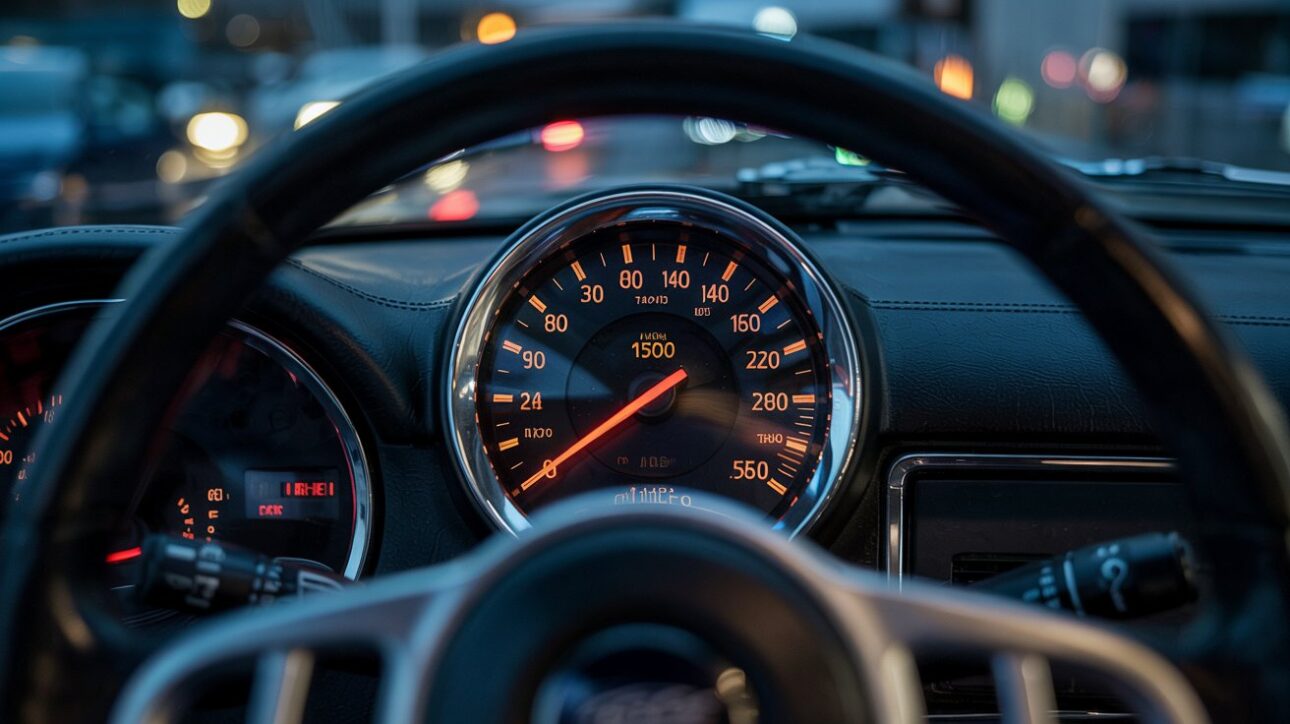
In the example of the driver caught at 150 km/h, the 7% error margin is applied, reducing the speed considered to 139.5 km/h.
This value is what is used legally to define whether there was an infraction and what its severity will be.
Thus, on a road with a limit of 120 km/h, the “legally considered” speed results in an excess of only 16.25%.
With this percentage, the infraction is classified as medium, according to Article 218, Section I, of the Brazilian Traffic Code (CTB).
This means that the driver does not receive a serious infraction, nor does he suffer from suspension of his license.
Mandatory Warning for Medium and Minor Infractions
Additionally, Brazilian legislation provides for another significant change that contributes to this “immunity”: the Law No. 14,071/2020, in effect since 2021.
This law states that drivers who commit minor or medium infractions and have not registered any infractions in the previous 12 months receive only a written warning, with no points on their CNH or fines to pay.
This educational warning is mandatory, not a mere choice of the traffic authority, according to Article 267 of the CTB.
Marco Fabrício Vieira emphasizes that this rule aims to encourage good behavior on the road and prevent severe penalties in cases of minor infractions.
Feeling of Impunity for Some Experts
However, this combination of the technical error margin and the mandatory application of warnings generates criticism.
For entities like SOS Estradas and various road safety experts, this loophole conveys a dangerous sense of impunity.
A driver traveling at 150 km/h on a highway, clearly putting lives at risk, ends up not facing the penalties that many would expect considering the severity of the act.
Defense of the Technical Margin
On the other hand, advocates of these rules stress that the error margin is not a tool to protect offenders but rather a guarantee to avoid unjust punishments caused by potential failures or variations in measurement devices.
Electronic enforcement equipment, even the most modern, can suffer slight inaccuracies. Therefore, legislation provides for a reduction to ensure that fines are applied only when speeds genuinely exceed the limit with a safe margin.
Current Context of Traffic in Brazil
It is worth noting that, according to data from the Ministry of Infrastructure updated in 2025, Brazilian highways continue to record thousands of annual accidents caused by speeding, which is one of the main factors for the severity of occurrences.
In this context, the discussion about the effectiveness of traffic laws and the application of fines gains even more relevance.
In addition to the error margin and the mandatory warning, Brazilian legislation offers other nuances that contribute to the complexity of enforcement.
For example, how the notification is delivered can influence the validity of the infraction notice.
According to legal experts, errors in the notification process can generate administrative and judicial appeals that ultimately annul fines.
This explains why many drivers resort to defenses and find legal support to evade penalties, even when caught committing clear infractions.
Moreover, the technological updates of radars and regulations regarding their calibration are topics of constant debate.
According to the National Traffic Council (Contran), equipment must undergo regular checks to ensure measurement precision, but delays or failures in these inspections can open loopholes for legal challenges.
Traffic Education as an Alternative
Another relevant point in the debate is traffic education, considered by many experts the most effective way to reduce accidents.
Initiatives that focus on raising driver awareness and promoting responsible behaviors tend to yield more lasting results than simply applying fines.
Therefore, the written warning for medium and minor infractions can also be seen as a pedagogical tool, even though its effectiveness is a subject of controversy.
This complex scenario requires that drivers, legislators, and traffic authorities remain attentive to balance the application of the law, safety on the roads, and fairness in enforcement.
With so many technical and legal nuances, the question for you reading this is: to what extent do the error margins and educational warnings really contribute to a safer traffic, or are they, in practice, protecting those who disregard the rules?