Portuguese
  Spanish


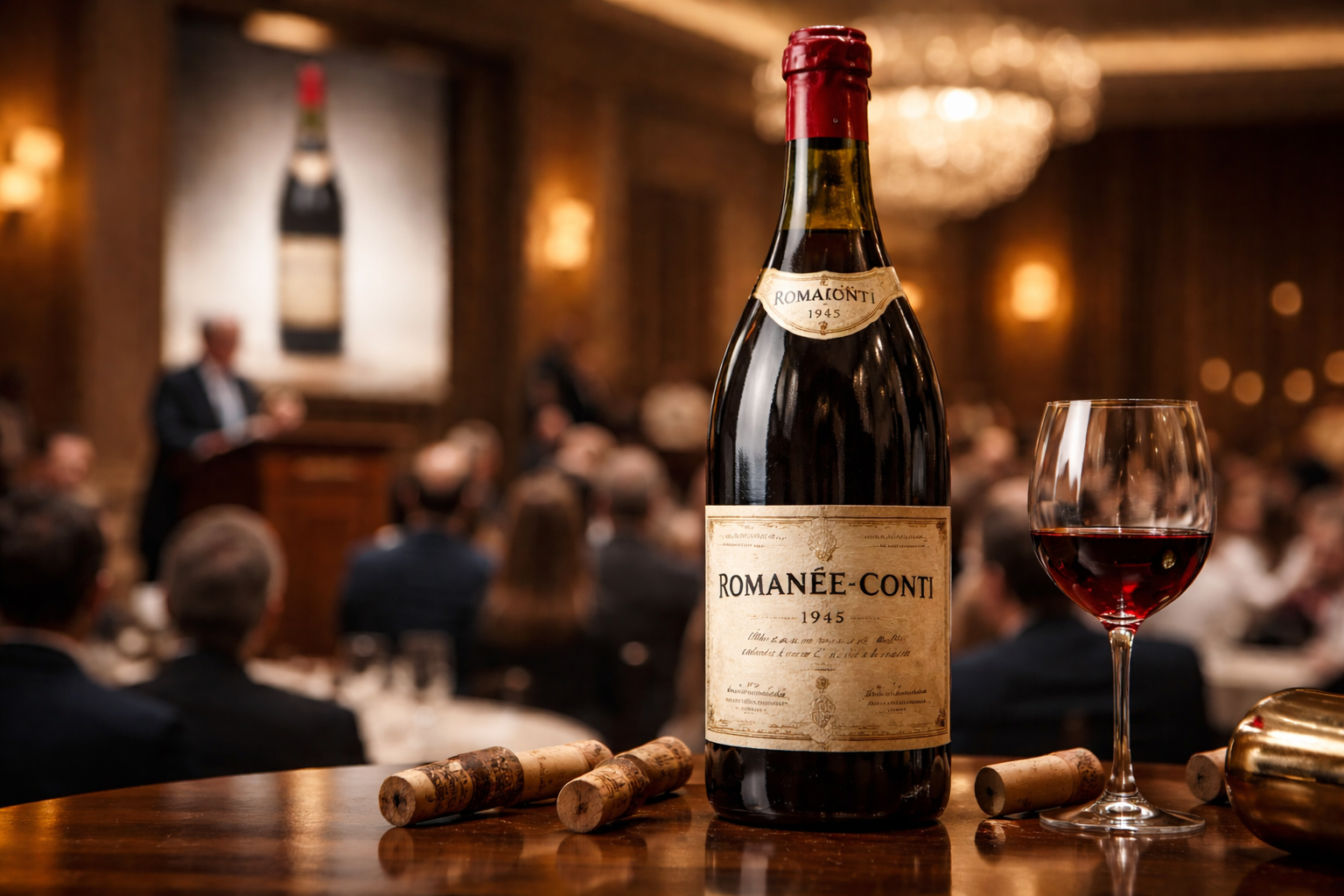

Rare Burgundy Bottle Combines History, Exclusivity, and Global Interest as It Becomes the Most Expensive Wine Ever Sold at Auction
A high-impact transaction in the rare wine market was recently recorded in New York, attracting global attention from collectors.
The bottle of Romanée-Conti 1945 was sold for US$ 812,500, an amount that exceeds R$ 4 million at the current exchange rate.
The result established a new world record recognized by the Guinness World Records, surpassing the previous mark set in 2018.
This movement highlights how historic labels continue to appreciate, even in the face of a retraction in the global wine consumption.
Historic Sale Reinforces Importance of International Auctions
The milestone was achieved during the La Paulée de Acker auction, held recently in New York.
The event brought together collectors from different countries and generated around US$ 25 million in three days, as reported by Acker.
The 750-milliliter bottle of Romanée-Conti 1945 stood out as the most valuable item at the auction.
The result reinforces the role of these events in the appreciation of rare and exclusive wines.
Vintage of 1945 Concentrates Historical and Productive Value
The origin of the wine explains a large part of its value in the market.
The vintage of 1945 marked the end of World War II, which adds historical relevance to the product.
This harvest was also the last before the replanting of the vineyards in 1947.
The decision was made to combat the phylloxera, a pest that affected European vineyards since the 19th century.
As a consequence, production was extremely limited, with only 600 bottles produced.
This context transformed the label into one of the most sought after in the world.
-
Brazilian Ship Refuels with 30% Renewable Fuel in Rotterdam: Transpetro Tests B30 for the First Time, Aiming to Reduce Maritime Emissions and Showcase a Quiet Transition in Key Global Ports

-
Brazilian Man Ingeniously Transforms Air Fryer into Functional Speaker with Radio and Volume Controls
-
Rows of “stone balls” emerge at low tide on California beach, with formations up to 1.5 meters aligned like a Pacific bowling alley

-
Japan Installs 800 Cameras in Tohoku Mountains Amid Rising Bear Attacks





Sensory Characteristics Expand Recognition Among Experts
The Romanée-Conti 1945 is recognized for its unique qualities.
Connoisseurs highlight its depth and complexity, considered rare in the world of wines.
John Kapon, president of Acker, stated that he has tasted the label only three times in his life.
He emphasized that the wine remains the best he has ever experienced.
After the replanting, production dropped to about 10% for several years, which increased the exclusivity of the product.

Provenance of the bottle increases value and reliability
The origin of the auctioned bottle also contributed to its appreciation.
The item was part of the personal cellar of Robert Drouhin, an influential figure in Burgundy.
This factor reinforces the traceability of the item, an essential element in the rare wine market.
Reliable provenance enhances security for buyers and increases the final value at auctions.
Appreciation over time reinforces interest as an investment
The price history confirms the appreciation potential of the label.
In 2018, a bottle from the same vintage was sold for US$ 558,000 at a Sotheby’s auction in New York.
The increase to US$ 812,500 in less than a decade demonstrates consistent growth.
This trend positions rare wines as alternative assets in the investment market.
According to the newspaper The Telegraph, the current buyer was primarily motivated by personal interest in the wine.
Global market faces decline in wine consumption
Despite the records, the wine sector shows signs of slowdown.
Indicators point to a decline or stagnation in global consumption.
A report from the European Union, with projections until 2035, estimates an annual reduction of 0.9% in demand.
Per capita consumption is expected to reach about 19.3 liters, below the levels of the early last decade.
This scenario reveals a contrast between the appreciation of rare labels and the contraction of overall consumption.